







Beyond the Black and White Page
For decades, the text resume has been the undisputed king of job applications. It’s a neat, chronological list of your experiences, skills, and education. But in today’s digital-first world, it’s becoming a relic. Recruiters are drowning in hundreds of similar-looking
documents, all using the same action verbs and bullet-point formats. A traditional resume *tells* a recruiter what you’ve done, but it fails to *show* them how well you did it, what problems you solved, or what your work actually looks like. It lacks context, personality, and proof. In a competitive environment where companies are looking for demonstrable skills, not just claims, the limitations of the text-only resume are more glaring than ever. It's no longer a tool that helps you stand out; for many, it's a document that helps you blend in.
The Power of Showing, Not Telling
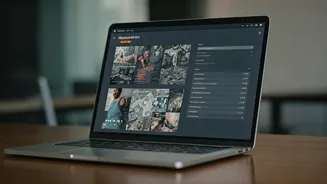
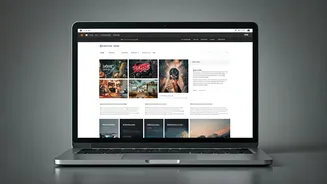
This is where a digital portfolio changes the game. A portfolio is a curated, online space that provides tangible evidence of your skills and accomplishments. For a writer, it’s a collection of published articles. For a developer, it's links to GitHub repositories and live projects. For a marketer, it’s case studies of successful campaigns with clear metrics. Even for roles that aren't traditionally 'creative,' a portfolio can showcase project management skills through a detailed project breakdown, or sales prowess through anonymized case studies of closed deals. It allows you to build a narrative around your career, demonstrating your process, your problem-solving abilities, and the real-world impact of your work. It transforms you from a list of qualifications into a living, breathing professional with a story to tell and results to prove it.
Anatomy of a Standout Portfolio
A great portfolio isn’t just a random collection of your work. It’s a strategic marketing tool. To be effective, it should be clean, easy to navigate, and focused on quality over quantity. Include a concise 'About Me' section that introduces you and your professional mission. Showcase your best 3-5 projects prominently. For each project, don't just show the final product; briefly explain the challenge, your role, the steps you took, and the outcome. This 'case study' approach is incredibly powerful. Where possible, include testimonials from clients or managers to add credibility. Finally, make it incredibly easy for someone to contact you. Your email, LinkedIn profile, and other relevant professional links should be impossible to miss. Remember, a recruiter might only spend a minute or two on your site, so make every second count.
Building Your Digital Home
Creating a portfolio might sound daunting, but it’s more accessible than ever. You don’t need to be a web designer. Platforms like Squarespace, Wix, and Carrd offer simple drag-and-drop templates to build a beautiful personal website in an afternoon. For specific fields, dedicated platforms are even better. Creatives can use Behance or Dribbble. Coders and developers have GitHub. Journalists and writers can use Contently or Muck Rack. Even a well-organized Google Drive folder with shareable links, or a polished LinkedIn profile that uses the 'Featured' section effectively, can act as a rudimentary portfolio. The key is to start. Choose a platform that feels comfortable, select your strongest work, and begin building. The goal is progress, not perfection.
Making It Work for You
Once your portfolio is live, it becomes an asset that works for you 24/7. But it only works if recruiters see it. Make sure to include a clear, clickable link to your portfolio at the top of your text resume, right next to your contact information. Add it to your LinkedIn profile header and email signature. When you network or speak with recruiters, your portfolio is the perfect thing to share. It gives them a reason to spend more time getting to know you and your work. While a text resume gets you in the door, a strong digital portfolio is what convinces the hiring manager to invite you to sit down and have a real conversation.