






The Basics of Exchange Rates
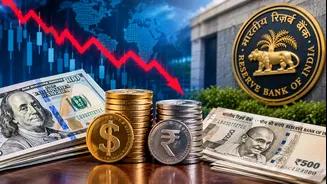
At its core, an exchange rate is simply the price of one country's currency in terms of another. When we say the Rupee is at 95 to the US dollar, it means you need ₹95 to buy $1. If this number goes up (e.g., to ₹97), the Rupee has 'weakened' or 'depreciated'
because you need more rupees to buy the same dollar. Conversely, if the number goes down (e.g., to ₹94), the Rupee has 'strengthened' or 'appreciated'. This price is not fixed; it fluctuates based on the daily demand and supply of currencies in the global foreign exchange (forex) market. Think of it like a marketplace where higher demand for a currency makes it more expensive, and lower demand makes it cheaper.
The Engine Room: Key Drivers of the Rupee
Several powerful forces influence the Rupee's value. The most significant is the dynamic of demand and supply for the US dollar. India is a major importer, especially of crude oil, and these imports must be paid for in dollars. When oil prices are high, India needs to buy more dollars, increasing dollar demand and putting downward pressure on the Rupee. Another critical factor is interest rates. When the Reserve Bank of India (RBI) raises interest rates, it can make holding rupees more attractive to foreign investors seeking higher returns, which can strengthen the currency. However, this is always relative to what other central banks, like the US Federal Reserve, are doing. Foreign investment flows are also crucial. When Foreign Portfolio Investors (FPIs) and Foreign Direct Investors (FDIs) invest in Indian markets, they buy rupees, boosting its value. When they pull money out, they sell rupees for dollars, weakening it. Finally, India's Current Account Deficit (CAD), which is the gap between the value of its imports and exports, plays a major role. A wider deficit means India is spending more foreign currency than it's earning, which typically weakens the Rupee.
The Rupee's Recent Performance
The Rupee has had a volatile 2026. After weakening past the 96 mark against the US dollar earlier in the year due to high crude oil prices and foreign investment outflows, it has seen a dramatic recovery in early October. As of October 13, 2026, the Rupee has strengthened to a four-week high, trading around 95.4 against the dollar. This sudden appreciation is largely due to decisive action from the Reserve Bank of India. The RBI recently announced a package of measures, including directly supplying US dollars to state-run oil companies, which are the largest buyers of dollars in the market. This move effectively reduced the daily demand for dollars on the open market, causing the Rupee to rally. This intervention came after the RBI also raised its key policy interest rate (the repo rate) to 5.50% on October 7, signalling a tough stance on inflation.
What This Means For You
The Rupee's performance is not just an economic headline; it directly impacts household finances. A weaker Rupee makes imported goods more expensive. This includes everything from electronics and gold to the crude oil that determines petrol and diesel prices. It also increases the cost of foreign education and international travel, as you need more rupees to cover fees and expenses priced in dollars or euros. Conversely, a strengthening Rupee, like the recent trend, can help ease some of this pressure, making imports and travel cheaper. For certain sectors, the exchange rate has a different effect. India's IT and software services exporters, who earn in dollars, benefit from a weaker Rupee because their foreign revenues translate into more rupees. A stronger Rupee, however, can squeeze their profit margins.