





As Diwali approaches, the familiar debate over firecrackers returns. Balancing festive traditions with health and safety requires knowing the rules. Here’s a guide to the national guidelines and city-specific regulations for a responsible celebration.
The National Rules of Play
Across India, a foundational set of rules governs the use of firecrackers, primarily established by the Supreme Court and environmental bodies. A general prohibition on bursting sound-emitting firecrackers is in effect between 10 PM and 6 AM. However, state governments can grant a limited exemption for festive occasions, often allowing use until midnight for a maximum of 15 days per year. The Supreme Court has consistently aimed for a balanced approach, ruling out both complete bans and unrestricted use. Ahead of Diwali 2026, the court reiterated this stance, indicating it would specify time limits and categories of permissible crackers rather than impose a blanket ban that could hurt public sentiment.
Decoding Decibel Limits
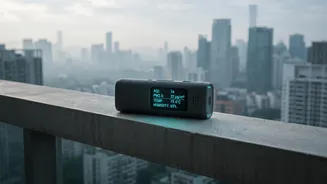
The core of noise regulation for firecrackers lies in decibel (dB) limits. According to the Environment (Protection) Rules, individual firecrackers cannot produce noise exceeding 125 decibels (dB) when measured from a distance of four metres. To put this in perspective, normal conversation is around 60 dB, while a loud rock concert can reach 120 dB. Sound at 125 dB is considered painful and can cause hearing damage, hence the measurement from a safe distance. For joined firecrackers, or 'laris', the noise limit is even stricter and is reduced based on the number of crackers in the chain. It's also illegal to burst crackers at any time in designated 'silence zones'—areas within 100 metres of hospitals, schools, and courts.
The Rise of Green Crackers
In recent years, 'green crackers' have become the recommended alternative to traditional fireworks. Developed by the Council of Scientific and Industrial Research (CSIR-NEERI), these are formulated to reduce particulate matter emissions by at least 30% and use fewer harmful chemicals like barium nitrate and aluminium. They are designed to be less polluting and have a lower noise level, typically capped between 110-125 dB. To be considered genuine, green crackers must be produced by a licensed manufacturer and feature a CSIR-NEERI logo and a QR code on the packaging. This code can be scanned to verify the cracker's authenticity and chemical composition, helping consumers avoid illegal and more polluting counterfeits.
City-Specific Bans and Restrictions
While national guidelines provide a framework, the final rules often come down to local administrations, especially in metro cities battling severe pollution. Delhi-NCR, for instance, frequently faces the strictest measures. While a final order for 2026 was pending a report from the Central Pollution Control Board (CPCB), the Supreme Court has indicated it would not impose a total ban but would regulate timings and types of crackers allowed. In Mumbai, the Bombay High Court has expressed alarm over rising pollution and banned the bursting of firecrackers on all public roads and streets. This ban is applicable yearround for all festivals, with strict enforcement mandated for civic and police authorities. Other cities also issue their own notifications, so it is crucial to check the latest rules from your local district authority or pollution control board before celebrating.
What About 'Laris' or Joined Crackers?
For years, joined firecrackers, commonly known as 'laris', were restricted due to the prolonged noise and smoke they generate. However, in a significant development for Diwali 2026, the Supreme Court has permitted the use of specified 'next generation' green joined crackers. This conditional relaxation applies only to products that conform to new formulations recommended by expert bodies like CSIR NEERI and PESO (Petroleum and Explosives Safety Organisation). These approved laris must be made by licensed manufacturers, comply with all noise and safety standards, and carry proper certification and traceability markings. This move signals a shift towards allowing more variety in celebrations, provided the products meet stringent environmental criteria.