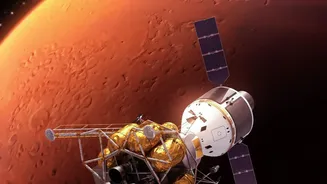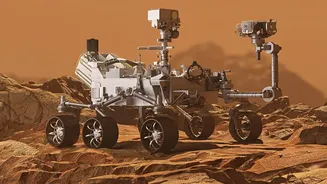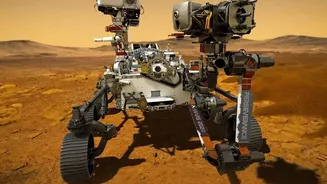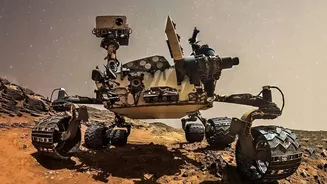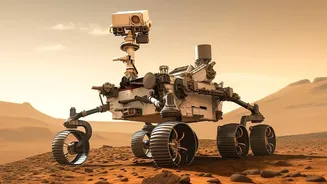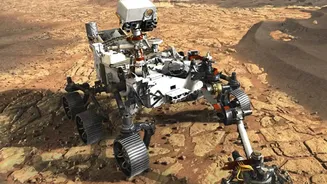



For years, NASA's Perseverance rover has been drilling and storing precious rock samples on Mars. Now, these tubes of Martian soil lie waiting for the most complex game of interplanetary fetch ever devised. But how do you get them home?
The Prize Waiting on Mars
Since its arrival
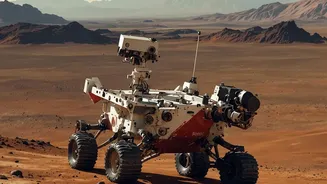
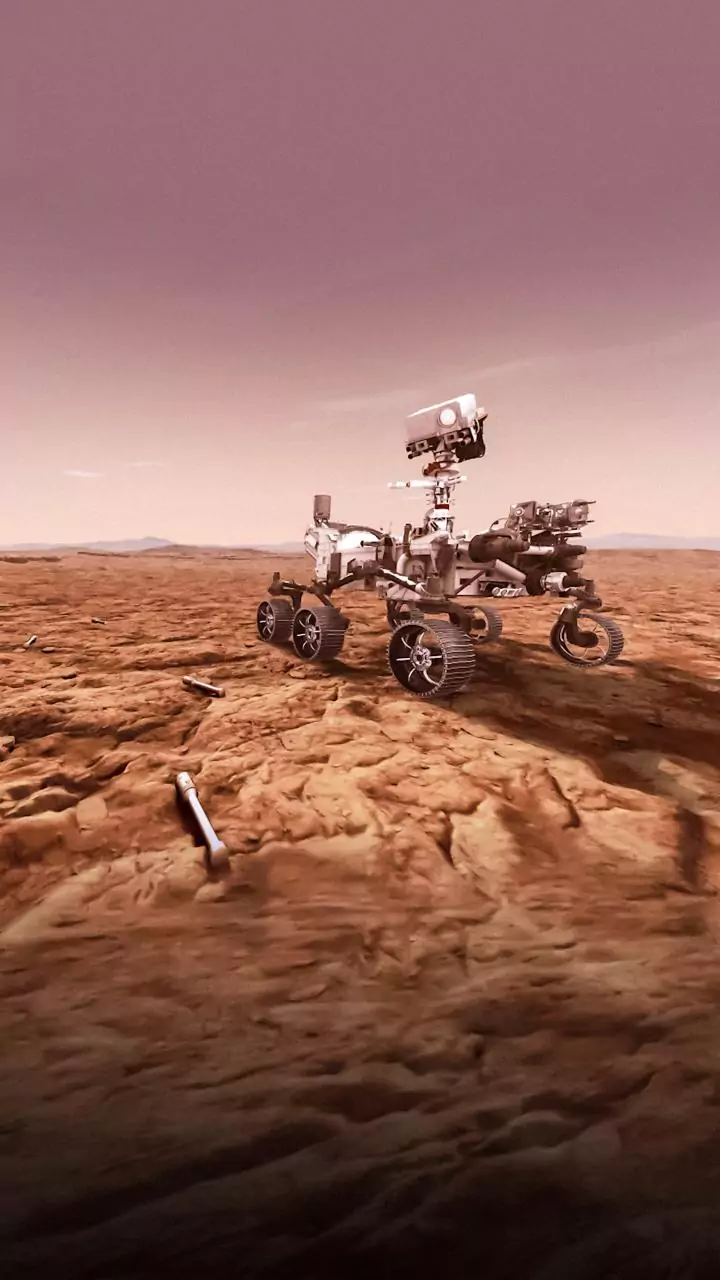
in 2021, the Perseverance rover has been diligently working in Jezero Crater, an area believed to have once hosted a river delta and a lake. It has collected dozens of carefully selected rock, soil, and even atmospheric samples, sealing them in titanium tubes. Some of these tubes are stored aboard the rover itself, while a backup depot of ten tubes has been strategically placed on the Martian surface at a location nicknamed 'Three Forks'. These samples are more than just rocks; they are time capsules that could hold the key to answering one of humanity’s biggest questions: was there ever life on Mars? Scientists believe that analyzing these samples in advanced laboratories on Earth is the only way to find definitive proof.
An Ambitious Plan Hits a Hurdle
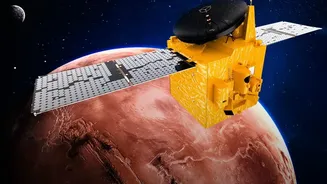
The original plan for the Mars Sample Return (MSR) mission, a joint effort with the European Space Agency (ESA), was a multi-stage marvel of engineering. It involved launching a Sample Retrieval Lander, which would deploy a small 'fetch' rover to collect the tubes. These samples would then be loaded onto a small rocket called the Mars Ascent Vehicle (MAV), launched into Martian orbit, and captured by an Earth Return Orbiter for the long journey home. However, independent reviews raised serious concerns. The estimated cost ballooned to as much as $11 billion, with a return date pushed back to 2040. For NASA, this was deemed too expensive and too slow.
Going Back to the Drawing Board
In response to the cost and timeline issues, NASA has initiated a fresh review. In early November 2026, the agency announced a new initiative called the Perseverance Sample Retrieval Architecture (PSRA). This effort aims to find a faster, cheaper, and less complex way to complete the mission, without sacrificing its core scientific goals. The PSRA team will kick off its work in January 2027, with the goal of presenting a new, streamlined strategy by the winter of 2027-2028. This reflects a major pivot, forcing engineers to rethink every step of this complicated interplanetary delivery service.
Simpler, Faster Options on the Table
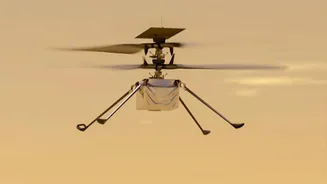
So, what might a revised mission look like? While final decisions won't be made until mid-2026, NASA is studying two main options for the lander. One involves an upgraded version of the proven 'sky crane' system that successfully landed both the Curiosity and Perseverance rovers. The other option is to solicit proposals from commercial companies for a heavy lander. A key part of the original complexity involved multiple vehicles. The new plan could see the Perseverance rover itself deliver its samples directly to the lander, eliminating the need for a separate fetch rover and helicopters, thereby simplifying the 'hand-off' on the Martian surface. The core challenge remains: landing a vehicle large enough to carry the Mars Ascent Vehicle, the rocket needed to blast the samples off the planet's surface.
The Race to Bring Mars Home
This rethink is not happening in a vacuum. China is also moving forward with its own ambitious Mars sample return mission, Tianwen-3, which aims to launch around 2028 and return samples to Earth by 2031. This adds an element of a modern-day space race to the equation. For NASA, the pressure is on to develop a workable plan that can bring its scientifically rich collection of samples back in a timely manner. The samples collected by Perseverance are from diverse geological locations within Jezero Crater, offering an unparalleled look into Mars' ancient, watery past. The scientific community eagerly awaits the chance to study them, hoping to unlock secrets that have been preserved for billions of years.