


New Evidence From the Shadows
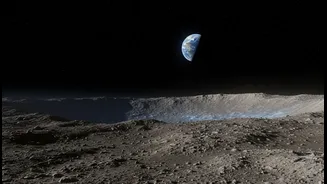
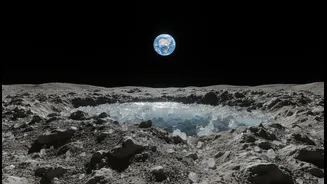
For years, scientists have known that water exists on the Moon, primarily as ice in permanently shadowed regions (PSRs) near the poles—craters so deep that sunlight has never touched their floors. However, the latest findings are providing a much clearer
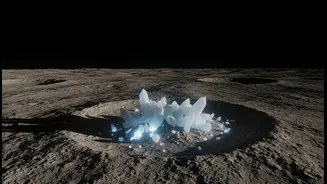
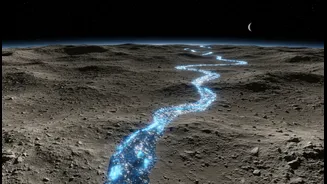
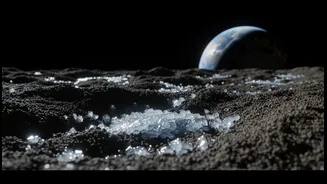
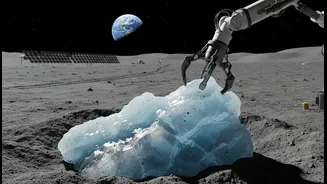
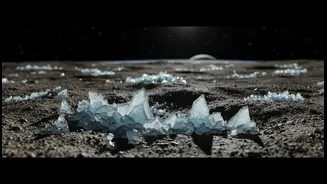
picture. Recent data from the Indian Space Research Organisation’s (ISRO) Chandrayaan-2 orbiter has delivered strong evidence of subsurface water ice. Using an advanced radar system, scientists were able to peer below the dusty lunar surface. The data revealed radar signatures consistent with buried ice in several craters near the Moon's south pole, suggesting these reserves are hidden and protected rather than just being a thin frost on the surface. This is a critical distinction, as buried ice is more likely to exist in larger, more stable quantities.
Why Buried Ice Is a Game-Changer
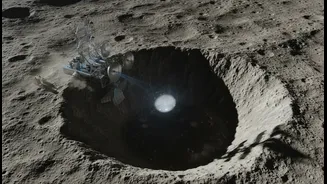
Finding water on the surface is one thing, but confirming deposits buried underground is a significant leap forward for mission planners. Surface ice is vulnerable to sublimation and the harsh space environment. Buried ice, however, is insulated by the lunar regolith (the Moon's soil), which could preserve it over geological timescales. The Chandrayaan-2 data specifically targeted "doubly shadowed craters"—areas that are not only permanently dark but are located inside other permanently shadowed craters, creating some of the coldest conditions in the solar system. Scientists believe these ultra-cold traps are ideal for preserving significant ice deposits. Identifying these potential reservoirs gives future missions, like NASA's Artemis program, specific targets for exploration and resource extraction.
The Ultimate Local Resource
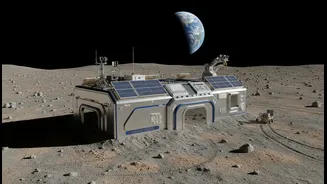
The logistical challenge of building a Moon base is immense, largely due to the incredible cost of launching materials from Earth. Water is especially heavy and expensive to transport. Having a local, accessible source of water ice on the Moon would fundamentally change the economics of lunar habitation. This ice isn't just for drinking. Through a process called electrolysis, water (H2O) can be split into its constituent elements: hydrogen and oxygen. This provides breathable air for astronauts and, crucially, the two key components of rocket propellant. A Moon base capable of producing its own air and fuel becomes vastly more self-sufficient and could serve as a refueling station for deeper space missions.
A Complicated Picture Emerges
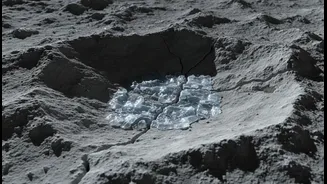
While the news about buried ice is promising, other recent studies have added a layer of complexity. Data from NASA's ShadowCam, an ultra-sensitive camera on the Korea Pathfinder Lunar Orbiter, suggests that widespread, thick sheets of surface ice may be less common than previously hoped. Instead, the surface ice that does exist appears to be in smaller, more isolated pockets or mixed in low concentrations with the lunar soil. This doesn't contradict the findings of buried ice but refines our understanding. It suggests that while there may not be vast, exposed glaciers for the taking, significant reserves are likely locked away underground. The task for future missions is to confirm the exact depth, purity, and distribution of these buried deposits.
The Next Steps: From Orbit to Ground
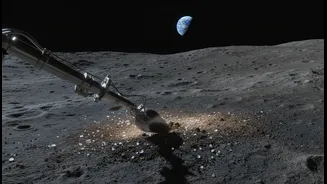
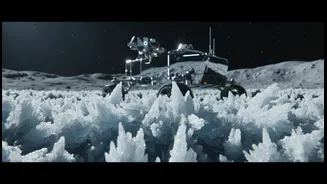
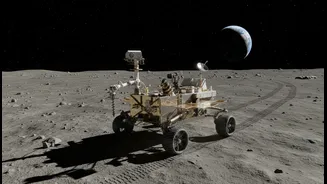
The scientific community is now focused on verifying these orbital clues with ground-based missions. NASA plans to send the Volatiles Investigating Polar Exploration Rover (VIPER) to the lunar south pole to map the concentration of water ice and other resources. This robotic mission will drill into the lunar soil to analyze samples directly, providing the "ground truth" needed to confirm the radar data. Furthermore, a joint mission between Japan's JAXA and India's ISRO, called LUPEX, will deploy a rover equipped with instruments, including a NASA neutron spectrometer, to search for signs of water. These missions are essential steps in turning promising clues into a reliable map of lunar resources, directly informing where to establish a permanent human outpost.