




A Visitor from the Deep Freeze
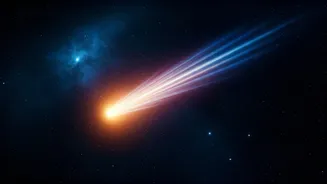
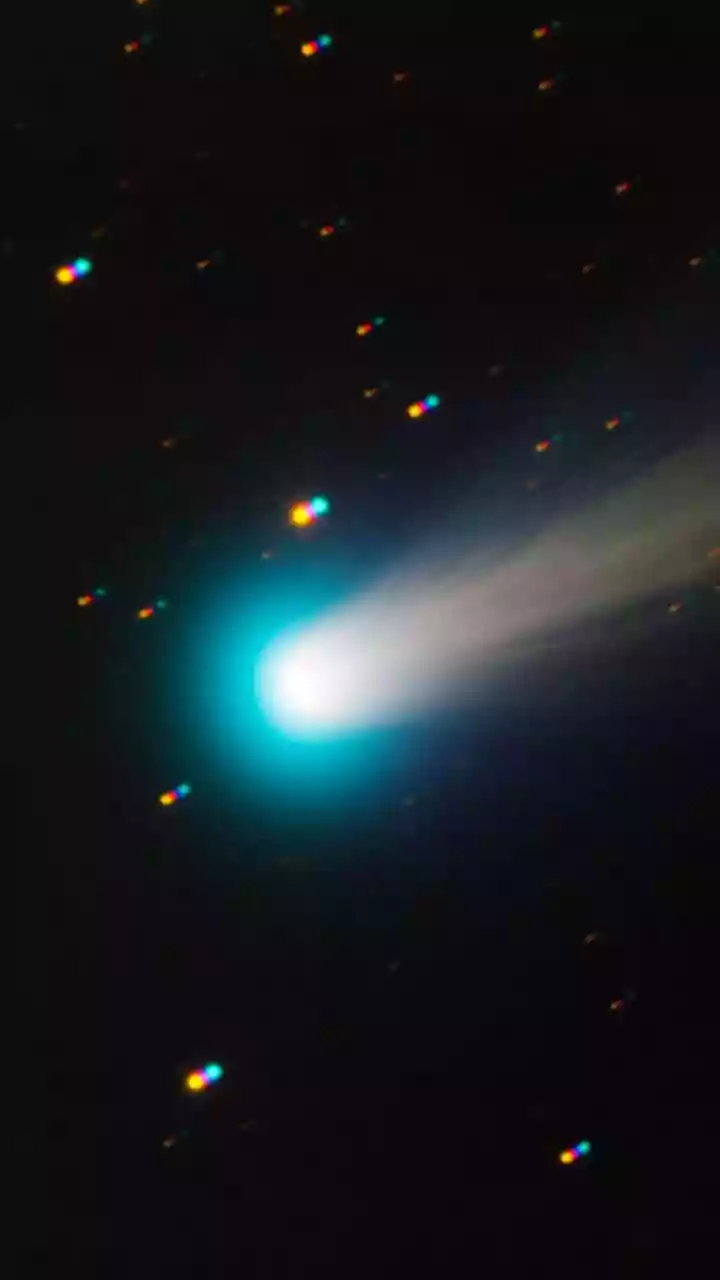
Astronomers have identified a new long-period comet, provisionally named C/2026 F3, on a journey that takes thousands of years to complete. Its path suggests it originated in the Oort Cloud, a theoretical sphere of icy bodies surrounding our solar system
at a vast distance. These objects are considered pristine relics from the time the planets were forming, roughly 4.6 billion years ago. Unlike planets and asteroids, which have been baked, transformed, and reshaped by geological activity and proximity to the Sun, Oort Cloud comets are like deep-frozen archives. They are thought to preserve the original chemical ingredients of the primordial cloud of gas and dust from which everything in our solar system, including ourselves, was born.
An Unexpected Chemical Signature
What makes C/2026 F3 so compelling is what it's made of. For decades, the prevailing theory has been that comets are essentially 'dirty snowballs'—a mix of water ice, frozen gases like carbon dioxide and carbon monoxide, and dust. But preliminary analysis of the light from C/2026 F3 reveals a composition that doesn't quite fit. It appears to be surprisingly rich in certain heavy metals and complex organic molecules that scientists previously thought could only form in the much warmer, inner regions of the early solar system. Finding them in a body that supposedly formed in the extreme cold of the outer solar system is like finding a tropical fish in an arctic sea.
Challenging the Solar Nebula Model
This discovery poses a direct challenge to the standard model of solar system formation. The Solar Nebula Hypothesis suggests that a vast, spinning disk of gas and dust collapsed under gravity to form the Sun at its centre. Closer to the Sun, where it was hot, rocky materials condensed to form the terrestrial planets like Earth and Mars. Farther out, in the colder regions, ices could survive, leading to the formation of gas giants and icy bodies like comets. This theory neatly explains the general distribution of materials we see today. However, if C/2026 F3 contains 'hot' materials, it implies that the early solar system was not as neatly organised as we believed. It suggests there may have been a much more chaotic and dynamic process of mixing, where materials formed near the proto-Sun were somehow flung out to the most distant reaches of the system.
The Implications for Life's Origins
The questions raised by this comet go beyond planetary science; they touch upon the origin of life itself. Comets are one of the leading candidates for having delivered water and essential organic compounds—the building blocks of life—to the early Earth. If the composition of comets is more varied and complex than we assumed, it could reshape our understanding of what ingredients were available on a young Earth. The presence of unexpected molecules in a pristine object like C/2026 F3 forces scientists to reconsider the chemical environment in which life on our planet may have begun. It opens up new possibilities for the types of prebiotic chemistry that could have taken place.
What Comes Next?
The scientific community is buzzing with excitement and a healthy dose of debate. As C/2026 F3 continues its journey through the inner solar system, astronomers around the world will be pointing every available telescope at it. Advanced spectrographs will break down its light to get a more precise reading of its chemical makeup. Space agencies are likely already exploring the feasibility of future missions designed to study such objects up close. The data gathered from this single comet could lead to a fundamental revision of textbooks. While its tail may fade as it travels away from the Sun, the questions it has raised will occupy scientists for years to come.