



A Foundation Built on Trust
The space relationship between India and the US is not new, with collaborations dating back decades. However, recent years have marked a significant acceleration. The U.S.-India initiative on Critical and Emerging Technology (iCET), recently rebranded
as TRUST (Transforming the Relationship Utilizing Strategic Technology), has firmly placed space at the center of the bilateral agenda. This framework aims to break down barriers to technology transfer and foster deeper partnerships. The successful launch of the NASA-ISRO Synthetic Aperture Radar (NISAR) satellite in 2025 serves as a powerful testament to this synergy. The $1.5 billion Earth-observation mission, which provides crucial data on climate change and natural disasters, is a model of what integrated teams from both nations can achieve.
To the Moon with the Artemis Accords
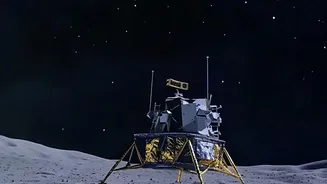
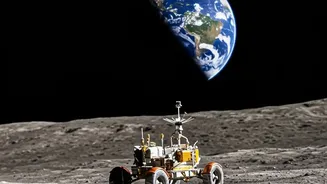
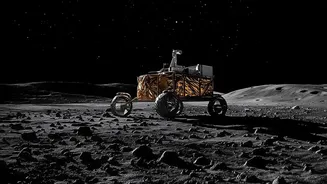
A pivotal moment in the partnership was India's decision to sign the Artemis Accords in 2023. These accords, led by the US, establish a set of principles for peaceful and transparent lunar exploration. By joining, India has positioned itself as a key player in humanity's return to the Moon. This has already led to concrete opportunities, including training for Indian astronauts at NASA's Johnson Space Center and plans for a joint mission to the International Space Station. More recently, in August 2026, NASA formally invited ISRO to participate in its Moon Base program, a planned lunar outpost near the South Pole. This aligns perfectly with India's own long-term goal of establishing a lunar presence by 2040 and sending an astronaut to the Moon.
The Commercial Space Boom
The future of space is not just in the hands of government agencies like NASA and ISRO. A thriving commercial space industry is a major area for expanded cooperation. The Indian Space Policy of 2023 formalized the role of the private sector, creating fertile ground for partnerships. Recognizing this, the US has actively promoted engagement between the two countries' private firms. In February 2026, a U.S. trade mission brought executives from 14 leading American space companies, including SpaceX and Amazon, to India to explore joint ventures and investment. The dialogue focuses on streamlining market access, procurement, and export controls, paving the way for Indian startups and US giants to collaborate on everything from satellite manufacturing to launch services.
Strategic Imperatives and Planetary Defense
Beyond science and commerce, the India-US space alliance has a strong strategic dimension. Both democratic nations see a shared interest in ensuring space remains a peaceful domain governed by international law, a view often seen as a counterbalance to the ambitions of other nations. High-level meetings between U.S. Space Command and Indian officials have focused on deepening interoperability and sharing data to improve space situational awareness—essentially, tracking the thousands of satellites and pieces of debris in orbit to prevent collisions and monitor potential threats. This cooperation extends to planetary defense, with both sides committed to working together to ensure the long-term sustainability of activities in outer space.