



The Science of the Smog
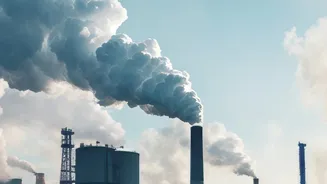
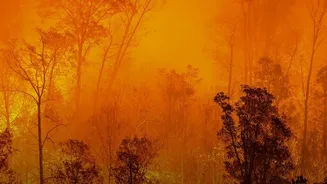
The air pollution that plagues the Indo-Gangetic Plain, especially from October to November, is characterized by a dramatic spike in fine particulate matter, or PM2.5. These microscopic particles are small enough to penetrate deep into the lungs and enter
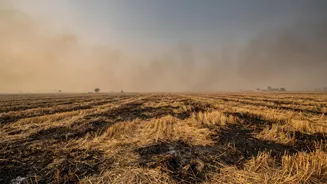
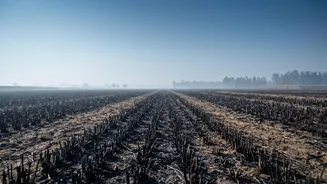
the bloodstream, posing severe health risks. Scientific studies have established a direct link between this pollution and agricultural fires in states like Punjab and Haryana. Using satellite data from agencies like NASA to track fire counts and employing atmospheric models, researchers can trace the path of smoke plumes. Studies indicate that during peak burning periods, the contribution of stubble burning to Delhi's PM2.5 can be substantial, with some estimates suggesting it can cause a 50-75% increase in concentration. The smoke is rich in harmful pollutants, including black carbon (soot), which not only deteriorates air quality but also has climatic effects.
A Farmer’s Economic Dilemma
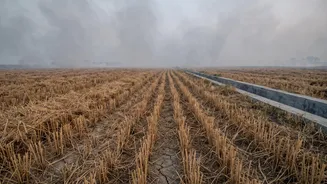
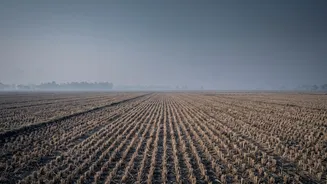
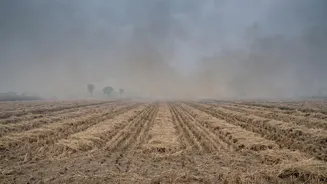
While it's easy to blame farmers, the reality is a complex economic issue. The problem is most acute after the paddy (rice) harvest. Farmers are left with a very short window, often just a couple of weeks, to clear their fields of leftover stubble before they must sow the next crop, typically wheat. Historically, this residue was removed manually, but labour has become more expensive and scarce. The use of combine harvesters, which are efficient at cutting the grain, leaves behind several inches of stalk. For many farmers, especially those with small landholdings, burning this residue is the quickest and most inexpensive way to prepare the land. The costs associated with alternative methods, such as using specialized machinery to manage the stubble, can be prohibitive, costing between ₹1,500 and ₹2,500 per acre. Rising diesel prices further discourage the use of these machines.
The Heavy Toll on Public Health
The consequences of this seasonal pollution are dire and widespread. Hospitals in North India report a significant surge in patients with respiratory distress, typically between 20-30%, during these months. The elderly and children are particularly vulnerable. Exposure to high levels of PM2.5 is linked to a host of health problems, including the worsening of asthma and chronic obstructive pulmonary disease (COPD), and an increased risk of heart attacks and strokes. Research suggests that long-term exposure can even lead to stunted lung growth in children, creating a generation at higher risk for chronic diseases later in life. One estimate from the International Food Policy Research Institute (IFPRI) places the annual economic and health costs of stubble burning-related air pollution at around $30 billion.
The Search for Lasting Solutions
Efforts to stop stubble burning have been underway for years, with mixed results. The government has promoted the use of subsidized machinery like the 'Happy Seeder', which can sow wheat seeds without needing to remove the paddy straw. The Crop Residue Management (CRM) scheme, launched in 2018, provides subsidies to farmers and custom hiring centers to make this equipment more accessible. Another solution is 'ex-situ' management, where the straw is collected and used for other purposes, such as fuel for biomass power plants or brick kilns. The Commission for Air Quality Management (CAQM) has even made it mandatory for many brick kilns to use paddy straw pellets as fuel. However, challenges in creating a robust supply chain and ensuring these alternatives are economically attractive for farmers remain significant hurdles.
Policy, Penalties, and the Path Forward
Alongside promoting alternatives, the government has also turned to penalties. Despite bans, enforcement has been difficult. To strengthen this, new draft rules proposed in September 2026 aim to introduce steeper fines based on land size, ranging from ₹5,000 to ₹30,000. A novel part of the proposal involves classifying fields where burning occurs into a “red category” in land records for 15 months, which could impact a farmer's eligibility for certain government schemes. Experts agree that a solution cannot rely on penalties alone. It requires a multi-pronged approach that includes making sustainable practices profitable for farmers, providing robust technological support, and creating a market for the agricultural residue that is currently seen as waste. The goal is to transform stubble from a liability into an asset, thereby aligning the economic interests of farmers with the environmental health of the entire region.