


A Threat from 150 Million Kilometres Away
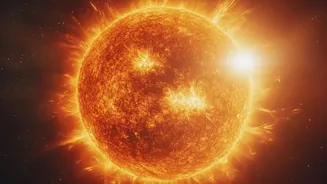
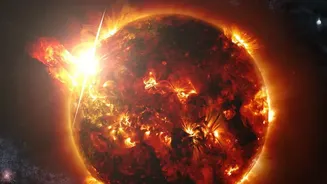
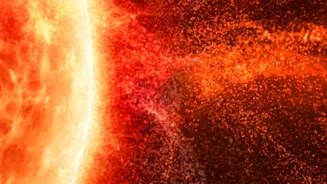
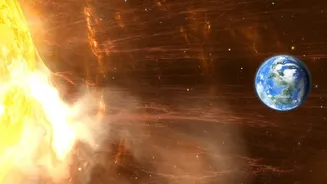
The primary threat comes from something called a Coronal Mass Ejection, or CME. Imagine the sun as a giant, boiling ball of plasma with intense, tangled magnetic fields. Sometimes, these fields snap and realign, violently throwing enormous clouds of plasma and magnetic particles
into space at incredible speeds. These are not small events; a single CME can contain billions of tonnes of matter. While many CMEs miss our planet entirely, a direct hit can have serious consequences for our technology-dependent world.
When Space Weather Reaches Earth
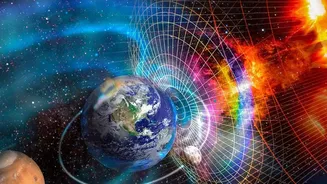
When a CME collides with Earth's magnetic field, it triggers a geomagnetic storm. This interaction compresses and shakes our planet's protective magnetic shield, generating spectacular auroras (the Northern and Southern Lights) but also inducing powerful electrical currents in the upper atmosphere and on the ground. These are known as geomagnetically induced currents, or GICs. For most of human history, these storms were harmless celestial light shows. But in a world connected by millions of kilometres of power lines, they represent a significant hazard.
The Power Grid’s Invisible Enemy
Power grids are designed to handle alternating current (AC). Geomagnetically induced currents, however, behave more like direct current (DC). When these quasi-DC currents flow from the ground into long transmission lines, they enter high-voltage transformers—the backbone of any electrical grid. This foreign current can push the transformer’s magnetic core into saturation, causing it to overheat, generate harmful harmonics, and consume massive amounts of reactive power. In a worst-case scenario, this can lead to permanent transformer damage and trigger a cascading collapse of the entire grid, as happened during the 1989 Quebec blackout which left millions without power for hours.
Fighting Fire with Forecasting
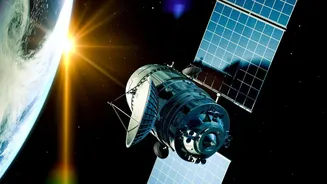
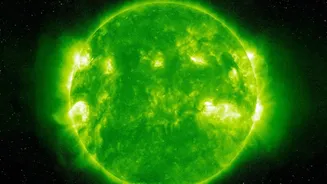
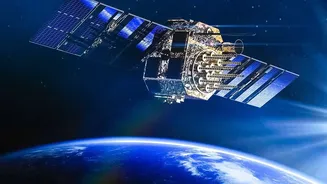
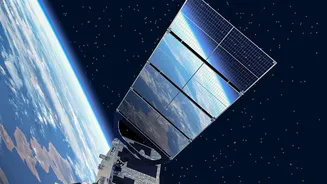
We cannot stop a CME, but we can prepare for its arrival. This is where simulation comes in. Using data from solar observatories like India’s Aditya-L1 mission, scientists can detect a CME shortly after it leaves the sun. Aditya-L1 is strategically positioned at a point 1.5 million kilometres from Earth, giving it an uninterrupted view of the sun and providing a crucial early warning—anywhere from 30 minutes to a couple of days—before a storm hits. This data on the CME's speed, density, and magnetic field is the crucial first input for predictive models.
Creating a Digital Twin of the Grid
Advanced simulation models like EUHFORIA and ENLIL take this solar data and project the CME's path through the solar system. As the storm gets closer, the models are refined with more data to predict the intensity and orientation of the geomagnetic disturbance. The next step is to apply this space weather forecast to a detailed digital model of the power grid itself. These sophisticated grid simulations calculate how and where GICs will flow, identifying which specific transformers and substations are at the highest risk of being overloaded.
From Simulation to Protective Action
Armed with this detailed forecast, power grid operators are no longer flying blind. Instead of reacting to a crisis, they can take proactive steps. Based on the simulation's results, they can strategically reduce the load on vulnerable transformers, reroute power across different lines, or temporarily take the most at-risk equipment offline until the storm passes. This ability to pinpoint vulnerabilities and take preventative action turns a potentially catastrophic natural disaster into a manageable operational event, significantly enhancing the resilience of our entire electrical infrastructure.