



The Official Process
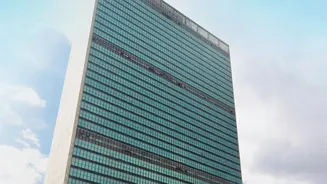
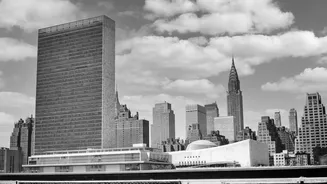
On paper, the process for choosing the world's top diplomat is straightforward. According to Article 97 of the UN Charter, the Secretary-General is appointed by the General Assembly upon the recommendation of the Security Council. This means the 15-member
Security Council first selects a single candidate. That name is then passed to the 193-member General Assembly for a final vote, which has historically been a ratification of the Council's choice. The current Secretary-General, António Guterres, will complete his second and final term on December 31, 2026, setting the stage for his successor to take office on January 1, 2027. The process formally began in late 2025, with member states invited to nominate candidates.
The P5 and the Veto
The real power lies not with the 15 members of the Security Council, but with its five permanent members (P5): China, France, Russia, the United Kingdom, and the United States. Each holds the power of veto over any 'substantive' resolution, which includes the recommendation of a Secretary-General. This means that for a candidate to succeed, they must secure at least nine affirmative votes in the Council, with no 'no' votes from any of the P5. An abstention from a P5 member does not count as a veto. This gives these five nations disproportionate influence, effectively ensuring that no one can lead the UN without at least their passive consent.
A Game of Straw Polls
To gauge support and identify potential vetoes without a formal vote, the Security Council uses a system of informal, secret 'straw polls'. In these polls, members cast ballots to 'encourage' or 'discourage' a candidate. Since 1991, the process has used colour-coded ballots to distinguish votes from permanent and non-permanent members. A 'discourage' vote on a red ballot from a P5 member signals a potential veto, often called the 'kiss of death' for a campaign. This behind-the-scenes process allows for political maneuvering and helps whittle down the field until a consensus candidate—one with at least nine 'encourage' votes and no P5 vetoes—emerges. The current 2026 selection has already seen numerous straw polls, with frontrunners struggling to avoid 'discourage' votes from P5 members.
A History of Political Hardball
History is filled with examples of the veto shaping the outcome. In 1950, the Soviet Union vetoed the reappointment of Trygve Lie, prompting the General Assembly to take the unprecedented step of extending his term without a Security Council recommendation. In 1981, a deadlock occurred when China vetoed Kurt Waldheim for a third term, and the United States vetoed Tanzania's Salim Ahmed Salim, eventually leading to the emergence of a compromise candidate. More famously, the US vetoed a second term for Boutros Boutros-Ghali in 1996, paving the way for Kofi Annan's selection. This history shows that the selection is less about finding the most qualified person and more about finding the least objectionable candidate to the world's most powerful nations.
The Race for 2027
As the selection process for the term beginning in 2027 unfolds, these power dynamics are on full display. The field of candidates includes several prominent figures, and for the first time, there is a strong push for a female Secretary-General after nine men have held the post. Candidates like Costa Rica's Rebeca Grynspan have performed well in early straw polls but have also attracted 'discourage' votes from P5 members, leaving the race deadlocked. The use of the veto, or the threat of it, is already frustrating the process, with some permanent members accused of blocking consensus to favor their own preferred candidates, potentially at the last minute. This highlights the central tension: finding a leader who can champion the UN's global mission while remaining acceptable to the divergent national interests of the P5.