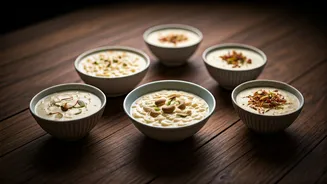



Nolen Gurer Payesh from West Bengal
A winter and monsoon specialty in Bengal, this payesh gets its soul from 'nolen gur' or date palm jaggery. [3] This seasonal jaggery imparts a uniquely smoky, caramel-like flavour and a beautiful brown hue that sets it apart from sugar-based kheers. [17]
It’s traditionally made with Gobindobhog rice, a short-grained, aromatic variety that cooks down to a creamy, luscious consistency in slowly reduced full-fat milk. [7] The focus is purely on the rich flavour of the milk and gur, so garnishes are often minimal, allowing the star ingredients to shine. [17] Its warm, earthy sweetness is the perfect antidote to a grey, rainy day.
Ada Pradhaman from Kerala
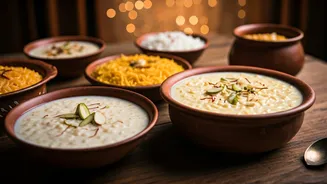
Hailing from 'God's Own Country', Ada Pradhaman is considered the king of payasams and a staple of the grand Onam sadya (feast). [4, 9] Unlike its milky North Indian cousins, this dessert's richness comes from a heavenly combination of coconut milk and jaggery. [12, 17] The 'ada', which are small, soft-cooked rice pasta flakes, are simmered in a dark, luscious jaggery syrup before being enriched with both thin and thick coconut milk. [9, 10] Fried coconut pieces, cashews, and raisins tossed in ghee add a delightful crunch and aroma, making each spoonful a complex and satisfying experience. [16]
Kong Phirin from Kashmir
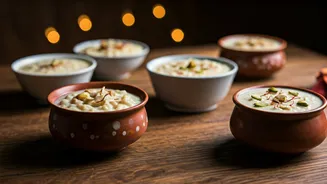
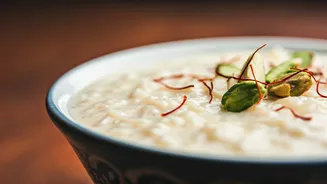
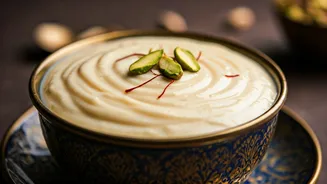
From the valleys of Kashmir comes a phirni with a delightful twist. While most phirnis use ground rice, Kong Phirin is made with semolina (suji/rava), which gives it a distinct, slightly granular yet incredibly creamy texture. [5, 22] Its name comes from 'kong,' the Kashmiri word for saffron, the star ingredient that infuses the pudding with a gorgeous yellow colour and an unmistakable, luxurious aroma. [5, 8] Cooked slowly in milk and flavoured with cardamom, this dessert is traditionally set in earthen bowls ('kulhads'), which absorb excess moisture, making it thicker and creamier. [5, 22] Though often served chilled, a warm bowl is pure comfort during a cool, rainy evening.
Sheer Khurma from across India
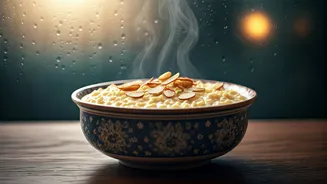
While strongly associated with Eid celebrations, Sheer Khurma is a comforting dessert perfect for any special occasion, including a cozy monsoon gathering. [6] The name, of Persian origin, translates to “milk with dates.” [19, 21] This festive pudding is made with fine vermicelli (seviyan) roasted in ghee, then simmered in milk with an assortment of chopped dates, pistachios, almonds, and cashews. [6, 19] The dates soften and dissolve into the milk, lending a natural sweetness and chewy texture. [15] Delicately spiced with cardamom and sometimes a hint of rose water, this rich and nutty kheer is often served warm, making it a wonderfully festive and heartwarming treat. [6, 21]
Chhena Poda from Odisha
A unique entry on this list, Chhena Poda from Odisha literally means “burnt cheese.” [26] It's less of a liquid kheer and more of a baked cheesecake, but its origins and core ingredient—fresh, soft cheese (chhena)—place it firmly in the family of milk-based sweets. Well-kneaded chhena is mixed with sugar, semolina, and often cardamom, nuts, and raisins. [24, 25] It is then baked for several hours until the outside caramelises into a deep, dark brown crust while the inside remains soft and spongy. [26] This delicious contrast of a slightly bitter, caramelised crust and a sweet, moist interior makes it an unforgettable dessert. [24]