




The Usual Suspects
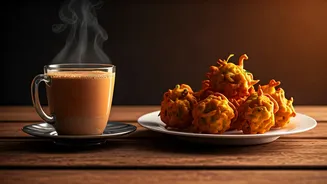
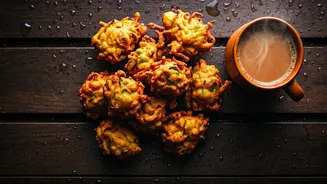
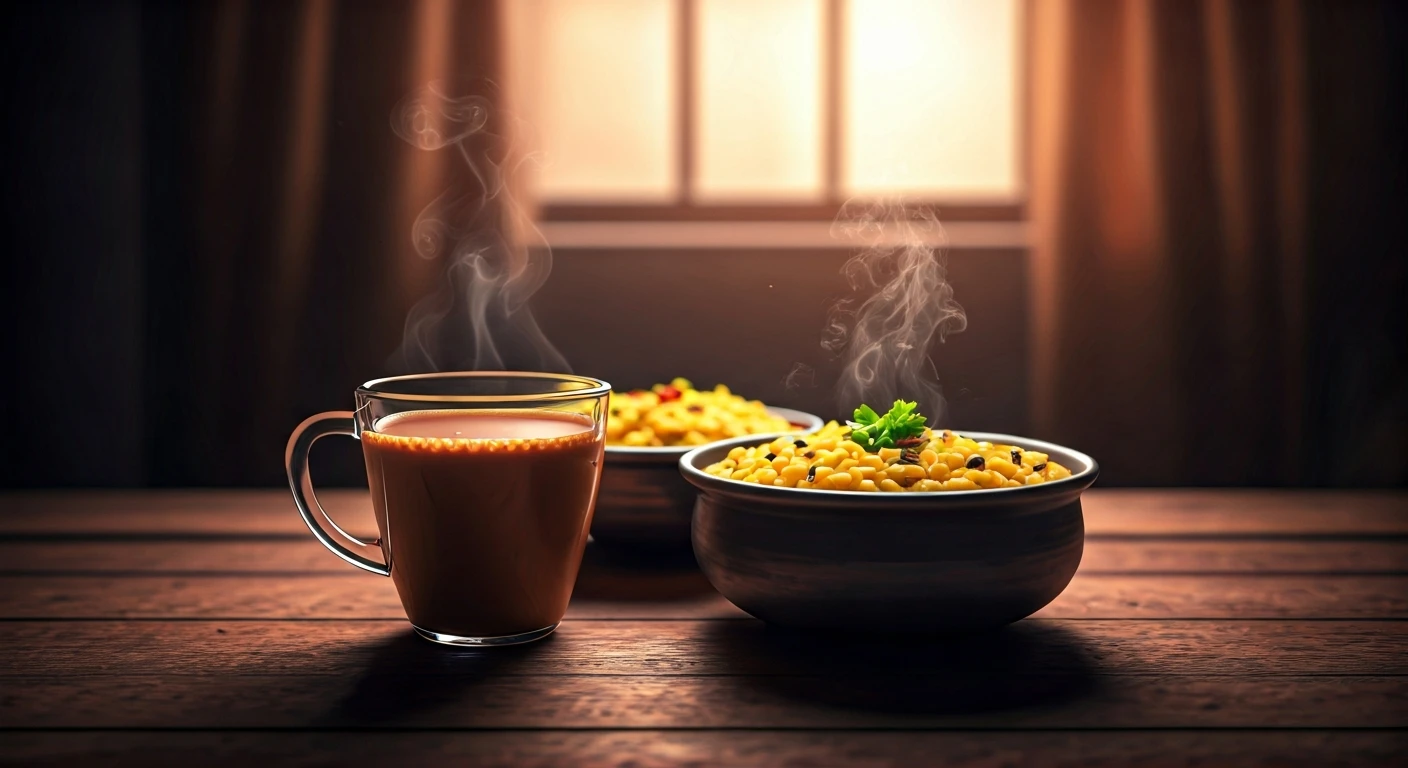
When the skies turn grey and the first raindrops hit the pavement, a universal signal is sent to kitchens across the country. It’s time for the fried and the flavourful. The immediate contenders for the monsoon’s most-loved food are, of course, pakoras.
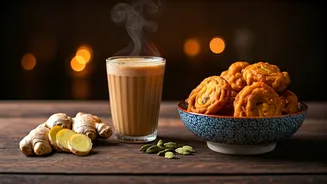
Whether it’s onion, potato, or paneer, these deep-fried fritters, paired with a cup of adrak wali chai, are a knee-jerk reaction to a downpour. Close behind are their cousins, the samosa and the kachori, golden pockets of savoury goodness that offer a satisfying crunch against the soft sound of rain. And let’s not forget the street-side bhutta, roasted corn on the cob rubbed with salt, chilli, and lime, its smoky aroma mingling with the smell of wet earth. These are not just snacks; they are traditions, edible rituals that mark the season’s arrival. But are they a meal? Can they truly be the one thing everyone agrees on? While universally loved, they are often the opening act, not the main event.
The Science of Rainy Day Cravings
There’s a reason we gravitate towards these specific foods. The drop in temperature and reduced sunlight during the monsoon can affect our mood, making us seek out 'comfort foods' that are warm, rich, and often associated with positive memories. Traditionally, Ayurvedic wisdom advises against heavy, hard-to-digest foods during this season, as the dampness is believed to weaken our digestive fire (agni). Instead, it recommends warm, lightly spiced, and easily digestible meals. This is where the pakora-and-chai combination hits a snag. While emotionally comforting, a plateful of fried food can feel heavy. Our bodies instinctively crave nourishment that is both comforting and sustaining, something that warms us from the inside out without weighing us down. The perfect monsoon meal needs to check all these boxes: it must be warm, easy on the stomach, emotionally satisfying, and nutritionally complete.
Enter the True Champion: Khichdi
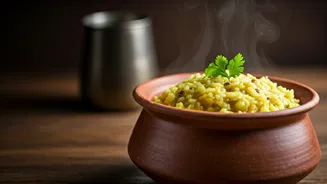
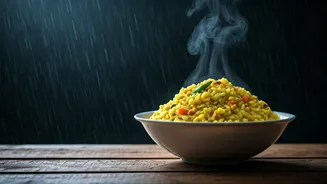
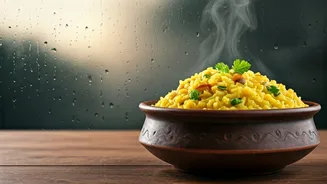
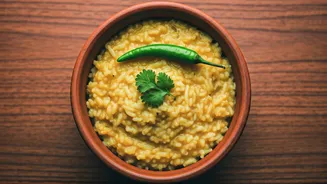
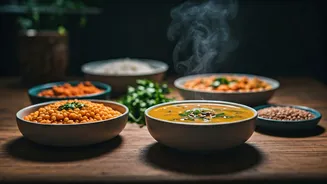
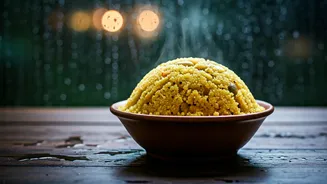
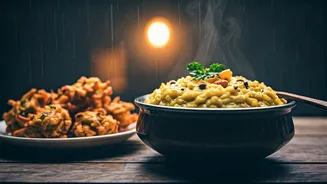
Here, stepping quietly out of the shadows, is the humble khichdi. It may not have the glamour of a crispy samosa or the street-cred of a bhutta, but it possesses a deeper, more universal appeal. At its core, khichdi is a simple porridge of rice and lentils, but to call it just that is to do it a great disservice. It is a canvas, a foundational dish that exists in countless variations across every region of India. This very adaptability is its superpower. While the claim that 'everyone' can agree on one meal is a tall order in a country as diverse as India, khichdi comes closer than any other dish. It’s the food we eat when we’re sick, the first solid food many of us ate as babies, and the comforting meal we return to after a long journey. Its association with comfort is ingrained in our collective culinary DNA.
A Dish with a Thousand Faces
The genius of khichdi is that it’s never just one thing. In Bengal, the bhoger khichuri is a celebratory dish made with roasted moong dal and gobindobhog rice, rich with ghee and spices, often served during pujas. In Gujarat, the vaghareli khichdi is a flavourful everyday meal, tempered with mustard seeds, cumin, and curry leaves, served with a dollop of yoghurt. In the South, its close cousin, pongal, comes in both savoury (ven pongal) and sweet (sakkarai pongal) forms. In North India, a simple moong dal khichdi is the go-to remedy for an upset stomach. It can be made with a medley of vegetables for a wholesome one-pot meal or kept starkly simple. This inherent flexibility means there is a khichdi for every palate, every mood, and every occasion. It accommodates, it adapts, it comforts. It doesn’t demand a single, rigid identity, which is why almost everyone can find a version to love.
The Unbeatable One-Pot Wonder
Beyond its versatility, khichdi is the perfect monsoon meal for practical reasons. It's a one-pot dish, meaning less work and cleanup on a lazy, rainy day. The combination of rice and lentils provides a complete protein profile, making it incredibly nourishing. It’s warm and easy to digest, perfectly aligning with Ayurvedic principles for monsoon wellness. And it is the ultimate vehicle for accompaniments. A simple bowl of khichdi can be elevated into a feast with its ‘four friends’: ghee (for richness), dahi (for tang), papad (for crunch), and achaar (for a spicy kick). This quartet turns a simple meal into a symphony of textures and flavours. It's a dish that asks for nothing but gives everything—warmth, nutrition, comfort, and a deep sense of well-being.