





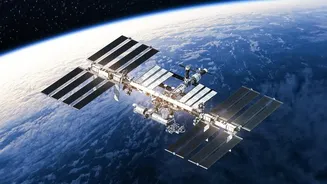
The Closed-Loop Imperative
On Earth, our planet's vast ecosystems naturally recycle the air we breathe. Plants absorb the carbon dioxide (CO2) we exhale and produce the oxygen we need. In the confined quarters of a space station, however, this vital process must be replicated artificially.
Relying solely on oxygen tanks launched from Earth is unsustainable for long-duration missions. It's expensive, takes up valuable cargo space, and creates a logistical dependency that would make future deep-space exploration to places like Mars impossible. The solution is a suite of technologies known as the Environmental Control and Life Support System (ECLSS). This complex system is designed to create a 'closed loop,' where waste products from the crew are recycled into life-sustaining resources, including breathable air.
Step 1: Capturing Carbon Dioxide
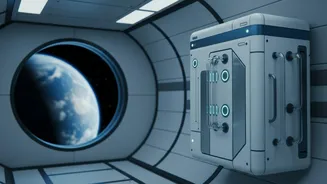
The first step in refreshing the station’s atmosphere is to remove the CO2 that astronauts exhale. On the ISS, this job primarily falls to the Carbon Dioxide Removal Assembly (CDRA). This system draws cabin air and passes it through beds containing a porous, crystalline material called zeolite. These zeolite beds act like a molecular sieve, trapping CO2 molecules while allowing oxygen and nitrogen to pass through. The system operates in cycles; while one set of beds is actively scrubbing CO2 from the air, another set is exposed to the vacuum of space, which vents the captured CO2 and effectively 'cleans' the filter beds so they can be reused. This regenerative process ensures the system can operate continuously without needing constant replacement parts from Earth.
Step 2: From Waste Gas to Water
Simply venting all the captured CO2 into space would be a waste of precious oxygen atoms. This is where a clever piece of chemical engineering, the Sabatier system, comes into play. This system takes the captured carbon dioxide and reacts it with hydrogen, which is a byproduct from the station's oxygen generation process. In the presence of a catalyst, this reaction produces two vital substances: water (H2O) and methane (CH4). The methane is considered a waste product and is vented into space, but the water is a crucial resource. By converting a waste gas into water, the Sabatier system essentially reclaims oxygen atoms that would have otherwise been lost, significantly closing the life support loop.
Step 3: Creating Oxygen Through Electrolysis
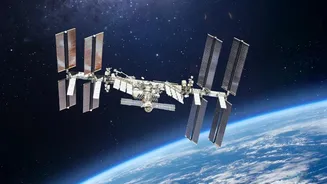
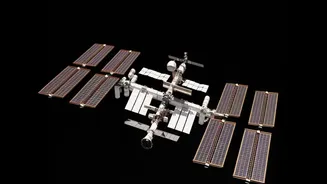
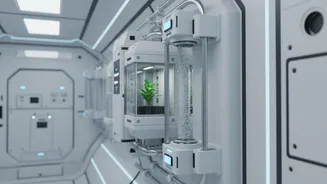
The final, and most critical, step is generating fresh oxygen. This is accomplished by the Oxygen Generation System (OGS). The OGS takes the water produced by the Sabatier system, along with recycled wastewater from the crew (including from humidity and even urine), and splits it into its constituent parts using a process called electrolysis. An electrical current, supplied by the station's large solar arrays, is passed through the water. This separates the water molecules (H2O) into breathable oxygen and hydrogen gas. The oxygen is released directly into the cabin atmosphere for the crew to breathe. The hydrogen, as mentioned earlier, is sent back to the Sabatier system to be used in converting more CO2 into water, creating a highly efficient cycle.
A System of Redundancies
The ECLSS is a marvel of engineering, but it's not foolproof. The systems have faced challenges and require maintenance over the years. To ensure crew safety, multiple backup systems are in place. The Russian segment of the ISS has its own oxygen-generating system called Elektron, which also uses electrolysis. In a more critical failure, the station has stores of pressurized oxygen tanks that can be released into the atmosphere. For absolute emergencies, there are Solid Fuel Oxygen Generation (SFOG) canisters, sometimes called 'oxygen candles'. When burned, these canisters of solid lithium perchlorate release a steady supply of oxygen, ensuring the crew has breathable air under any circumstance.