
Beyond the Name and Date
Properly labeling your frozen meals is about more than just identifying that chili from three weeks ago. It's the key to preventing food waste, ensuring a delicious outcome, and saving precious mental energy on a busy weeknight. When you open the freezer,
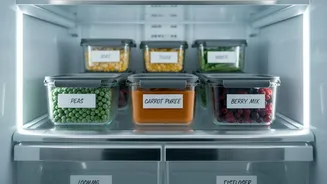
you want a solution, not a puzzle. The most common meal prep mistake is not labeling at all, leading to a game of 'freezer roulette' where you might defrost soup thinking it's a stew. By including the dish name, the date it was frozen, and the number of portions, you create an organized system that helps you use older items first. This simple habit preserves the quality of your food, making sure you enjoy it at its best.
The Magic is in the Method
The single most overlooked detail on a freezer label is the reheating or finishing instructions. Your future self, tired after a long day, will not want to look up a recipe to remember the correct oven temperature or cooking time. This is where you transform a good idea into a great one. The label becomes your personal cheat sheet for a perfect meal. Think of it as the difference between just warming something up and truly finishing the dish. A simple note like “Thaw overnight, then bake at 180°C for 25 minutes” is infinitely more helpful than a label that just says “Lasagna.” It removes all friction between a frozen block and a hot, delicious dinner.
What to Write for Perfect Reheating
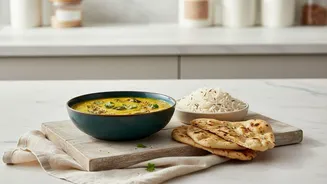
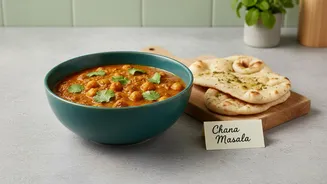
Your reheating notes should be clear, concise, and specific to the dish. Vague instructions lead to disappointing results, like rubbery chicken or soggy vegetables. For best results, include the method, temperature, and time. For a soup or stew, the instructions might be: “Reheat on stovetop over medium heat, stirring occasionally, until simmering.” For a casserole: “From frozen, cover with foil and bake at 175°C for 40 minutes. Remove foil and bake for another 10 minutes until golden.” Also, consider adding a 'finishing note' for that extra touch. This could be something like, “Garnish with fresh coriander before serving” or “Serve with a dollop of sour cream.” These small details elevate a reheated meal from merely convenient to genuinely enjoyable.
Choosing Your Labeling Tools
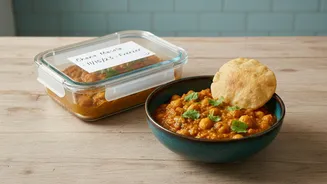
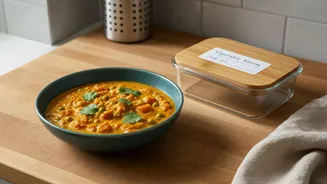
You don't need a fancy system to label your meals effectively. Many professional kitchens rely on the simple combination of masking tape and a permanent marker. Masking tape sticks well in the freezer but peels off cleanly without leaving residue, and you can write on it easily. For glass or reusable plastic containers, a permanent marker can often be used to write directly on the lid and can be removed later with rubbing alcohol. Freezer-specific labels are also available and are designed to withstand low temperatures and moisture. Whatever tool you choose, the key is to label the container before you fill it or while the contents are still at room temperature for the best results.
Common Mistakes to Avoid
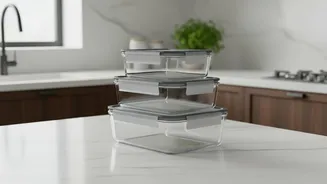
A few common errors can undermine your best meal-prepping efforts. First, always let cooked food cool down before freezing it; placing hot food in the freezer can create condensation and affect the texture of your meal. Second, don't overfill your containers. Liquids and foods expand when frozen, which can pop the lid off and lead to freezer burn. Finally, use the right containers. Make sure they are freezer-safe, and if you plan to microwave the contents, ensure they are microwave-safe as well to avoid messes and potential chemical leaching. By avoiding these pitfalls, you ensure your carefully prepped meals remain safe and delicious.