






The Twin Burdens: Fuel and Water
Across Maharashtra's agricultural heartlands, farming has become increasingly dependent on machines. From tractors for tilling to pumps for irrigation, diesel is the lifeblood of modern cultivation. This reliance, however, makes farmers incredibly vulnerable.
Rising fuel prices and supply shortages can dramatically inflate operational costs, with expenses for ploughing and tilling surging in a single season. A farmer might spend a significant amount just to acquire diesel, sometimes travelling long distances only to find limited stock. Compounding this is the challenge of water. Conventional irrigation methods like flooding fields can be inefficient, leading to significant water loss through evaporation and runoff, a critical issue in a water-stressed region. This dual pressure of high energy costs and inefficient water use puts a constant strain on farm incomes.
How Solar Drip Technology Works
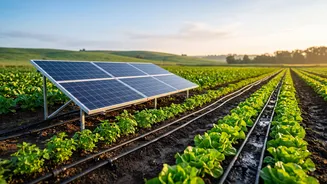
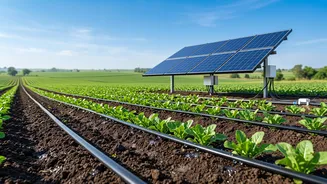
Solar drip technology tackles both problems at once by merging two smart solutions: solar-powered pumps and drip irrigation networks. The system begins with photovoltaic (PV) solar panels that capture sunlight and convert it into electricity. This clean energy powers a water pump, which draws water from a source like a borewell, river, or storage tank. Instead of flooding a field, this water is directed into a network of pipes and tubes that run along the crop rows. Small emitters placed near each plant release water slowly and directly to the root zone. This precision delivery system is incredibly efficient, minimizing water loss and ensuring that every drop is used effectively. The entire setup operates independently of the electrical grid and fossil fuels, giving farmers control over their energy and water supply.
A Revolution in Farm Economics
The most immediate impact of adopting solar drip irrigation is the drastic reduction in operational costs. Once the system is installed, the energy from the sun is free, eliminating the recurring daily or weekly expense of diesel fuel. This shift from a variable expense to a one-time capital investment provides farmers with financial stability and insulates them from fuel price volatility. In places like Palghar district, the introduction of shared solar pumps has transformed local agriculture, enabling year-round cultivation and reducing the need for seasonal migration to cities for work. Government initiatives like the PM-KUSUM scheme are crucial in making this technology accessible. The scheme provides significant subsidies, often covering 30% from the central government and 30% from the state, requiring the farmer to bear only a fraction of the initial cost, which can often be financed.
More Than Just Money Saved
The benefits of solar drip systems extend far beyond the balance sheet. By delivering water directly to the roots, drip irrigation can reduce water consumption by 30-50% compared to conventional methods. This not only conserves a precious resource but also improves plant health, as the targeted watering discourages weed growth and reduces the risk of fungal diseases caused by excess moisture on leaves. Farmers often report better crop yields and quality due to the consistent and timely watering schedules, which are no longer tied to grid power availability or fuel budgets. Environmentally, the shift away from diesel pumps means a significant reduction in carbon emissions and air pollution. It empowers farmers to practice a more sustainable form of agriculture that is resilient to both climate and economic shocks.
Challenges and the Path Forward
Despite the clear advantages, the widespread adoption of solar drip technology faces some hurdles. The primary challenge is the high upfront investment. Even with subsidies, the initial cost can be a barrier for small and marginal farmers. A lack of awareness and a shortage of trained technicians for installation and maintenance in remote areas can also slow down adoption. However, the momentum is undeniable. Maharashtra has emerged as a leader in this transition, even setting world records for the number of solar pumps installed in a short period. As government support continues through schemes like PM-KUSUM, which has been extended until March 2026, and as financing models become more accessible, this technology is poised to become a cornerstone of modern Indian agriculture.