






Beyond Delays: The Real Dangers of a Rainy Commute
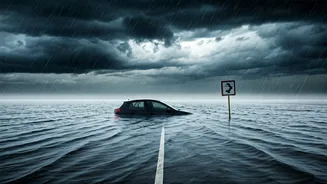
For many Indians, a heavy downpour means more than just traffic jams and cancelled plans. It poses significant safety risks that are often underestimated. Urban flooding turns roads into murky canals, hiding deep potholes, open manholes, and debris that can cause
serious accidents for both two-wheelers and cars. [13, 33] Waterlogged streets also increase the risk of vehicle breakdowns and hydroplaning, where tyres lose their grip on wet surfaces, leading to loss of control. [14, 35] Furthermore, the danger isn't just on the ground. Heavy rains and winds can lead to falling trees or branches and, more perilously, downed power lines, creating a risk of electrocution in flooded areas. [13, 36] These hazards transform a routine journey into a high-stakes obstacle course, where being unprepared can have severe consequences.
Decoding the IMD's Colour-Coded Warnings
The India Meteorological Department (IMD) uses a colour-coded system to warn citizens about impending weather events, and knowing what each colour means is the first step to a safer commute. [9, 15] These alerts are issued for districts and are valid for up to five days. [5] * **Green (No Advisory):** This indicates normal weather conditions. No action is needed. [16] * **Yellow (Be Aware):** A yellow alert signals the possibility of severe weather that could affect daily activities. It serves as a heads-up to stay updated, as conditions might worsen. [9, 16] For commuters, this is a cue to start monitoring their route and expect potential minor delays. * **Orange (Be Prepared):** An orange alert is issued for weather conditions that have the potential to cause significant disruption. This includes heavy to very heavy rainfall (115.6 mm to 204.4 mm in 24 hours), which can lead to traffic congestion and waterlogging. [15, 16] Commuters should be prepared for major travel disruptions and consider altering their plans, such as leaving earlier or working from home if possible. [11] * **Red (Take Action):** This is the highest level of warning, indicating a forecast of extremely heavy rainfall (over 204.5 mm) that poses a serious risk to life and property. [18] A red alert suggests that transportation and power supply could be severely interrupted. Non-essential travel should be avoided. [16]
Your Digital Toolkit for Weather Preparedness
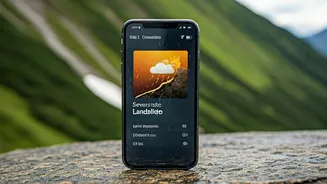
Arming yourself with the right digital tools can make all the difference. The most crucial app for Indian users is the government's official **MAUSAM** app from the IMD. [5, 23] Developed jointly by several Indian institutes, it provides district-wise colour-coded alerts, city forecasts for over 450 cities, and three-hourly 'nowcasts' for localized weather phenomena. [5, 6, 17] Its data is based on Indian climate models, often making it more accurate for local conditions than global apps. [6] Other highly-rated and reliable apps include **AccuWeather**, known for its MinuteCast feature that provides minute-by-minute precipitation forecasts, and **WeatherBug**, which offers real-time lightning alerts. [7, 30] Apps like **Windy** are also popular for their detailed visual maps showing wind, rain, and pressure systems. [25] Using one or a combination of these can provide a comprehensive picture of what to expect before and during your commute. [19]
From Information to Action: A Pre-Commute Checklist
Checking the forecast is only half the battle; the next step is to act on that information. Before you leave home on a day with a Yellow alert or higher, run through this simple checklist: 1. **Check Multiple Sources:** Look at the MAUSAM app for official warnings and cross-reference with another app like AccuWeather for granular, short-term predictions. [19] 2. **Plan and Inform:** If heavy rain is predicted, identify potential waterlogging spots on your usual route and plan an alternative. It's also wise to inform a family member or colleague of your route and expected travel time. 3. **Vehicle Readiness:** A pre-monsoon check-up is vital. Ensure your vehicle's tyres have adequate tread, brakes are working perfectly, and windscreen wipers are effective. [14, 22] For car owners, make sure the defogger is functional to maintain visibility. [14] 4. **Pack an Emergency Kit:** Keep a waterproof bag with a power bank, a small towel, and some drinking water in your vehicle or backpack. [22] An emergency kit is crucial in case you are stranded for an extended period. [14] 5. **Leave with a Buffer:** Monsoon traffic is notoriously slow. Add at least 30-60 minutes to your usual travel time to avoid the stress of running late. [19, 34]
Navigating the Roads Safely in Heavy Rain
Once you are on the road, your driving behaviour needs to adapt to the conditions. The most important rule is to reduce your speed. [14] Wet roads significantly increase braking distances, and slowing down gives you more time to react to unexpected hazards. [22] Maintain a greater distance from the vehicle in front of you. [14] Always keep your headlights on, even during the day, to improve your visibility to others. [14] Be extremely cautious of waterlogged underpasses and streets; it's impossible to know their depth or what hazards lie beneath. If you can't see the road surface, it is safer to find another route. [21] Motorcyclists should be especially vigilant for slippery patches and potholes. Finally, never try to drive or walk near downed power lines or overflowing electrical boxes. [21, 36]