




What Are We Actually Looking For?
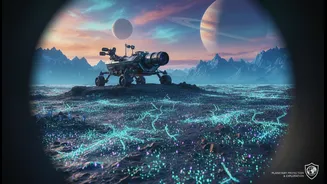
For decades, the hunt for life beyond Earth has revolved around finding “biosignatures.” These are any substances, objects, or patterns that suggest the presence of life. Think of them as cosmic fingerprints. On Earth, the oxygen in our atmosphere, produced
overwhelmingly by photosynthesis, is a classic example. Similarly, the presence of complex organic molecules like amino acids—the building blocks of proteins—or specific types of lipids found in cell membranes are considered strong indicators. The basic idea is that life reorganizes its environment in detectable ways. Finding these tell-tale signs on another planet or moon has been the primary goal of astrobiology.
The Problem of the Great Imposters
The challenge is that nature is full of imposters. Many chemical and geological processes that have nothing to do with life can create substances that look suspiciously like biosignatures. These are known as “false positives.” For instance, oxygen can be produced abiotically (without life) through various chemical reactions. Methane, another gas associated with life on Earth, can also be generated by geological activity. This is the core problem facing future missions: an instrument might detect a molecule we associate with life, but we could be completely misinterpreting its origin. This risk of being fooled by non-biological chemistry is forcing a major rethink in how we plan to search for life.
A New Playbook for Life Detection
To counter this, scientists are developing a more sophisticated playbook. Instead of searching for a single “smoking gun” molecule, the new approach emphasizes context and complexity. One strategy is to look for patterns that are hard to explain without biology. For example, life on Earth exclusively uses left-handed amino acids. Finding a strong preference for one handedness in a sample from another world would be a powerful sign. Another approach is to analyze the entire collection of molecules in a sample. Recent research suggests that the diversity and distribution of biotic molecules differ statistically from those produced by random, abiotic chemistry. Furthermore, scientists are proposing new biosignature targets, like methylated gases, which are less likely to have false positives because they are not typically formed by natural equilibrium processes. Even artificial intelligence, once seen as a key tool, is being scrutinized, as recent studies show it can be easily fooled into identifying non-living samples as biotic.
Europa and Enceladus: The Ultimate Test
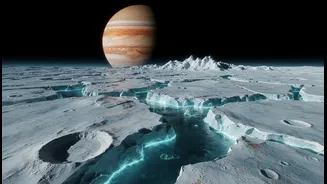
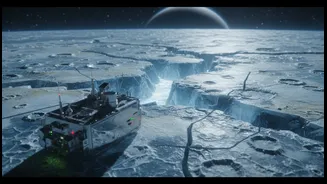
This refined strategy is crucial for upcoming missions to Jupiter’s moon Europa and Saturn’s moon Enceladus. Both are believed to harbor vast liquid water oceans beneath their icy shells, making them prime candidates for life. NASA’s Europa Clipper mission, for example, is not designed to find life directly but will comprehensively study Europa's habitability. Its instruments, including mass spectrometers like MASPEX and a dust analyzer called SUDA, will analyze gases and ice grains ejected from the moon's surface or from potential plumes. While they may not detect something as complex as DNA, which would likely be destroyed on its journey to the spacecraft, they can analyze the chemical makeup for signs that point towards a biological origin. The goal is to determine if the ocean has the right ingredients for life and to understand the chemistry well enough to distinguish a truly biological signal from the background noise.
From 'Finding' to 'Understanding'
The shift is subtle but profound. The scientific community is moving from simply trying to find life to trying to understand all the ways a planet can mimic it. This involves creating libraries of abiotic molecules and reactions to better differentiate them from biological ones. It also means grappling with the problem of “false negatives”—where life is present but our instruments or assumptions cause us to miss it. Recent NASA experiments have shown that potential biosignatures like amino acids could survive near the surfaces of these icy moons, meaning landers might not have to dig very deep to find them, but they must know what to look for and how to interpret it correctly. The stakes are incredibly high. A false positive could trigger a massive, expensive, and ultimately disappointing follow-up effort, while a false negative means we might overlook one of the most important discoveries in human history.