






Understanding Joint Load
Before comparing these two activities, it's helpful to understand what 'joint loading' means. In simple terms, it's the force exerted on a joint during any activity. High-impact exercises like running involve moments where both feet are off the ground,
leading to a forceful landing that can generate impacts of 3-4 times your body weight on your knees. Low-impact exercises, by contrast, keep at least one foot on the ground, resulting in less shock. However, not all low-impact activities are created equal. The nature of the movement—whether it's gliding, stepping, or squatting—creates different types of forces and stresses on the joints, particularly the hips, knees, and ankles.
Skating: The Smooth, Low-Impact Glide
At first glance, skating—whether on ice or with roller skates—is a fantastic low-impact cardiovascular workout. The smooth, gliding motion eliminates the jarring impact that comes with running. One study found that skating causes less than half the impact shock to joints compared to running, making it a potentially more tolerable option for those with sensitive knees, hips, or ankles. The primary movement involves a powerful side-to-side push, which engages the leg muscles, glutes, and core to maintain balance and propulsion. This makes it an excellent choice for building lower-body strength and improving dynamic balance. However, the low-impact nature is dependent on good technique and a smooth surface. Falls can, of course, lead to acute injuries. Furthermore, the side-push motion creates specific lateral (side-to-side) forces on the knee and hip joints, which differ from the straightforward forces of walking or running.
Tai Chi: The Art of Mindful Movement
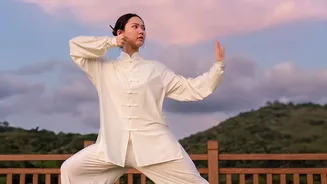
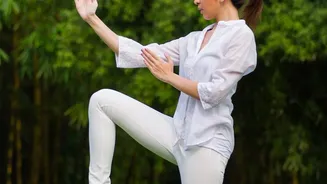
Tai Chi is an ancient Chinese martial art characterized by slow, controlled, and continuous movements. Often described as 'meditation in motion', its primary focus is on posture, balance, and mindful coordination. From a biomechanical perspective, Tai Chi is the epitome of a low-load activity. Studies show the forces generated on the knee joint during Tai Chi are around 1.2 times body weight, which is significantly less than even walking. The slow, deliberate weight shifts and semi-squatting postures are designed to enhance muscle coordination and stability around the joints, particularly the knees. This helps strengthen the muscles that support the joints, which can reduce pain and improve function, especially for individuals with conditions like arthritis. The practice has been shown to improve flexibility, balance, and muscle strength, all of which contribute to better joint protection and a lower risk of falls.
A Head-to-Head Comparison
When placed side-by-side, the key differences in joint loading become clear. Skating offers a vigorous, low-impact cardio workout that builds power and dynamic stability. Its continuous gliding is gentle on the joints compared to running, but it involves higher speeds and lateral forces that require strong stabilizing muscles. Tai Chi, on the other hand, is a very low-load, low-intensity activity focused on control, flexibility, and static balance. It builds strength and stability through slow, deliberate postures rather than propulsive force. While skating is primarily an aerobic exercise, many forms of Tai Chi are closer to a stress-reduction technique or a form of mobility training, though it can still improve cardiovascular health. The risk of injury in skating primarily comes from falls, whereas in Tai Chi, improper form (like letting the knee extend past the toe) could potentially strain a joint.
Making the Right Choice for You
So, which is better? The answer depends entirely on your personal goals and physical condition. If your priority is a high-energy cardiovascular workout that burns a significant number of calories without the jarring impact of running, skating is an excellent choice. It builds powerful leg muscles and challenges your balance in a dynamic way. If your goal is to improve flexibility, reduce stiffness, enhance body awareness, and build foundational strength and stability with almost no impact, Tai Chi is unparalleled. It's frequently recommended for older adults and individuals with arthritis because it significantly reduces pain and improves joint function. Ultimately, both are fantastic, joint-friendly activities. Skating provides a feeling of freedom and speed, while Tai Chi fosters a sense of calm and control. Choosing between the dynamic glide and the gentle flow is a matter of deciding what your body needs and what your mind enjoys most.