

Know When and Where to Look
First things first: timing is everything. The Orionid meteor shower is active from early October to early November, but the best time to watch in 2026 will be during its peak on the night of October 21-22. The most spectacular display happens in the predawn
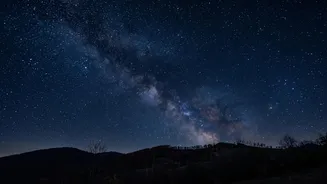
hours. The name 'Orionids' comes from the fact that the meteors appear to radiate from a point in the constellation Orion, known as the radiant. You don't need to stare directly at Orion, though. In fact, the meteors with the longest, most impressive tails often appear 45 to 90 degrees away from the radiant. So, just lie back and look up, taking in as much of the sky as possible.
Beat the Urban Glow
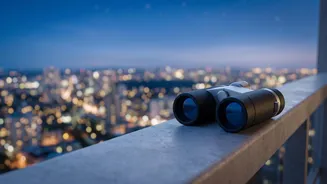
The biggest challenge for any city-based skywatcher is light pollution. Streetlights, buildings, and general urban glow can wash out all but the brightest meteors. While you can't turn off the city, you can minimise its impact. Find the darkest spot available to you. This could be a local park, a sports field, or even a rooftop with an unobstructed view. If you're staying home, turn off all the lights in your flat and find a balcony or window that faces away from the brightest streetlights. Even small reductions in direct light can make a big difference. The key is to find a location with a wide, open view of the sky, away from immediate, glaring lights.
Give Your Eyes Time to Adjust
This is the most crucial—and most often ignored—step. Your eyes need time to adapt to the darkness to see faint objects like meteors. This process, called dark adaptation, takes about 20 to 30 minutes to become fully effective. During this time, you must avoid all bright lights. That means putting your phone away. A quick glance at a bright screen can reset your night vision, forcing you to start the adaptation process all over again. If you absolutely need a light, use a torch with a red filter, as red light has a much lower impact on your night vision. Be patient; the longer you sit in the dark, the more stars—and meteors—will slowly appear.
Work Around the Moon
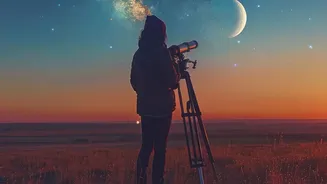
Your other source of potential light pollution is a natural one: the Moon. A bright, full moon can make it just as difficult to see meteors as city lights. For the 2026 Orionid peak, the Moon will be about 80% full, which is quite bright. However, there's good news. On the morning of October 22, the moon will set around 3 a.m. local time. This creates a perfect viewing window of truly dark skies between moonset and the start of dawn, giving you the best possible chance to see the show.
Get Comfortable and Be Patient
Meteor watching is a waiting game. You won't see a constant stream of shooting stars; under ideal dark skies, the Orionids produce about 15 to 25 meteors per hour. In a city, that number will be lower. The key is to make yourself comfortable for the long haul. Bring a reclining lawn chair or a thick blanket to lie on. October nights can be chilly, so dress in warm layers. A flask of a warm beverage can also make the experience more pleasant. The goal is to get into a comfortable position where you can gaze at the sky for an extended period without straining your neck. Patience will be rewarded.