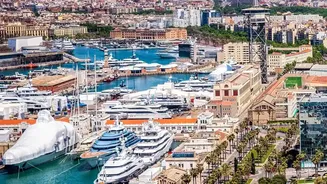





Barcelona has long been a dream destination, but its magnetic appeal is causing a crisis. As residents protest and officials seek solutions, the city's most beloved hotspots are now at the center of a fierce debate about its future.
The Price of Popularity
For decades, Barcelona
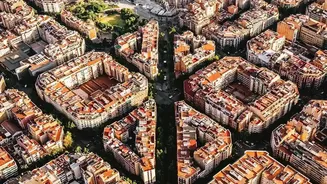
has been a global tourism success story, leveraging its stunning architecture, vibrant culture, and Mediterranean climate to become one of Europe's most visited cities. Following the 1992 Olympics, a concerted effort to market the city transformed it into an economic powerhouse, with tourism now accounting for around 14% of its GDP. However, this success has come at a steep cost. Many residents now feel their city is being sacrificed for an industry that has spiraled out of control. Soaring housing costs, driven by the proliferation of short-term tourist rentals, have pushed locals out of their own neighbourhoods. Public spaces have become overwhelmingly crowded, and daily life for many involves navigating through tourist crowds just to do errands. This has led to growing resentment and a significant shift in public opinion; a city where tourism was once seen as almost universally beneficial now views it as a major problem.
Hotspots Under Pressure
The strain is most visible at Barcelona's iconic attractions. The Gothic Quarter and La Rambla, once the heart of local life, are now often impassable for residents who report feeling displaced. A recent study highlighted how residents in the busiest areas, such as the Gothic Quarter, Barceloneta, and the area around the Sagrada Família, are forced to change their daily routes and schedules to avoid the tourist crush. Even the famous La Boquería market has become a symbol of the problem; once a bustling hub for local chefs and shoppers, it transformed into a strip of takeaway snack stalls catering to visitors, prompting a ban on such sales to try and reclaim its original purpose. This erosion of local identity is a core complaint, with everyday shops replaced by souvenir stands and tour agencies. The constant influx of people also puts immense pressure on public transport and sanitation, contributing to noise pollution and a perceived decline in quality of life.
Residents and Officials Push Back
The frustration has boiled over into direct action. Protests have become more frequent and confrontational, with slogans like 'Tourists go home' and 'This isn't tourism, it's an invasion' appearing on city walls. Demonstrators have marched through central neighbourhoods, and in some instances, have even sprayed water guns at tourists dining outdoors. City officials are responding with a clear message: 'Not one tourist more'. Barcelona has reached its limit, and the focus has shifted from growth to management. In a landmark move, the city plans to eliminate all 10,000 licensed tourist apartments by November 2028, a measure intended to return housing to the local rental market. Furthermore, taxes for tourists are on the rise, with significant increases for both hotel stays and cruise passengers, especially those visiting for less than 12 hours. The goal is to attract higher-quality, more sustainable tourism rather than sheer volume.
A New Model for Urban Tourism?
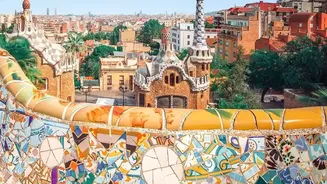
Barcelona is now a test case for how a major city can reclaim itself from the pressures of its own popularity. The strategy extends beyond just taxes and rental bans. Authorities are actively trying to decompress the most visited areas by promoting attractions in less-frequented neighbourhoods. There's a concerted effort to manage visitor flow at major sites, with Park Güell, for example, set to reduce its annual visitor capacity. At the Sagrada Família, a new 'Quiet Hour' has been introduced to preserve a contemplative atmosphere, and a strict dress code is enforced, reinforcing its primary function as a place of worship. The city has also embraced a 'Sustainable Tourism' strategy, earning a Biosphere certification that recognizes its commitment to responsible practices. These initiatives aim to find a new equilibrium where tourism supports the city without overwhelming it, integrating visitors into local life rather than allowing them to dominate it.