





A Major Nutritional Upgrade
The single greatest advantage of switching to oats dosa lies in its nutritional profile. Traditional dosas, made primarily from rice and lentils, are delicious but can be high in simple carbohydrates. Oats, on the other hand, are a complex carbohydrate packed
with soluble fibre, most notably beta-glucan. This powerful fibre is known for its ability to help lower cholesterol levels and improve heart health. It also slows down the absorption of sugar into the bloodstream, which helps in managing blood sugar levels more effectively, making it a smarter choice for those monitoring their glucose intake. Furthermore, the high fibre content promotes a feeling of fullness, or satiety, which can aid in weight management by preventing overeating. You get a meal that sustains you for longer, without the energy crash associated with simpler carbs.
A Different Texture and Taste
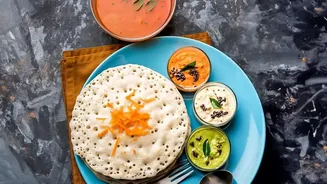
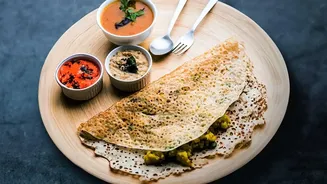
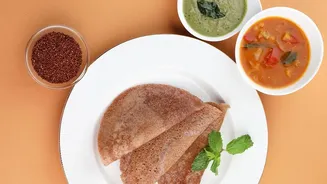
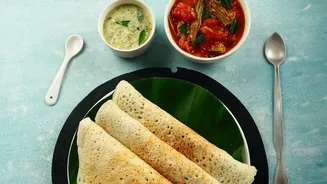
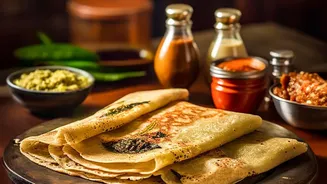
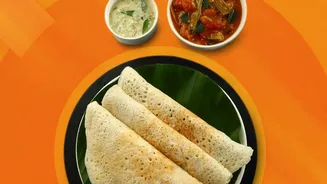
An oats dosa is not a one-to-one replacement for a classic rice dosa, and that is part of its charm. Expect a different textural experience. While a traditional dosa is prized for its paper-thin crispiness, an oats dosa is typically softer, spongier, and more pliable, closer in texture to an uttapam. This is because oats lack the same starch structure as rice that allows for that signature brittle crunch. The flavour profile also shifts. Oats introduce a subtle, nutty, and slightly earthy taste that is pleasant and mild. This makes it an excellent vehicle for flavourful accompaniments. The familiar tang from fermentation is absent in most instant recipes, resulting in a gentler, more savoury base. It pairs wonderfully with the same traditional partners—spicy sambar, coconut chutney, and tangy tomato chutney—but the experience is uniquely its own.
The No-Ferment Advantage
Perhaps the most compelling practical benefit for the modern, time-crunched household is convenience. Authentic dosa batter requires a lengthy process of soaking grains and lentils for several hours, grinding them into a paste, and then allowing the batter to ferment overnight. This requires significant planning. Many oats dosa recipes, however, are 'instant'. They often involve simply mixing oat flour (or powdered rolled oats) with semolina (sooji), yoghurt (dahi), water, and spices. After a brief resting period of just 15 to 30 minutes, the batter is ready to be cooked. This transforms the dosa from a weekend project into a feasible weekday breakfast, lunch, or dinner. It delivers the comfort and satisfaction of a home-cooked dosa without the extensive prep time, making it an incredibly practical addition to any meal rotation.
Your Canvas for Creativity
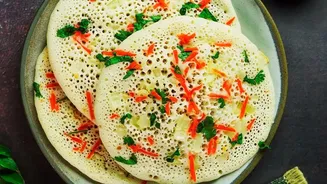
Beyond the basic recipe, oats dosa is remarkably versatile. You can use different types of oats, from quick-cooking oats to rolled oats pulsed into a coarse flour, each yielding a slightly different texture. The batter is a blank canvas for customisation. Finely chopped onions, green chillies, coriander, grated carrots, and spinach can be mixed directly into the batter to create a more wholesome and flavourful meal, much like a savoury pancake. Spices like cumin seeds, ginger, and black pepper can also be added to elevate the flavour. This adaptability allows you to tailor the dosa to your specific tastes and even use up leftover vegetables in the fridge, reducing food waste while boosting the meal's nutritional value. It is a forgiving recipe that invites experimentation in the kitchen.