




The Himalayan Water Problem
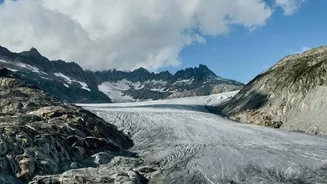
Regions like Ladakh face a peculiar and challenging water crisis. Known as a 'cold desert', it receives very little rainfall, making its communities heavily dependent on the seasonal meltwater from glaciers for agriculture. However, climate change has
disrupted this ancient rhythm. Glaciers are receding and the winter snow melts too early in the season, long before the crucial spring planting months of April and May. This means that when farmers need water most for their barley and vegetable crops, the streams are running dry. The water from larger, higher-altitude glaciers only arrives in late summer, often too late for the sowing season. This timing mismatch threatens the livelihoods and food security of the entire region.
An Inspired Solution Takes Shape
Enter the ice stupa, a brainchild of Ladakhi engineer and innovator Sonam Wangchuk. The idea was born from a simple observation: ice that remained frozen under a bridge well into the spring, shielded from direct sun. Wangchuk realized that the shape of the ice mass was key to its longevity. While earlier attempts at creating artificial glaciers involved freezing water into flat ice fields, they melted too quickly due to their large surface area. Wangchuk's innovation was to go vertical. He envisioned a cone-shaped structure, resembling the traditional Buddhist stupas that dot the Ladakhi landscape, which would expose a minimal surface area to the sun for the volume of water it holds. This simple geometric insight is the foundation of the ice stupa's success.
The Science of Building a Glacier
The construction of an ice stupa is a beautiful application of basic physics, requiring no external power. The process starts in winter. A pipe is laid to carry water from a glacial stream at a higher altitude down to a village. Due to the height difference, gravity creates natural pressure in the pipeline. At the chosen location, the pipe runs vertically upwards. Water shoots out from a sprinkler at the top, and in the sub-zero temperatures of the Ladakhi winter, this fine spray freezes almost instantly as it falls. Layer by layer, over weeks, this frozen spray builds up around a basic structural frame, forming a massive cone of ice—an artificial glacier. The vertical cone shape is crucial, as it ensures the ice melts much slower than a horizontal field of ice would.
Storing Millions of Litres
The headline's claim of millions of litres is no exaggeration. While the first prototype built in 2014 stored around 150,000 litres, subsequent versions have scaled up dramatically. Some larger ice stupas can reach heights of 30 to 40 meters and are capable of storing several million litres of water each. A single large stupa can hold enough water to irrigate thousands of newly planted trees or several hectares of farmland. By 2019, dozens of these structures were operational across Ladakh, collectively providing tens of millions of litres of crucial spring water to local communities. This stored water is released slowly as the stupa melts from March to May, perfectly timed for the start of the agricultural season.
More Than Just Water
The impact of ice stupas extends far beyond irrigation. They have become powerful symbols of community-led climate adaptation. The construction itself is often a community effort, sometimes even taking the form of a friendly competition between villages to build the tallest stupa. This has revitalised a sense of collective action in tackling a shared problem. The greening of barren land has created new economic opportunities and supported reforestation efforts. Furthermore, the striking beauty and ingenuity of the ice stupas have attracted global attention, making them a tourist attraction and a beacon of hope, demonstrating that local, nature-based solutions can have a profound impact in the face of global environmental challenges.