






Automation vs. Augmentation
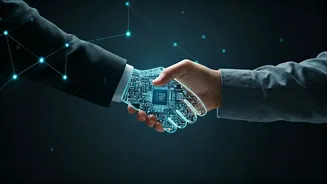
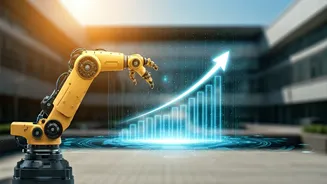
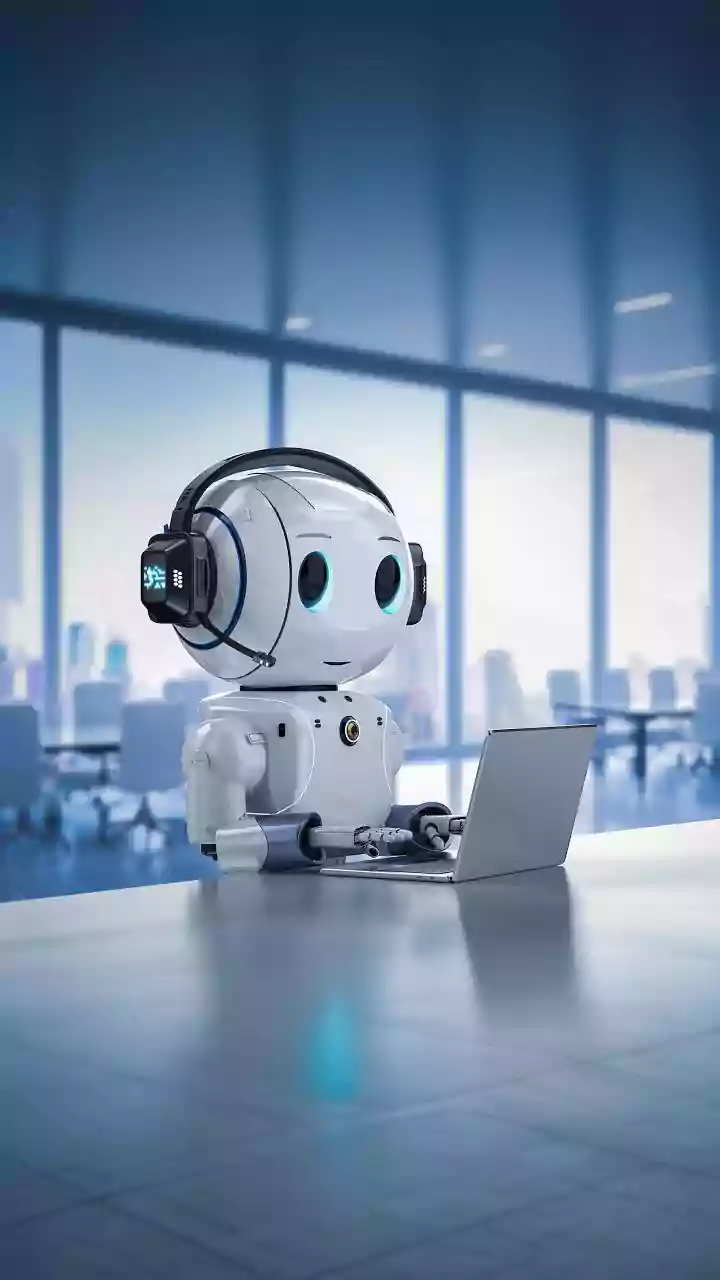
First, let's clear up a common misconception. When we hear 'AI is changing careers,' our minds often jump to automation—the idea that robots are coming to take our jobs. While automation is happening, a more significant trend is augmentation. Think of AI not
as a replacement for a human, but as a powerful assistant or a 'co-pilot.' It excels at handling repetitive, data-heavy tasks, which frees up professionals to focus on what humans do best: strategy, creative problem-solving, critical thinking, and building relationships. The accountant isn't replaced; their tool for finding anomalies in a ledger just became infinitely smarter. The core of the job remains, but the workflow is transformed.
The New Creative Partner
Perhaps nowhere is this shift more visible than in creative fields. For years, creativity was considered a uniquely human domain, safe from algorithms. Then came generative AI tools like Midjourney and ChatGPT. Suddenly, artists, writers, and designers have partners that can generate concepts, draft copy, or produce stunning visuals in seconds. This isn't the end of creativity; it's the evolution of it. The skill is no longer just in the manual act of creation but in the art of curation, direction, and refinement. The most successful creators are becoming expert conductors of AI, using their vision and taste to guide these powerful tools toward a unique and compelling final product.
Reshaping Expert Professions
Even the most knowledge-intensive careers are being redefined. In medicine, AI algorithms can analyse medical scans like X-rays and MRIs to detect signs of disease with a speed and accuracy that can surpass human capabilities, acting as a crucial second opinion for radiologists. In the legal world, AI tools can sift through thousands of pages of case law and contracts in minutes, a task that would take a team of junior lawyers days to complete. This doesn't make doctors or lawyers obsolete. Instead, it allows them to dedicate more time to complex diagnoses, patient care, and courtroom strategy, elevating the value of their expertise.
The Evolution of Everyday Jobs
The impact extends to roles we interact with daily. Customer service, for example, is increasingly handled by sophisticated AI chatbots that can resolve common queries instantly. But this has created a new need for 'AI trainers' who refine the bots' responses and customer service agents who can handle the complex, emotionally charged issues that AI cannot. Similarly, in logistics and supply chain management, AI optimises routes and predicts demand, but human managers are still needed to handle unexpected disruptions, negotiate with suppliers, and make final strategic decisions. The nature of the work is shifting from manual execution to system oversight and exception handling.
The Skills That Matter Now
So, how does one prepare for this new reality? The focus is shifting from mastering a specific, repeatable task to developing durable, uniquely human skills. Critical thinking and the ability to ask the right questions are paramount. 'Prompt engineering'—the skill of crafting effective queries for AI—is becoming a discipline in itself. Data literacy, or the ability to understand and interpret the data AI provides, is no longer just for analysts. And above all, emotional intelligence, collaboration, and adaptability are becoming premium assets. The future belongs to those who can learn to work alongside AI, leveraging its power to amplify their own human ingenuity.