




The Dual-Harvest Dream
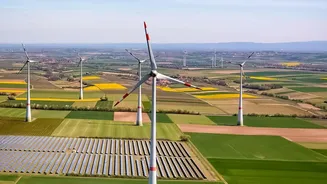
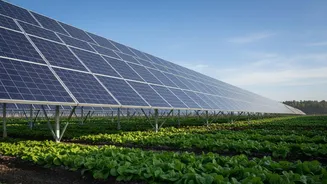
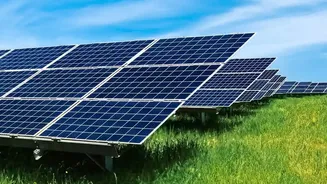
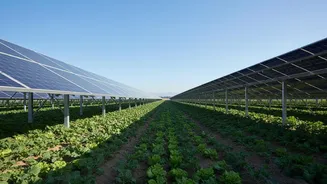
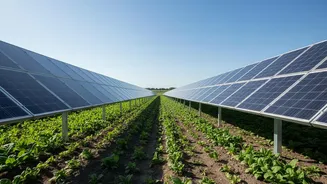
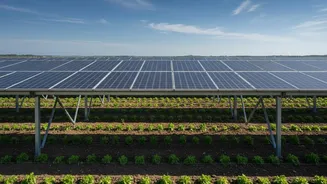
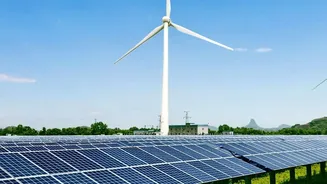
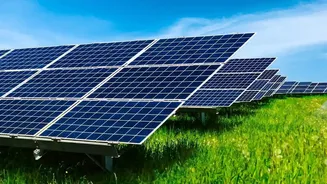
Agrivoltaics, also known as solar farming, is the practice of using the same piece of land for both agriculture and solar power generation. Instead of vast solar parks displacing farmland, agrivoltaics integrates the two by mounting solar panels high
enough for crops to grow and farm machinery to operate underneath. This dual-use model addresses a critical conflict in a land-scarce country like India: the need for more renewable energy without compromising food security. The concept is simple yet powerful, turning a single plot of land into a dual-income source for farmers, who can cultivate crops below while generating electricity above. Government initiatives like the PM-KUSUM scheme are already encouraging this model to boost farmer income and decentralize energy production.
The Crucial Third Element: Water
For years, the main benefits cited for agrivoltaics were land efficiency and dual income. Now, a third, equally vital benefit is taking center stage in India's assessment of these projects: water conservation. The shade provided by solar panels reduces soil moisture evaporation and lowers the ambient temperature, creating a cooler microclimate for the plants underneath. Research from pioneering institutions like the Central Arid Zone Research Institute (CAZRI) in Jodhpur has shown that this shading effect can reduce the need for irrigation by a significant margin. Studies indicate water savings can be as high as 30-40%, a game-changing figure for agriculture in India's arid and semi-arid regions, which consume around 80% of the nation's water resources.
India's New Assessment Framework
The "latest drive" isn't a single new law, but a fundamental shift in how agrivoltaics projects are being evaluated and promoted. Policymakers, researchers, and solar developers are increasingly incorporating water savings into the core value proposition of agrivoltaic systems. Pilot projects across the country are now systematically measuring the impact on water usage, crop yields, and soil health. CAZRI's work, for instance, has demonstrated that agrivoltaics can be paired with rainwater harvesting systems, collecting runoff from the panels to provide supplemental irrigation. This integrated approach views agrivoltaics not just as an energy or agricultural solution, but as a comprehensive tool for managing the critical food-energy-water nexus.
More Crop Per Drop
For the Indian farmer, this focus on water efficiency has profound implications. Reduced dependence on irrigation means lower costs for water and the electricity needed to pump it. It makes farming more resilient in the face of erratic monsoons and depleting groundwater levels, particularly in drought-prone states. Furthermore, the cooler, moister conditions under the panels can actually improve the yields of certain shade-tolerant crops. Pilot projects have shown success with vegetables, spices, and pulses like tomatoes, turmeric, and spinach. This opens up opportunities for farmers to diversify their crops, potentially growing higher-value produce that would otherwise struggle in harsh, open-field conditions. The result is a more stable, climate-resilient income.
Challenges on the Horizon
Despite the immense potential, scaling up water-conscious agrivoltaics comes with challenges. The initial capital cost of setting up these elevated solar structures is higher than for conventional ground-mounted solar farms. More region-specific research is needed to identify the optimal combination of panel configuration and crop choice for different agro-climatic zones across India. While government schemes provide subsidies, awareness and technical expertise at the grassroots level need to be strengthened. Ensuring that the benefits flow to small and marginal farmers, not just large corporations, will require clear policy frameworks and financial support mechanisms. The path forward involves standardizing designs, streamlining regulations, and proving the long-term economic viability for farmers across the country.