






The Monsoon's Effect on the Body
The romance of the Indian monsoon, with its cool breezes and lush greenery, also brings health challenges. According to Ayurveda, the ancient Indian system of medicine, the rainy season, or 'Varsha Ritu', is a time when the body's digestive fire, known
as 'Agni', weakens. The increased humidity and dampness are believed to aggravate the 'Vata dosha', leading to an imbalance that can manifest as digestive issues like bloating, indigestion, joint pain, and a general feeling of sluggishness. This seasonal shift makes the body more vulnerable to infections, which is why common colds, coughs, and fevers become more prevalent during these months.
The Kitchen Pharmacy
For generations, Indian kitchens have functioned as the first line of defence against seasonal ailments. The spice box is not just a source of flavour; it is a carefully curated apothecary. This turn towards herbs and spices during the monsoon is less a conscious decision and more a piece of inherited wisdom. It's a culinary practice rooted in the scientific and medicinal rationale of using food to bolster immunity when the body is most susceptible. These spices, used in everything from daily cooking to special decoctions, possess antibacterial, antiviral, and anti-inflammatory properties that help fortify the body's natural defences.
The Immunity-Boosting Trio
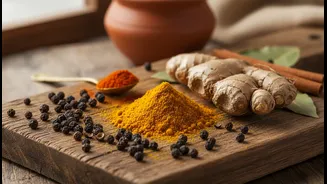
Three spices stand out as monsoon superstars: ginger, turmeric, and black pepper. Ginger ('Adrak') is revered for its ability to aid digestion and soothe sore throats. Its natural warming properties help counteract the damp chill of the season. Turmeric ('Haldi'), with its active compound curcumin, is a powerful anti-inflammatory and antiseptic agent, helping the body fight off infections. Black pepper ('Kali Mirch') does more than just add a pungent kick; it contains piperine, a compound that significantly increases the body's absorption of curcumin, making turmeric more effective. It also helps clear respiratory congestion.
Herbal Allies for Respiratory Health
Beyond the basic trio, other herbs play a crucial role. Tulsi, or Holy Basil, is hailed as the “Queen of Herbs” for good reason. It acts as a natural antibiotic and is highly effective against the viruses that cause coughs and colds. Many households grow a tulsi plant for easy access to its leaves, which can be chewed raw or boiled in water. Mulethi (Licorice root) is another go-to remedy for soothing sore throats and respiratory irritation. Ashwagandha, a powerful adaptogen, helps the body combat stress and boosts overall energy and stamina, fighting off the lethargy that often accompanies grey, rainy days.
The Comforting Power of Kadha
Perhaps the most quintessential monsoon remedy is a steaming cup of 'Kadha'—a traditional herbal decoction. This is a simple brew made by boiling a combination of herbs and spices in water. A typical kadha might include tulsi leaves, crushed ginger, black peppercorns, and cloves, often sweetened with a spoonful of honey, which has its own antimicrobial properties. This warm, aromatic drink is the epitome of monsoon wellness, offering immediate relief for a scratchy throat and working to build long-term immunity against seasonal infections.