


What is Cat-Cow Pose?
Cat-Cow is not one static pose, but a dynamic, fluid movement that connects two positions: Marjaryasana (Cat) and Bitilasana (Cow). Performed on all fours, you rhythmically alternate between arching your back (Cow) and rounding it (Cat). This combination
creates a gentle wave along the entire spine, from your tailbone to the crown of your head. Think of it as a conversation between the front and back of your body. It's often used as a warm-up at the beginning of a yoga class because it safely prepares the body for more complex movements.
The Core Benefits for Your Body and Mind
Don't let its simplicity fool you; the benefits of a daily Cat-Cow practice are profound. Primarily, it improves spinal flexibility and can relieve back, neck, and shoulder tension, making it a perfect antidote to long hours spent sitting at a desk. The movement gently massages the abdominal organs, which can aid digestion and stimulate the kidneys and adrenal glands. By synchronizing the flow with your breath, you also cultivate a powerful mind-body connection, which helps to calm the mind, relieve stress, and improve focus and coordination.
A Step-by-Step Guide to Perfect Form
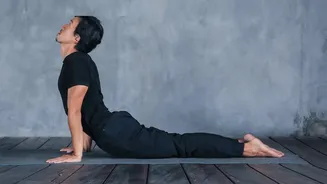
To begin, find a comfortable spot on a yoga mat or carpeted floor. 1. Start in a 'tabletop' position on your hands and knees. Your wrists should be directly under your shoulders and your knees directly under your hips. Spread your fingers wide to create a stable base. 2. Inhale into Cow Pose: As you take a deep breath in, drop your belly toward the floor. Lift your chest and tailbone up toward the ceiling, creating an arch in your back. Keep your gaze soft and slightly forward, being careful not to crunch your neck. 3. Exhale into Cat Pose: As you breathe out, press the floor away with your hands and round your spine toward the ceiling, just like a cat stretching. Tuck your tailbone under and gently release your chin toward your chest. 4. Flow with Your Breath: Continue moving between Cow on the inhales and Cat on the exhales. Aim for five to ten slow, deliberate rounds, letting your breath guide the movement.
Common Mistakes to Avoid
To get the most out of the pose and prevent strain, watch out for a few common errors. Many beginners move too quickly; the magic of this pose is in the slow, mindful connection to your breath, so don't rush it. Another pitfall is craning the neck too far back in Cow pose or forcing the chin to the chest in Cat. Let your head follow the natural curve of your spine. Also, ensure your shoulders are relaxed and away from your ears, and that your elbows have a slight, soft bend rather than being locked straight. Finally, check that your hands and knees are properly aligned under your shoulders and hips to maintain a stable foundation.
Modifications for Every Body
Yoga is about honouring your body, and Cat-Cow can be adapted for different needs. If you have sensitive knees, place a folded blanket or towel underneath them for extra cushioning. For those with wrist pain, you can come down onto your forearms instead of your hands. Another option is to make fists with your hands and rest on your knuckles, keeping your wrists straight. This pose is also wonderfully accessible without getting on the floor. You can do a seated version in a chair, placing your hands on your knees and moving through the same spinal motions, which is perfect for an office break. A standing variation can also be done by placing your hands on a wall or the back of a sturdy chair.
Using Cat-Cow in a Simple Practice
Cat-Cow serves as an excellent warm-up for almost any physical activity. In a basic yoga sequence, it often comes after a few moments of grounding in a seated position or Child's Pose. After several rounds of Cat-Cow have awakened your spine, you might move into other foundational poses like Downward-Facing Dog. You can also use Cat-Cow as a standalone 'movement snack' during your day whenever you feel stiff. A minute or two of gentle spinal flexion and extension can work wonders to reset your posture and clear your head.