








Why the Monsoon Dictates India's Fortunes
India's agricultural sector is the lifeblood of its economy, and the southwest monsoon is its pulse. Accounting for nearly 70% of the country's annual rainfall, the monsoon is crucial for the Kharif (summer) crops. With more than half of India's cultivated
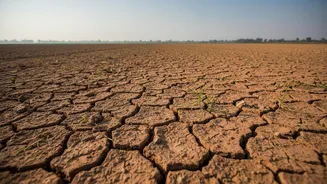
land being rain-dependent, even a minor deviation in rainfall can have a major impact. Forecasts for the 2026 season have pointed towards a below-normal monsoon, primarily due to the emergence of El Niño conditions, which historically weaken rainfall over the subcontinent. Early predictions from the India Meteorological Department (IMD) suggested rainfall could be around 90-94% of the Long Period Average (LPA), raising concerns for agriculture, water supply, and overall economic stability.
From Fields to Your Grocery Bill
The connection between rainfall and your grocery receipt is a direct chain reaction. Inadequate rain leads to lower crop yields, which in turn tightens supply in the market. When supply shrinks and demand remains constant, prices inevitably rise. This dynamic is especially true for staples like rice, pulses, and vegetables, whose production is heavily reliant on monsoon showers. The uneven distribution of rain is often a bigger problem than the overall deficit. Prolonged dry spells in key agricultural states can disrupt sowing schedules and stress crops at critical growth stages, directly impacting the final harvest and what ends up on market shelves.
The Most Vulnerable Kitchen Staples
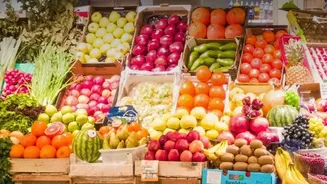
While a weak monsoon affects a wide range of products, certain items are more susceptible to price hikes. Perishable goods like tomatoes, onions, and leafy greens are often the first to see a price surge as their supply chain is short and highly sensitive to disruption. Pulses (dal) and oilseeds are also at significant risk. Deficient rainfall in key growing regions has already put pressure on pulse acreage. With food items accounting for nearly half of India's Consumer Price Index (CPI), a spike in the prices of these staples can quickly fuel broader food inflation. Even the cost of milk can be affected, as poor rains reduce fodder availability for cattle, increasing production costs for dairy farmers.
Watching for Inflationary Pressures
Higher food prices are one of the most immediate consequences of a weak monsoon. Economists and analysts closely watch food inflation, which rose to 5.52% in July 2026, as a key indicator of economic health. While inflation is expected to rise in the coming months, it is projected to remain below the Reserve Bank of India's (RBI) upper tolerance limit of 6%. The RBI has flagged the uneven monsoon as a risk to its inflation outlook, noting that it could dampen rural consumption. A weaker rural economy doesn't just affect farmers; it has a ripple effect on demand for other goods like tractors and two-wheelers, slowing overall economic activity.
Can Government Measures Soften the Blow?
India is better equipped to handle a weak monsoon today than in the past. The government maintains significant buffer stocks of essential grains like rice and wheat, which can be released into the market to stabilize prices and prevent shortages. The Agriculture Ministry has also prepared contingency plans, advising farmers in at-risk districts to shift towards less water-intensive crops like millets and oilseeds. However, the effectiveness of these measures depends on the severity and distribution of the rainfall deficit. While grain stocks provide a cushion, the prices of perishable goods remain a key area of concern.