






A Major Spacewalk for a Major Upgrade
In a recent, carefully coordinated spacewalk lasting over six hours, NASA and European Space Agency (ESA) astronauts installed a new high-speed communication antenna. This operation was part of the station's ongoing modernization efforts to keep the two-decade-old
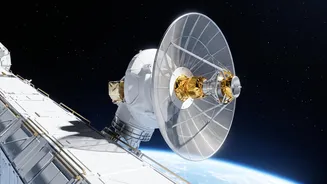
orbital laboratory at the forefront of science and technology. The installation involved replacing an older unit with a new, more powerful Space-to-Ground antenna, a critical link that enables high-data-rate transmission between the ISS and Mission Control in Houston. This wasn't just a routine repair; it was a significant enhancement of the station's data infrastructure, essential for handling the massive amounts of information generated by modern experiments.
Leaping from Broadband to a 'SpaceDataHighway'
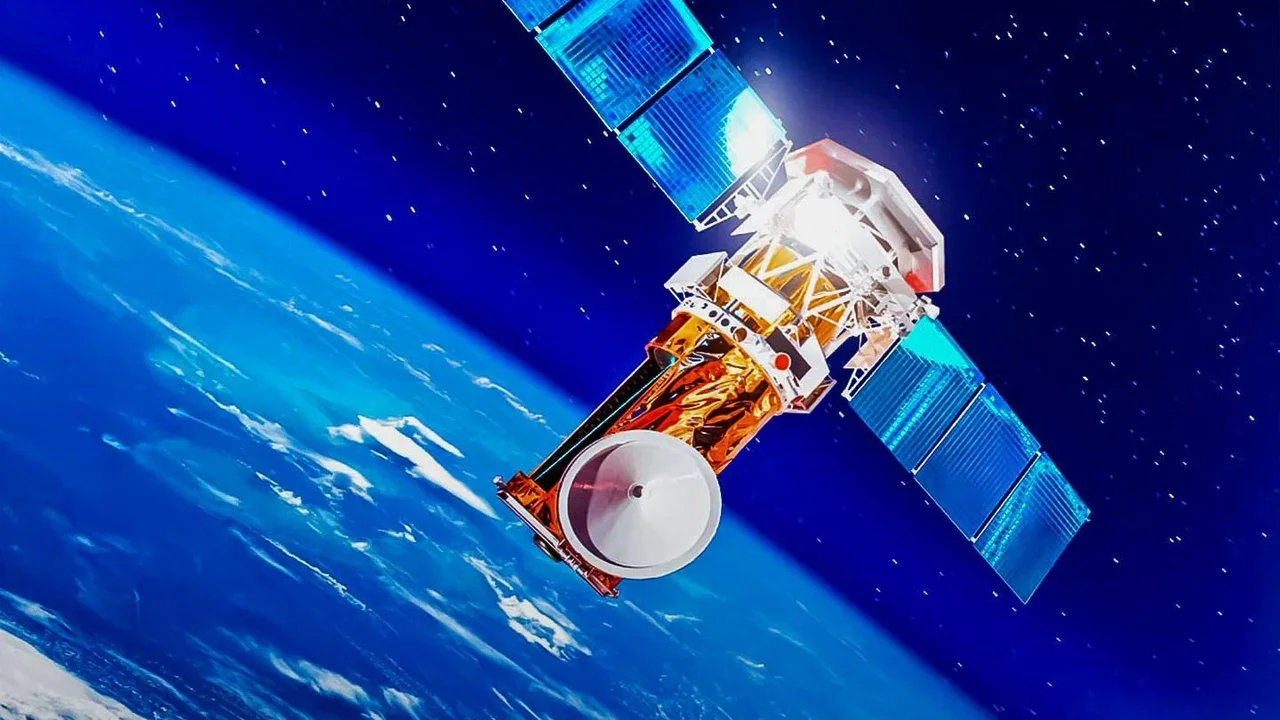
The new hardware represents a massive leap in connectivity. While the ISS has seen data speed boosts in the past, including a notable doubling of its connection rate to 600 Mbps, this new European-built antenna, nicknamed ColKa (Columbus Ka-band Terminal), opens up an even more efficient channel. It provides a direct, high-speed link to Europe, offering speeds up to 50 Mbps for downlinking data and 2 Mbps for uplinking. To put that in perspective, it's like giving the station its own dedicated fibre optic line. ColKa connects to the European Data Relay System (EDRS), a network of satellites in a higher, geostationary orbit. This 'SpaceDataHighway' can relay data continuously to a single ground station, eliminating the need for the ISS to switch connections as it orbits Earth every 90 minutes.
A Game-Changer for Science in Orbit
For scientists on the ground, this upgrade is monumental. The ISS is a unique laboratory where research is conducted in microgravity, a condition impossible to replicate for long periods on Earth. These experiments, from studying diseases like Alzheimer's to developing new materials, generate huge volumes of data. Previously, researchers often had to wait for data to be physically returned or transmitted in slow batches. With the new antenna, scientists can access their experiments in near real-time. This allows for immediate analysis, adjustments, and follow-up, dramatically accelerating the pace of discovery. Research performed on the ISS has been shown to have a significantly higher impact, and this enhanced data flow will only amplify its value.
Improving Life and Morale for the Crew
Beyond the scientific benefits, the high-speed connection has a profound human impact. Astronauts on long-duration missions face extreme isolation. A robust communication link is a lifeline, not just for operational safety but for crew morale. Faster and more reliable connections mean higher-quality video calls with family and friends on Earth, a crucial psychological boost. It also allows for quicker access to entertainment, training materials, and personal data, making life in the confined space of the station more manageable. This enhanced connectivity helps bridge the vast distance between the crew and their homes, making their orbital stay a little less remote.
A Stepping Stone for Moon and Mars Missions
This upgrade is not just about improving the ISS; it's also a critical testbed for future deep-space exploration. The technologies and operational know-how gained from systems like ColKa are directly applicable to upcoming missions like the lunar Gateway outpost and eventual human missions to Mars. For these long journeys, where communication delays are measured in minutes, not seconds, having robust, high-bandwidth systems is non-negotiable for crew safety and mission success. By proving these advanced communication technologies in Earth orbit, NASA and its partners are building the reliable infrastructure needed for humanity's next giant leap into the cosmos.