




It’s a classic fruit standoff: the luscious, sweet mango versus the mellow, vibrant papaya. For years, health-conscious eaters have debated which tropical giant deserves a regular spot in their fruit bowl. But what if we’re asking the wrong question?
A Nutritional Showdown
At first glance, the two fruits present different nutritional strengths. Papaya is the lighter option, with significantly fewer calories and less sugar. A 100-gram serving of papaya contains around 24 to 43 calories and roughly 4 to 8 grams of sugar. In contrast, the same amount of mango has about 42 to 60 calories and 8 to 14 grams of sugar. Papaya also takes the lead on Vitamin C, with one serving providing a substantial portion of your daily requirement. On the other hand, mango is a powerhouse of Vitamin A (thanks to its beta-carotene content), Vitamin E, and folate, a crucial B-vitamin. Both fruits are good sources of fibre, which aids digestion and promotes a feeling of fullness.
The Sugar Story: Not All Sweetness Is Equal
The sugar content is often where mango gets a bad reputation, but the full picture is more complex. The Glycemic Index (GI) measures how quickly a food raises blood sugar levels. Surprisingly, despite having more sugar, mango often has a lower GI (around 51-59) than papaya (around 56-60, with some studies showing it even higher). This means mango may lead to a slower, more gradual rise in blood sugar compared to papaya. This is likely due to the type of sugars and the fibre composition in mango, which slows down absorption. However, it's important to remember that ripeness plays a huge role; a very ripe fruit will generally have a higher GI than a less ripe one. So, while papaya is lower in total sugar, mango may offer a steadier energy release.
Why Portion Is King
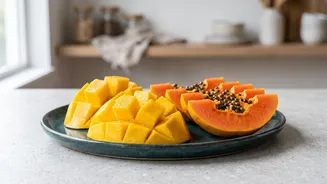
This brings us to the core of the issue: portion size matters more than the 'good' or 'bad' label on any single fruit. Scientific studies consistently show that when people are served larger portions, they tend to eat more, regardless of the food. You might feel virtuous choosing the 'lower sugar' papaya, but if you eat a massive bowl of it, you could easily consume more sugar and calories than if you'd had a small, sensible serving of mango. For example, a standard portion of fruit is about 80-150 grams, which can look like one slice of papaya or two slices of mango. Exceeding this can turn a healthy snack into a sugar overload. The key isn't to ban mango but to be mindful of how much you're eating in one sitting. The same principle applies to all foods. Focusing on moderation and balanced plates is a more effective strategy for long-term health than demonizing specific ingredients.
The Verdict: How to Enjoy Both
So, which fruit should you choose? The answer depends entirely on your personal health goals. If you're focused on weight management or need a big boost of Vitamin C, papaya is an excellent choice due to its lower calorie count and high vitamin content. If you're looking for a source of sustained energy, more Vitamin A for eye and skin health, or a higher dose of folate, mango is a fantastic option. Rather than picking a permanent winner, the smartest approach is to rotate both fruits in your diet. Enjoy mangoes when they are in season and papaya year-round. To further manage the impact on blood sugar, pair either fruit with a source of protein or healthy fat, like a handful of nuts or a scoop of yoghurt. This slows down sugar absorption and keeps you feeling full for longer.