



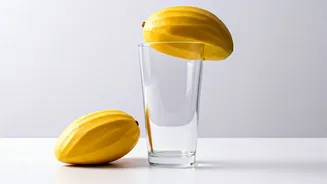


The Sweet Problem of Mango Season
Every summer, India revels in the arrival of its most beloved fruit. From the sweet perfume of Alphonso to the golden blush of Kesar, mangoes are a national treasure. But with this great joy comes a small, sticky challenge: getting to the delicious flesh
without creating a mess or wasting precious fruit. We’ve all been there—wrestling a slippery mango with a knife, leaving behind chunks of good fruit on the skin, and ending up with sticky fingers and a messy countertop. It’s the one downside to an otherwise perfect experience. What if there was a better way? A method so simple and effective it feels like a magic trick? There is, and all it requires is a drinking glass.
The Simple Science Behind the Hack
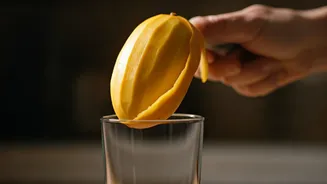
This technique isn’t magic; it’s just clever physics. The method relies on the contrast between the soft, yielding flesh of a ripe mango and the firm, unyielding skin. The thin, sturdy rim of a drinking glass acts as a perfect blade. When you press the mango against it, the rim cleanly separates the flesh from the inside of the skin, scooping it out in one smooth motion. Unlike a knife, which can be clumsy and cut too deep or not deep enough, the glass follows the natural curve of the fruit. This results in a cleaner peel, significantly less waste, and a much faster process, especially when you’re preparing multiple mangoes for aamras, a smoothie, or a fruit salad.
Step-by-Step: The Glass Method
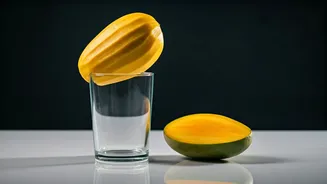
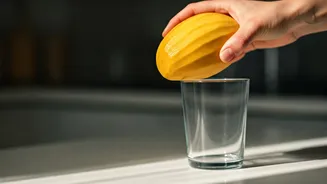
Ready to change your mango game forever? Here’s exactly what to do. 1. **Prepare the Mango:** Wash your mango thoroughly. Place it on a cutting board and, using a sharp knife, slice it lengthwise on both sides of the flat, central seed (the ‘gutli’). You should have two large “cheeks” of mango and the central piece with the seed. 2. **Grab Your Glass:** Choose a sturdy drinking glass with a relatively thin but not sharp rim. A standard water or juice glass works best. Avoid glasses with thick, rounded lips, as they won’t be as effective. 3. **Scoop and Slide:** Take one mango cheek and hold it firmly. Position the bottom edge of the mango against the rim of the glass, with the skin on the outside and the flesh on the inside. Apply firm, steady pressure and push the mango down along the curve of the glass. The rim will slide between the skin and the flesh, scooping the fruit cleanly into the glass. In one smooth motion, the skin will be left in your hand, and all the delicious flesh will be in the glass.
Tips for a Perfect Peel Every Time
While the technique is simple, a few tips will ensure success. First, ripeness is key. This hack works best on mangoes that are ripe and soft, but not overly mushy. If the mango is too hard, you’ll struggle to slide it; if it’s too soft, it might disintegrate. For varieties like Dasheri or Langra, wait until they are fragrant and yield to a gentle press. Second, the size of the mango cheek should ideally match the mouth of the glass. If the cheek is much wider than the glass, you may need to do it in two passes. Finally, be confident with your pressure. A hesitant push can mangle the fruit, but a firm, smooth slide works wonders. You can use the same technique on the remaining fruit around the seed if you trim it away from the hard center first.
Glass vs. Knife: Is It Really Better?
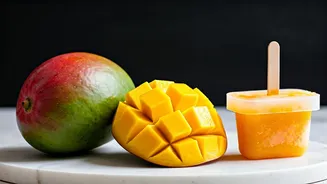
So, should you throw away your peeler? For ripe mangoes destined for dicing, pureeing, or slicing, the glass method is a clear winner. It’s faster, safer (no risk of a knife slipping on the slick fruit), and creates almost zero waste. Children can even be taught this method with supervision. However, the traditional knife method still has its place. If you want to create intricate cubes while the fruit is still in its skin (the “hedgehog” method) or if you are working with a firmer, less-ripe mango for a salad, a knife offers more precision and control. The glass hack is a specialist tool for a specific job: peeling a ripe mango quickly and completely.