

What Is the International Space Station?
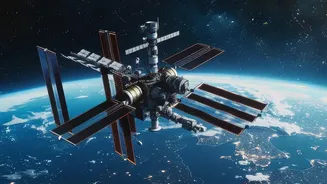
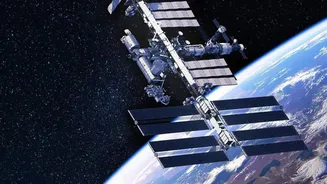
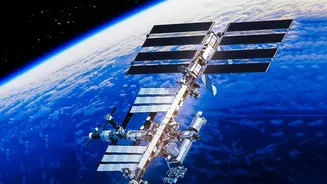
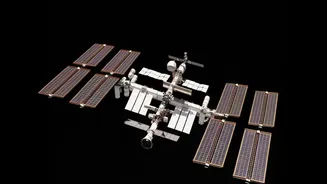
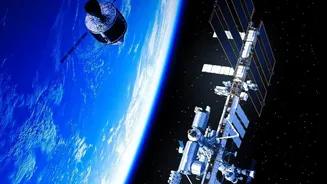
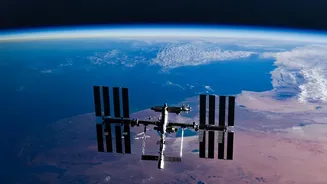
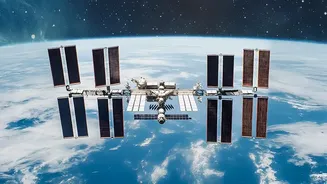
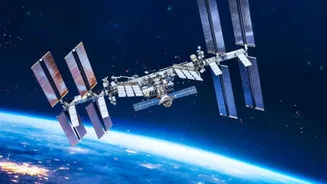
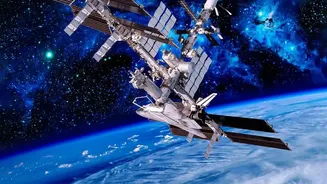
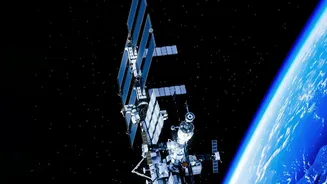
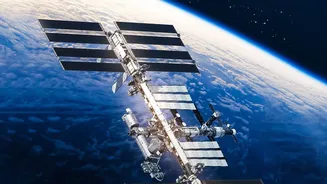
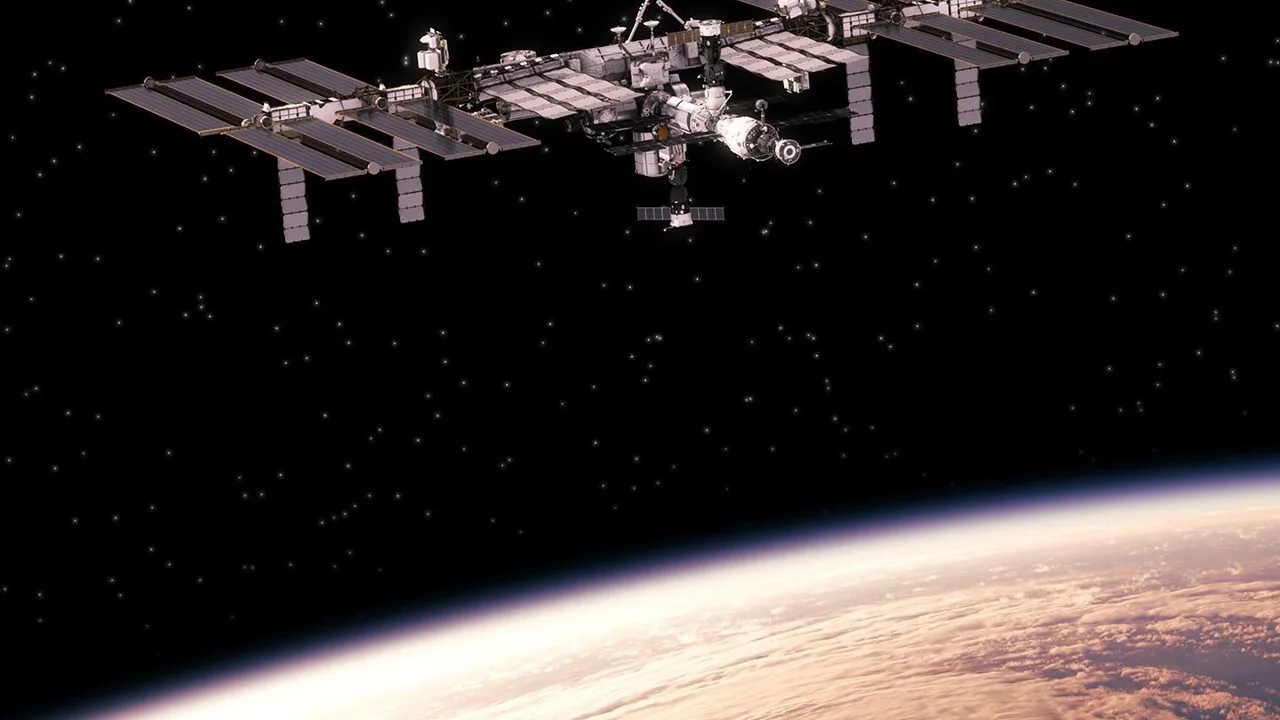
The International Space Station (ISS) is the largest human-made structure in orbit, serving as a home and laboratory for astronauts from around the globe. Orbiting Earth at a breathtaking speed of about 28,000 kilometres per hour, it completes a full
circle of our planet roughly every 90 minutes. This incredible feat of science and collaboration has been continuously occupied by humans since the year 2000, pushing the boundaries of research in a microgravity environment. Its sheer size and massive solar panels make it highly reflective of sunlight, which is why it becomes visible to us on the ground.
The Best Time and Place to Look
The key to spotting the ISS is timing. It is only visible when your location is in darkness, but the station itself is still illuminated by the sun. This perfect alignment happens for a few hours just after sunset or before sunrise. During the middle of the day, the sky is too bright to see it, and in the middle of the night, the station is in Earth's shadow and doesn't reflect any light. For the best view, find a spot with a clear, open view of the sky, away from the direct glare of city lights, though the ISS is often bright enough to be seen even from urban areas. Passes where the station reaches a high point in the sky (over 40 degrees elevation) are the most spectacular.
Top Apps to Track the ISS
Gone are the days of complex charts. Today, a few taps on your smartphone are all you need. NASA's official Spot The Station app is a fantastic, free resource for both iOS and Android. It provides real-time tracking, a list of upcoming sightings for your location, and even has an augmented reality (AR) feature that shows you the station's exact path across the sky. Another highly recommended app is ISS Detector. Its user-friendly interface lists upcoming passes and uses a simple icon to indicate how good the viewing opportunity will be. For those who enjoy identifying more than just the station, apps like Heavens-Above and SkyView offer comprehensive star-gazing features, tracking planets, stars, and other satellites in addition to the ISS.
What to Look For in the Sky
When the time comes for a pass, what should you be looking for? The ISS appears as a very bright, steady point of light, similar to a star or planet but moving purposefully across the sky. It moves much faster than you might expect, typically crossing from one horizon to the other in just a few minutes. A key differentiator from an airplane is that the ISS does not have flashing or blinking lights; it is a constant, solid light. Sometimes, it may seem to appear or disappear suddenly as it moves into or out of Earth's shadow. At its brightest, it can outshine every star and planet in the night sky, second only to the Moon.
Your Simple Viewing Checklist
Ready to give it a try? First, download one of the recommended tracker apps and allow notifications for your location. The app will alert you about 12 hours before a good viewing opportunity. About five to ten minutes before the scheduled pass, head outside to let your eyes adjust to the darkness. Use the app's compass or AR feature to determine where the station will first appear on the horizon. Then, simply watch as this beacon of human achievement glides silently overhead. No special equipment is needed, as it is easily visible to the naked eye.