




The Big Question: Is It Visible From India?
Let's get straight to the point: the partial lunar eclipse of August 28, 2026, will not be visible from India. The entire event occurs during daytime hours for the subcontinent, when the Moon will be below the horizon. The eclipse will begin around 6:53
AM Indian Standard Time (IST) and end after noon at 12:32 PM IST, with the maximum eclipse happening at approximately 9:43 AM IST. Since this is well after sunrise, skywatchers in Delhi, Mumbai, Bengaluru, or anywhere else in India will unfortunately miss the live spectacle.
What Exactly Is a Partial Lunar Eclipse?
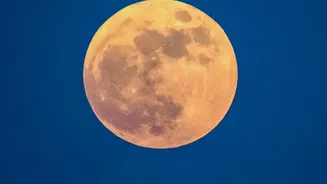
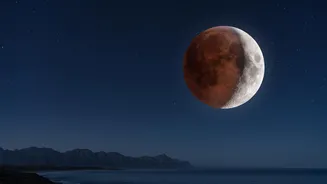
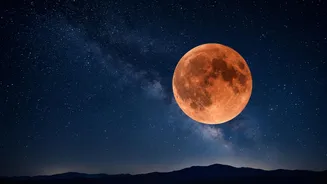
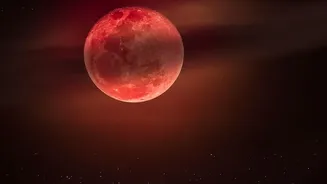
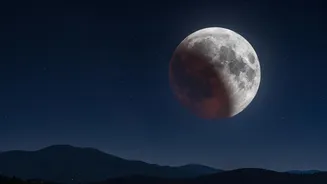
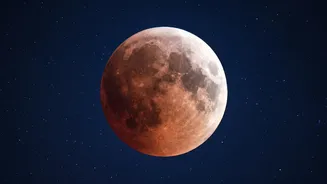
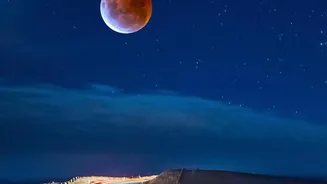
A lunar eclipse happens when the Earth passes directly between the Sun and a Full Moon, casting its shadow on the lunar surface. There are three types: total, partial, and penumbral. This upcoming event is a partial lunar eclipse, which means only a part of the Moon will pass through the darkest part of Earth's shadow, called the umbra. Imagine a dark, circular bite being taken out of the Moon; that's the classic look of a partial eclipse. This particular event is quite a deep one, with nearly 96% of the Moon's surface expected to be covered at its peak, giving it a dramatic, reddish hue where visible. This has led some to call it an 'almost Blood Moon'.
Where in the World Will It Be Seen?
While India misses out, this will be a major astronomical event for other parts of the globe. The best views will be across North and South America, where viewers can see the entire eclipse. Partial views will also be available in parts of western Europe, Africa, and West Asia. Cities like New York, London, Rio de Janeiro, and Johannesburg will be prime locations for witnessing the Moon blush a deep coppery red as it glides through Earth's shadow.
How You Can Still Watch From India
Just because it's not visible in our skies doesn't mean you have to miss it entirely. Several astronomy organisations and observatories will be hosting free live streams of the event. Websites like Timeanddate.com, along with the YouTube channels for institutions like the Griffith Observatory in Los Angeles and the Virtual Telescope Project, are expected to provide real-time feeds. You can tune in from your computer or smartphone to watch the spectacle unfold from the best vantage points on Earth, with expert commentary explaining the science as it happens. The live streams will likely begin around 7:30 AM IST on August 28.
Is It Safe to Watch a Lunar Eclipse?
This is a common question, and the answer is simple: yes, lunar eclipses are completely safe to view with your naked eyes. Unlike a solar eclipse, which requires special protective glasses to prevent eye damage, a lunar eclipse is just the Moon being dimmed by Earth's shadow. You do not need any special filters or equipment. In fact, if you were in a location where it's visible, a pair of binoculars or a small telescope would offer a fantastic, up-close view of the shadow moving across the lunar terrain.
Cultural Significance and a Celestial Coincidence
In India, this particular eclipse has generated extra interest because its date, August 28, 2026, coincides with the festival of Raksha Bandhan. In Hindu tradition, visible eclipses, or 'Grahan', often involve specific rituals and are considered inauspicious. However, since this eclipse is not visible to the naked eye anywhere in India, it holds no religious significance for observation, and rituals associated with a visible Chandra Grahan do not apply.