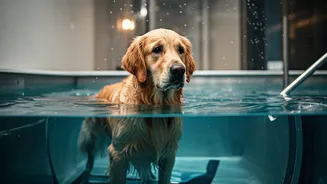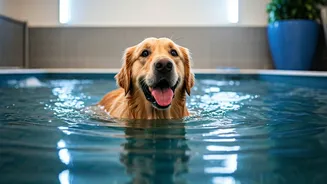






What Is Pet Hydrotherapy?
At its core, pet hydrotherapy is the use of water for therapeutic purposes. Think of it as physical therapy in a pool. The practice primarily uses the principles of resistance, buoyancy, and temperature to help dogs exercise in a low-impact environment.
The buoyancy of water supports the body, reducing stress on joints and bones, which makes it ideal for dogs of all ages and fitness levels. Sessions often take place in one of two settings: a heated pool where a therapist guides the dog through swimming exercises, sometimes against a gentle current, or on an underwater treadmill, where the water level can be adjusted to control weight-bearing and resistance. Unlike a chaotic day at the lake, these are controlled, one-on-one sessions focused on specific health goals.
The Splashy Benefits for Your Pup
The advantages of hydrotherapy extend far beyond a fun way to cool off. For dogs recovering from surgery or injury, it’s a game-changer, allowing them to rebuild muscle mass and improve their range of motion without putting strain on healing limbs. It's also a powerful tool for managing chronic conditions like arthritis and hip dysplasia, as the warm water soothes aching joints while the gentle exercise improves mobility. For overweight dogs, hydrotherapy provides a robust cardio workout that burns calories efficiently without the pounding impact of running on hard ground. But the benefits aren't just physical. The mental stimulation of a new activity and the focused attention from a therapist can reduce anxiety and build confidence, especially in timid dogs.
Is It Therapy or Just a Treat?
This is a crucial distinction for any pet owner to understand. While a recreational swim can be a delightful treat, true hydrotherapy is a clinical practice. If your dog has a specific medical condition—like post-operative recovery, arthritis, or a neurological issue—hydrotherapy should be pursued under the guidance of a veterinarian. Your vet can refer you to a certified canine rehabilitation therapist who will design a specific treatment plan. On the other hand, many facilities offer “wellness swims” or “fun swims.” These are less about rehabilitation and more about general fitness, conditioning, and enjoyment. They're a fantastic form of exercise, but they don't replace a prescribed therapeutic regimen. Always consult your vet before starting any new, intensive exercise program, especially if your dog has underlying health concerns.
What Makes a Pet Spa 'Luxury'?
While you can find hydrotherapy at veterinary rehabilitation centers, the “luxury pet spa” experience elevates the service. The luxury element is about the environment and the amenities that surround the therapy itself. These high-end facilities often feature state-of-the-art, pristine pools with advanced filtration systems and precisely controlled water temperatures. Instead of a clinical setting, the atmosphere might resemble a human day spa, designed to be calming for both pet and owner. Luxury packages can include private, one-on-one sessions with a dedicated therapist, post-swim blowouts with professional-grade dryers, fluffy towel service, and even organic post-workout treats. Some spas also offer complementary wellness services like canine massage or acupuncture, creating a holistic health retreat for your furry companion.
Finding the Right Pool for Your Pet
Before you book a session, it’s important to do your homework to ensure a safe and effective experience. Start by looking for certified staff. A qualified hydrotherapist should have training in canine anatomy, physiology, and first aid. The facility itself should be clean and well-maintained, with excellent water quality. Don’t be afraid to ask about their sanitation protocols. Safety should be paramount; look for features like non-slip ramps for easy entry and exit, and check that they use life vests, especially for first-timers or less confident swimmers. A reputable center will conduct a thorough intake assessment to understand your dog’s health history, temperament, and specific needs before their first dip in the water.