



From Spectators to Participants
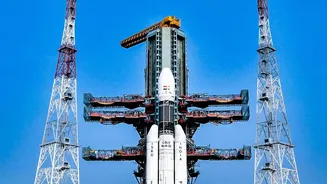
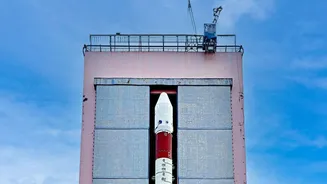
For decades, the Indian space program was something most people watched from a distance. Today, that is changing. The gates of the Satish Dhawan Space Centre (SDSC) in Sriharikota, India's primary spaceport, are increasingly opening to students. Schools
and universities now organize industrial visits, allowing young minds to witness the colossal launch pads, intricate mission control rooms, and the sheer scale of the engineering that sends rockets to the Moon and beyond. These visits transform abstract textbook concepts into tangible reality. Interacting with ISRO scientists, students get a firsthand account of the challenges and triumphs behind every mission, from vehicle assembly to the final countdown. This experiential learning is proving to be a powerful catalyst, sparking curiosity and providing a clear answer to the age-old question: "Where will I ever use this in real life?"
ISRO’s Flagship Youth Program: YUVIKA
To formalize its outreach, ISRO launched the YUva VIgyani KAryakram (YUVIKA), or the Young Scientist Programme. This initiative is designed to "catch them young," identifying and nurturing talent from an early age. YUVIKA is a two-week residential program for students who have completed Class 9, with a special preference given to those from rural areas. The selected students are hosted at various ISRO centers across the country, including in Bengaluru, Thiruvananthapuram, and Ahmedabad. The curriculum is immersive and hands-on. Participants attend lectures by senior scientists, engage in model rocketry, assemble DIY kits, and get an inside look at cutting-edge space science and technology. The program has been immensely popular; the 2026 edition saw over 100,000 registrations for just a few hundred spots, demonstrating the immense appetite among India's youth for space education.
Embedding Innovation in Schools
The push for space and STEM education extends deep into the school system through initiatives like the Atal Tinkering Labs (ATLs). Established under the NITI Aayog's Atal Innovation Mission, ATLs are innovation workspaces set up in schools nationwide to foster creativity and a hands-on learning culture. These labs are equipped with tools for robotics, 3D printing, and electronics, allowing students to build, tinker, and innovate. Recognizing the synergy, ISRO has adopted 100 ATLs to directly promote space education and technology. In these adopted labs, ISRO scientists and engineers act as mentors, guiding students on projects and sharing their expertise. This collaboration creates a direct pipeline from classroom curiosity to professional mentorship, helping demystify careers in the space sector.
The Chandrayaan and Gaganyaan Effect
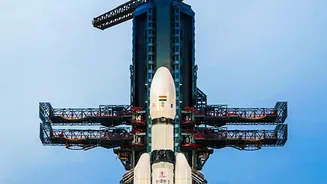
The success of missions like Chandrayaan-3, which made India the first nation to land on the Moon's south pole, has had a monumental impact on public consciousness. These achievements have turned space exploration into a source of immense national pride and a powerful engagement tool for STEM. Following the mission's success, a surge in student interest in aerospace engineering and related fields was widely noted. Educational foundations and ISRO itself have leveraged this excitement, organizing workshops on rocketry and aerodynamics for school children. Similarly, as the Gaganyaan human spaceflight program progresses, interactions with astronaut-designates (Gaganyatris) are being organized to inspire students and connect them with the human face of India's space ambitions.
Fueling a New Space Ecosystem
This educational push is perfectly timed with the opening up of India's space sector to private players. The rise of over a thousand space startups has created a vibrant new job market for skilled engineers and scientists. The Indian Space Policy 2023 encourages end-to-end participation from private companies in everything from satellite manufacturing to launch services. By inspiring a generation of students to pursue STEM, India is not just preparing future talent for ISRO, but for a burgeoning commercial space economy. These young innovators will be crucial in helping India achieve its goal of expanding its share of the global space economy and establishing itself as a leader in space technology and services.