




Why Quality Beats Quantity
When it comes to lower-body exercises, how you perform each repetition is far more important than how many you do. Proper form ensures you are engaging the intended muscles—in this case, your quadriceps, hamstrings, and glutes. When your technique is off,
other parts of your body, like your lower back or knees, compensate. This not only reduces the effectiveness of the exercise but also dramatically increases your risk of strain or injury. Good form ensures the load is absorbed by muscles, which are designed to adapt and grow stronger, rather than by joints and ligaments, which are less forgiving. By focusing on controlled, correct movements, you protect your body while building functional strength that supports everyday activities like climbing stairs and walking.
The Classic Bodyweight Squat
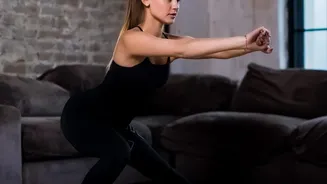
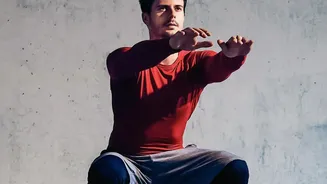
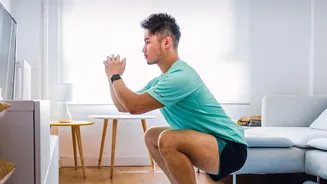
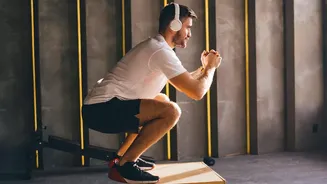
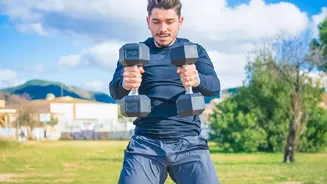
The squat is often called the king of leg exercises for a reason. It targets all the major muscles of the lower body. To do it right, stand with your feet shoulder-width apart, toes pointing slightly outward. Begin by pushing your hips back as if you’re about to sit in a chair. Keep your chest up and your back straight. Lower yourself until your thighs are parallel to the ground, or as low as you comfortably can, ensuring your knees track in line with your toes and don’t cave inward. A common mistake is letting the heels lift off the ground; keep your weight evenly distributed through your feet. Drive through your heels to return to the starting position.
The Powerful Lunge
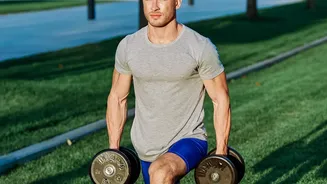
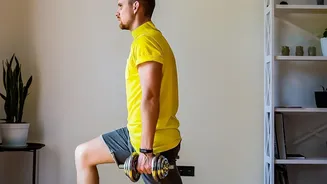
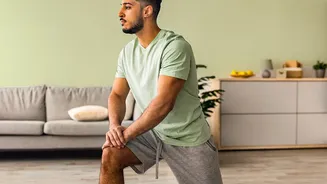
Lunges are excellent for building strength, balance, and stability one leg at a time. This unilateral training helps correct strength imbalances between your left and right sides. To perform a lunge, step forward with one leg and lower your hips until both knees are bent at approximately a 90-degree angle. Your front knee should be directly above your ankle, not pushed out over your toes, and your back knee should hover just above the floor. A frequent error is stepping one foot directly in front of the other, like on a tightrope, which creates instability. Instead, maintain a hip-width stance as you step. Keep your core engaged and your torso upright to protect your spine. Push off your front foot to return to the start and alternate legs.
The Foundational Glute Bridge
While often seen as a glute exercise, the bridge is fantastic for strengthening your hamstrings—the muscles on the back of your thighs—and improving hip stability. Strong glutes and hamstrings are essential for a balanced lower body and help protect your lower back. To start, lie on your back with your knees bent, feet flat on the floor hip-width apart, and heels as close to your glutes as is comfortable. Squeeze your glutes and lift your hips off the floor until your body forms a straight line from your shoulders to your knees. Avoid arching your lower back; the work should come from your hips. Hold the position for a few seconds before slowly lowering your hips back down.
The Enduring Wall Sit
The wall sit is an isometric exercise, meaning you hold a static position. It’s incredibly effective for building muscular endurance in your thighs and is gentler on the knees for those who find squats difficult. Lean your back flat against a wall and walk your feet out. Slide down until your thighs are parallel to the floor, as if you're sitting in an invisible chair. Your knees should be at a 90-degree angle and directly above your ankles. Feel the work in your quadriceps, hamstrings, and glutes. Beginners can start by holding the position for 20-30 seconds, while more advanced individuals can hold it for a minute or longer to increase the challenge.