





Gondh: The Warming Wonder
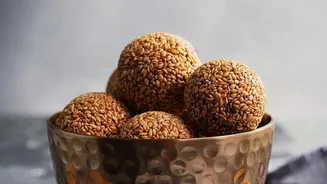
Gondh, or edible gum, is a natural resin harvested from the bark of acacia trees. Neutral in taste, its power lies in its function. When fried in ghee, these tiny, hard crystals puff up into a crunchy, light form. Across North and West India, gondh is a key
ingredient in winter 'laddoos'. These energy-dense sweets, often made with whole wheat flour, ghee, nuts, and jaggery, are more than just a treat. Traditionally, gondh is considered a 'warming' food, believed to generate internal heat. This makes it a winter essential in many households, especially for providing nourishment, strengthening bones, and boosting immunity against common colds.
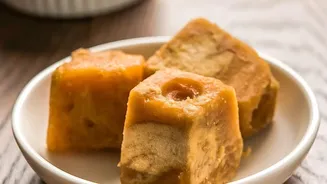
Nolen Gur: Bengal's Liquid Gold
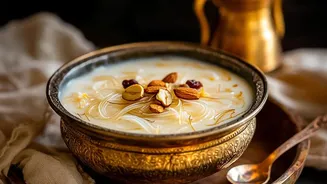
Come November, kitchens in Bengal eagerly await the arrival of Nolen Gur, or fresh date palm jaggery. Available only until February, this seasonal sweetener is made by collecting the sap from date palm trees before sunrise and boiling it down. The cold weather is crucial, as warmth can cause the sap to ferment. Nolen Gur has a uniquely smoky and caramel-like flavour, far more complex than its sugarcane counterpart. It comes in two forms: a liquid 'jhola' gur perfect for drizzling and a solid 'patali' gur. It is the soul of iconic Bengali winter sweets like sandesh, payesh (kheer), and various pithas (rice cakes), lending them a distinctive taste that defines the season.
Ponkh: A Fleeting Gujarati Delicacy
Ponkh is a true winter specialty, primarily found in Gujarat and parts of Maharashtra. These are tender, young sorghum (jowar) grains, harvested while they are still green and juicy. The traditional way to enjoy ponkh is to roast the entire stalk over a charcoal fire and then beat the grains out. This fleeting delicacy, available only from December to February, has a fresh, sweet, and slightly smoky taste. It is often served simply, tossed with savoury sev and sometimes a spicy garlic chutney. These gatherings, known as ponkh or hurda parties, are a communal celebration of the winter harvest.
Sarson ka Saag: The Heart of Punjab's Winter
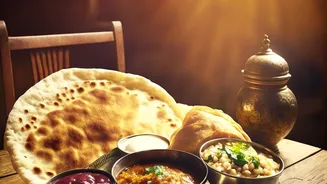
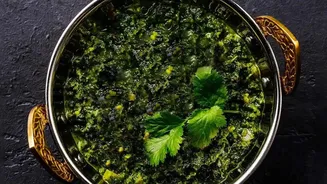
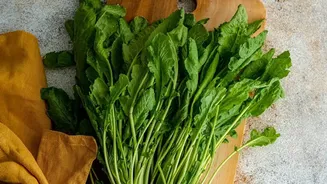
No discussion of Indian winter food is complete without mentioning Sarson ka Saag. Made from fresh mustard greens (sarson), this dish is a staple in Punjab and across North India during the colder months when the greens are harvested. The pungent, slightly bitter taste of mustard leaves is balanced by adding other greens like spinach (palak) or bathua (chenopodium), creating a creamy, flavourful dish. Slow-cooked for hours and thickened with a bit of maize flour (makki ka atta), it is traditionally served with a dollop of white butter and paired with Makki ki Roti (maize flour flatbread), another winter classic made from a grain harvested in the same season.
Hari Chana: The Tender Green Treat
Hari Chana, or fresh green chickpeas, are another gift of the winter season. Available for a short period, these tender pods are a common sight in vegetable markets. Unlike their dried counterparts, they are soft, sweet, and can be eaten raw right out of the pod. In North India, they are often used to make 'nimona', a rustic curry from Uttar Pradesh where the green chickpeas are ground into a coarse paste and cooked with potatoes and spices. They are also used in various other curries and pulaos, or simply roasted and enjoyed as a snack, offering a fresh, distinctly wintery flavour.