






An Origin of Spirit, Not Sweat
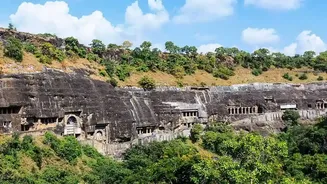
Long before it was a workout, yoga was a profound spiritual and mental discipline. Its origins can be traced back more than five millennia in northern India, with the first mentions appearing in the Rig Veda, one of the oldest sacred texts. The original
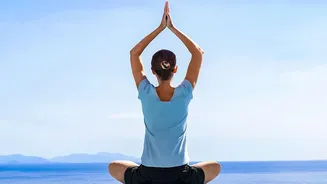
purpose was not physical fitness but to unite the body, mind, and spirit to achieve a state of enlightenment and inner peace. This ancient practice was later refined and systemised by the sage Patanjali in the Yoga Sutras, a foundational text that outlines an eight-limbed path to self-realisation. This classical yoga was a holistic guide to living, encompassing ethical principles, meditation, and breath control, with physical postures being just one component of a much larger spiritual framework.
The First Journey Westward
For centuries, yoga remained largely within the Indian subcontinent. Its introduction to the Western world can be traced to one pivotal moment: September 11, 1893. On that day, a young, eloquent monk named Swami Vivekananda addressed the Parliament of the World's Religions in Chicago. Beginning his speech with the electrifying words, 'Sisters and brothers of America', he captivated the audience not by demonstrating complex postures, but by presenting the philosophy of Vedanta and Raja Yoga as a universal science of the mind. Vivekananda framed yoga as a practical, rational path to discovering the divine within, accessible to all people regardless of their faith. He sparked a profound interest that opened the door for other spiritual teachers, like Paramahansa Yogananda, who arrived in the 1920s and further popularised the practice.
The Great Physical Transformation
While Vivekananda introduced the philosophy, the yoga that most people recognise today—focused on physical postures (asanas)—was popularised by a later generation of gurus. Often called the 'father of modern yoga', Tirumalai Krishnamacharya was a key figure whose teachings would shape the practice for the 20th century. It was his students who became the most influential ambassadors of hatha yoga. One of them, Indra Devi, opened a studio in Hollywood in 1947, introducing asana practice to celebrities and tastemakers. However, it was B.K.S. Iyengar, another of Krishnamacharya's pupils, who revolutionised yoga and made it accessible to the masses. Iyengar developed a method that emphasised precise physical alignment and, most critically, introduced the use of props like blocks, straps, and bolsters. This innovation was a game-changer, allowing people of any age, fitness level, or physical limitation to practice safely and effectively. By demystifying the postures and focusing on their therapeutic benefits, Iyengar built the bridge between an esoteric discipline and a mainstream fitness regimen.
A Modern Billion-Dollar Brand
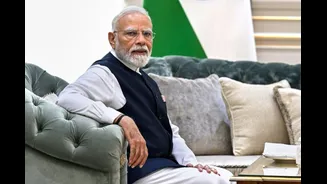
The seeds planted by these pioneers blossomed during the counter-culture movement and the subsequent health and wellness boom. Today, yoga is a staggering global phenomenon. The market was valued at an estimated USD 138.7 billion in 2026, encompassing not just classes but a vast ecosystem of apparel, equipment, teacher trainings, mobile apps, and yoga tourism. Its mainstream acceptance was formally cemented on December 11, 2014, when the United Nations, following a proposal by Indian Prime Minister Narendra Modi, declared June 21st the International Day of Yoga. The resolution was co-sponsored by a record 175 nations, acknowledging yoga as an 'invaluable gift of India's ancient tradition' with universal appeal.