



Glimpsing the Cosmic Dawn
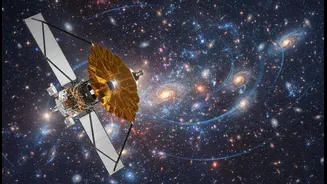
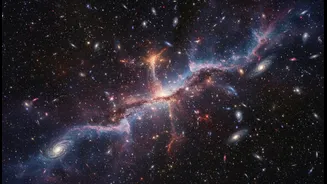
For decades, the Hubble Space Telescope has been our eye on the cosmos, delivering breathtaking images of distant galaxies. Recent observations have pushed its capabilities to new extremes, capturing light from some of the earliest structures in the universe.
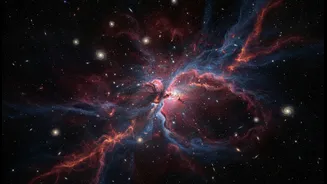
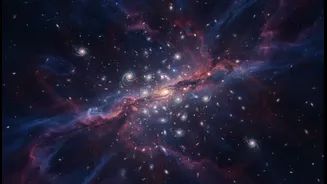
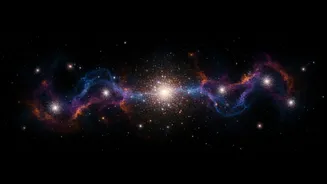
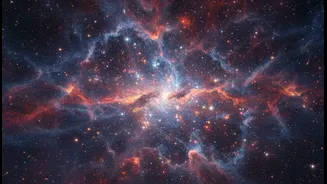
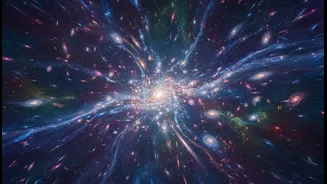
These are not the grand, spiral galaxies we see today, but small, intensely bright blue collections of stars that existed when the universe was less than a billion years old. By looking at light that has travelled for over 13 billion years, Hubble is essentially a time machine, showing us the universe in its infancy. This era, known as the 'cosmic dawn', is when the very first stars and galaxies began to form, illuminating a universe that was previously dark.
The Power of Spectral Imaging
This latest breakthrough is not just about taking a picture of something very far away. The 'quantum leap' lies in the technique: spectral imaging. Think of a normal camera, which captures visible light in red, green, and blue. Spectral imaging goes far beyond this, capturing information across many different wavelengths of light, including those in the infrared and ultraviolet spectrum that are invisible to the human eye. Each pixel in a spectral image contains a 'light signature' or spectrum. By analysing this spectrum, astronomers can deduce an object’s chemical composition, temperature, density, and how fast it is moving away from us. It’s the difference between seeing a car from a distance and having a full diagnostic report on its engine.
Decoding the Universe's Blueprint
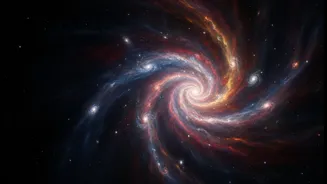
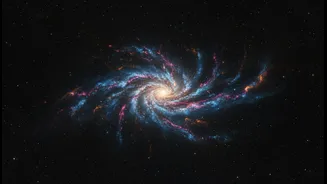
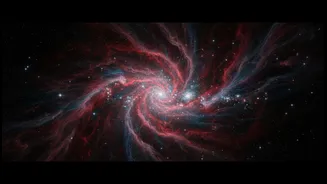
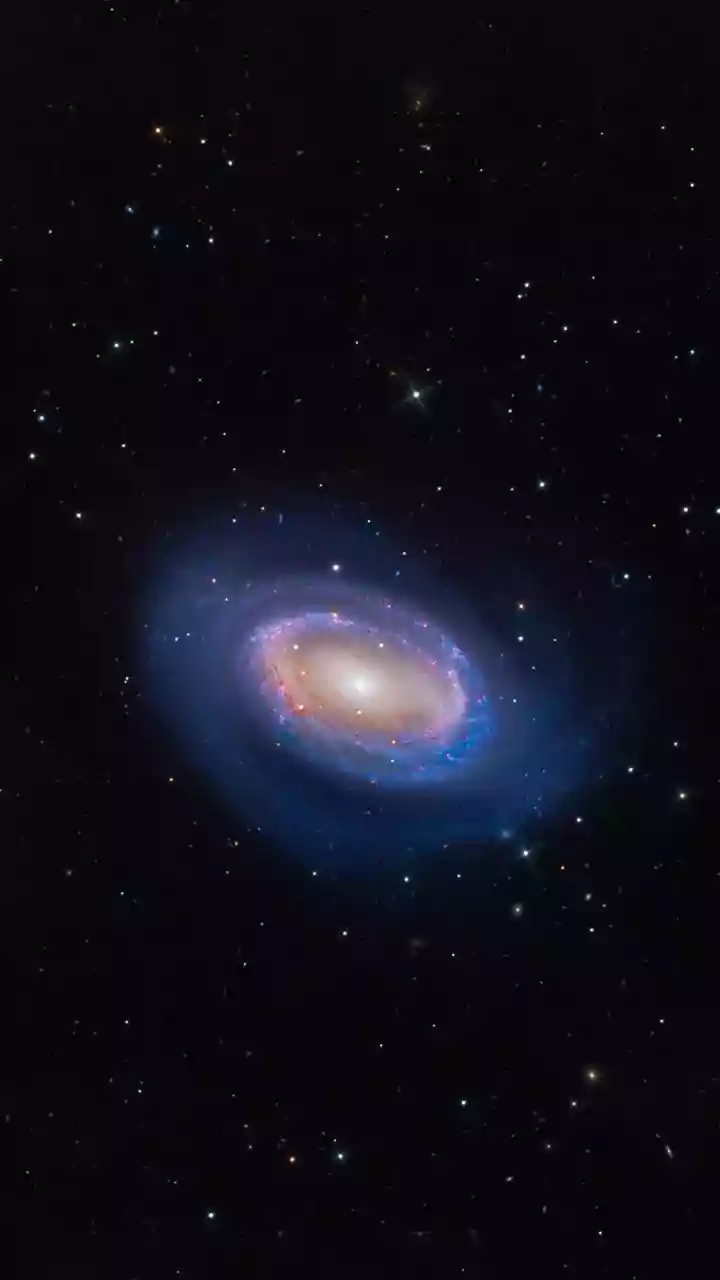
So, what does this 'diagnostic report' on a 13-billion-year-old galaxy tell us? For one, it provides crucial information on its distance through a phenomenon called 'redshift'. As the universe expands, light from distant objects gets stretched, shifting it towards the red end of the spectrum. The more redshifted the light, the farther away and older the object is. More importantly, spectral analysis reveals the elements present. It can show the signatures of hydrogen and helium, the building blocks of the first stars, and even heavier elements forged inside those stars. By studying these primitive structures, scientists can test and refine theories about how galaxies grow from small, chaotic starbursts into the majestic spirals like our own Milky Way.
Hubble's Enduring Legacy
With the newer, more powerful James Webb Space Telescope (JWST) now operational, one might wonder why Hubble is still making such headlines. While JWST is optimised to see in infrared light, making it a master at finding the most distant objects, Hubble has a unique and powerful view of the ultraviolet and visible spectrum. Its ability to capture certain types of ultraviolet light from the early universe is, in some cases, unmatched. Rather than being competitors, Hubble and JWST are complementary partners. Hubble can identify promising targets, and new analytical techniques are constantly being developed to squeeze every last drop of information from its 30-plus years of observations, proving the veteran telescope still has much to teach us.
A New Chapter in Cosmology
Capturing these ancient structures with spectral imagery is a quantum leap because it moves astronomy from simply mapping the early universe to truly understanding its physics and chemistry. These findings provide hard evidence for what was previously only theory. For example, recent discoveries have provided the first direct observation of a galaxy powerful enough to clear the opaque fog of hydrogen that filled the early universe, a key event known as reionisation. Each new observation of these primordial galaxies adds a crucial piece to the puzzle of our cosmic origins, answering fundamental questions about how the universe became the way it is today.