




Priority 1: Achieving Human Spaceflight
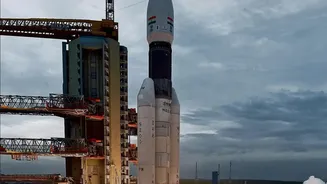
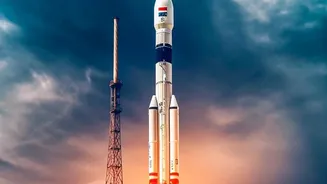
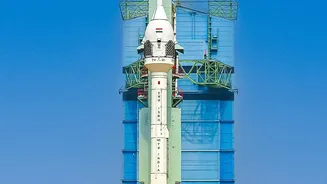
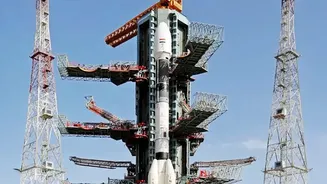
The crown jewel of ISRO's current endeavours is the Gaganyaan mission, India's quest to send its own astronauts into orbit. A significant portion of the upcoming launch schedule is dedicated to making this a reality. Key missions include several uncrewed
test flights to validate every system, from the human-rated LVM3 rocket (HLVM3) to the crew escape system and re-entry procedures. The first uncrewed orbital test flight, Gaganyaan-1 (G1), is a critical step planned for this financial year. These precursor missions are non-negotiable for ensuring the safety of the Gaganauts who will eventually make the historic journey. This intense focus signals that establishing indigenous human spaceflight capability is ISRO's foremost priority, a move that will place India in an elite club of spacefaring nations.
Priority 2: Dominating the Commercial Launch Market
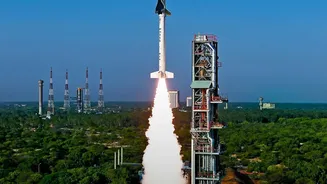
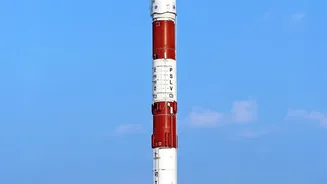
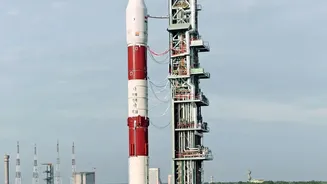
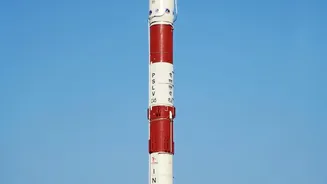
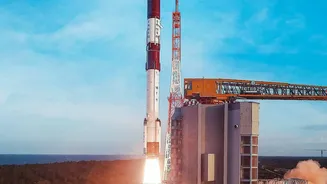
India is aggressively moving to capture a larger slice of the multi-billion-dollar global space economy. The strategy is two-fold: leveraging the proven reliability of the Polar Satellite Launch Vehicle (PSLV) and scaling up the new Small Satellite Launch Vehicle (SSLV) for on-demand services. The government has empowered NewSpace India Limited (NSIL), ISRO's commercial arm, to productionise these rockets through Indian industries, accelerating the launch cadence. With plans for a new spaceport at Kulasekarapattinam in Tamil Nadu specifically for smaller rockets, ISRO is building the infrastructure needed for high-frequency launches. This push is designed to attract more international and domestic customers, transforming India from just a space-research hub into a global launch service provider.
Priority 3: Developing Next-Generation Technology
Even as current missions take flight, ISRO is investing heavily in the future. A key project is the Reusable Launch Vehicle (RLV), nicknamed 'Pushpak'. This 'swadeshi space shuttle' aims to drastically cut the cost of accessing space by allowing the most expensive parts of the rocket to be reused. ISRO has already conducted several successful landing experiments (LEX), demonstrating its autonomous landing capability. This programme is a direct investment in making space access more sustainable and economical. The development of next-generation launchers and technologies like air-breathing propulsion shows a clear intent to not just participate in the space race, but to be a technology leader in the decades to come.
Priority 4: Expanding the Frontiers of Science
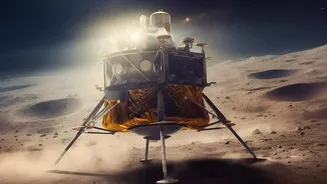
Beyond the headlines of human and commercial missions, ISRO's commitment to pure scientific discovery remains unwavering. Following the successes of Chandrayaan-3 and the Aditya-L1 solar observatory, the agency is planning ambitious interplanetary missions. Future plans include Shukrayaan-1, an orbiter mission to study Venus, and the highly anticipated Mangalyaan-2, which will not only orbit Mars but also attempt to soft-land a craft on its surface. These missions are about expanding human knowledge, searching for answers about the origins of our solar system, and cementing India's reputation as a formidable power in planetary exploration.
Priority 5: Bolstering National Capabilities
Underpinning all these high-profile goals is the foundational priority of using space for national development and security. A steady stream of launches is dedicated to deploying and upgrading India’s constellation of Earth observation, communications, and navigation satellites. Missions like the NVS series for the NavIC navigation system and various Earth Observation Satellites (EOS) provide critical data for everything from disaster management and agriculture to military surveillance and secure communications. These satellites form the backbone of India's strategic autonomy, ensuring that the nation's economic and security interests are served from orbit.