



More Than Flags and Footprints
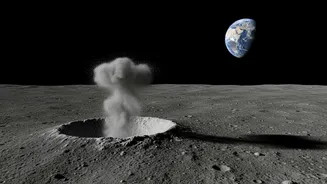
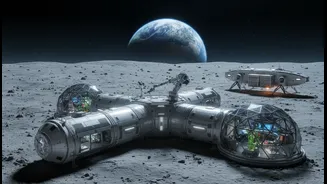
Under the Artemis program, NASA's vision extends far beyond short visits. The goal is to build Artemis Base Camp, a sustainable outpost for science and exploration, likely near the Moon's South Pole. This isn't about repeating the Apollo missions; it's
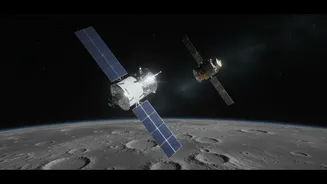
about creating a permanent foothold in deep space that will serve as a stepping stone for future missions to Mars. The camp is envisioned to eventually include a surface habitat, rovers for transport, and power systems. This long-term strategy means NASA needs a steady, reliable way to get supplies, equipment, and experiments from Earth to the lunar surface. Instead of building its own delivery fleet, the agency has decided to buy the service, effectively becoming the anchor customer for a new commercial industry.
Science as a Market Signal
The core purpose of a lunar base is to conduct groundbreaking science. NASA has laid out clear objectives: searching for and characterizing water ice, studying the Moon's geology to understand planetary formation, analyzing the radiation environment, and even using the Moon as a platform for astronomy. These scientific priorities are not just academic exercises; for the private sector, they are a detailed shopping list. Each scientific question requires specific hardware. To study water ice, you need drills and mass spectrometers. To understand the radiation environment, you need sensitive detectors like the Linear Energy Transfer Spectrometer. To map the terrain for future astronauts, you need advanced 3D imaging tools. By defining the science, NASA is defining the cargo.
The Commercial Lunar Payload Services (CLPS) Initiative
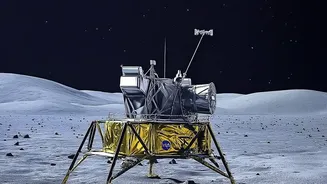
This is where the business opportunity truly crystallizes. Through the Commercial Lunar Payload Services (CLPS) initiative, NASA contracts with private American companies to deliver these scientific payloads. The agency doesn't dictate the rocket or lander design; it simply buys a spot for its instruments on a commercial flight, paying for the end-to-end service of getting from Earth to the lunar surface. With a multi-billion dollar budget through 2028, CLPS missions are poised to become a regular feature of the space calendar. This approach is designed to foster innovation, drive down costs through competition, and build a robust marketplace for lunar logistics that could one day serve customers beyond just NASA.
Opportunities and Obstacles
For companies in the emerging cislunar economy, NASA's science objectives are a treasure map. They provide clear demand signals for what kind of hardware is needed, allowing businesses to align their research and development with confirmed customer needs. The opportunity extends beyond just building landers. It includes developing the specialized instruments, creating power and communication systems, and designing rovers. However, the challenge is immense. Landing on the Moon remains one of the most difficult feats in engineering, as demonstrated by the mixed success of early CLPS missions. Reliability is paramount. Companies that can prove they can consistently and safely deliver payloads to the correct location will have a significant competitive advantage. The market is high-risk, but the potential rewards are astronomical, with analysts forecasting the lunar transportation market to be worth over $10 billion by 2033.