





Looking for a simple way to build strength without a gym? The walking lunge is your answer. This powerful, no-equipment move turns any park or path into your personal training ground, making fitness accessible for everyone.
Why Take Your Workout Outdoors?
Before diving into the lunge
itself, let’s appreciate the setting. Exercising outdoors offers benefits that a gym can’t match. Exposure to sunlight helps your body produce Vitamin D, which is crucial for bone health and mood regulation. Studies have shown that 'green exercise' can reduce stress, anger, and depression while improving your overall mood and self-esteem. The varied terrain of a park or trail challenges your body more than a flat treadmill, improving balance and agility by forcing you to adapt to uneven surfaces. Best of all, it’s free and accessible, removing the barriers of cost and travel time to a fitness facility.
The Power of the Walking Lunge
The walking lunge is a dynamic, functional exercise that delivers a full-body workout with a focus on the lower half. It’s praised by fitness professionals because it targets multiple major muscle groups simultaneously: the quadriceps (front of the thighs), hamstrings (back of the thighs), glutes (your backside), and calves. But it doesn't stop there. To stay stable as you move from one lunge to the next, you must engage your core, making it a fantastic exercise for building abdominal strength and stability. This single, fluid movement mimics everyday actions like climbing stairs or even just walking, improving your functional fitness for daily life.
How to Perform the Perfect Walking Lunge
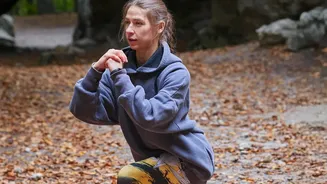
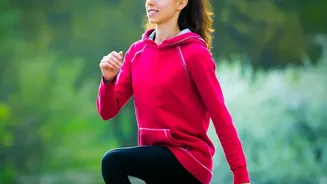
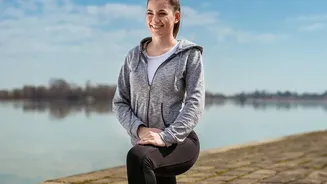
Proper form is key to maximizing benefits and preventing injury. Here’s a step-by-step guide: 1. Stand tall with your feet hip-width apart and your hands on your hips or clasped in front of you. Keep your shoulders back and your core engaged. 2. Take a large step forward with your right foot, about two feet or a comfortable stride length. Plant your foot firmly on the ground. 3. Lower your hips until both knees are bent at approximately a 90-degree angle. Your front thigh should be parallel to the ground, and your front knee should be aligned directly above your ankle, not pushed out over your toes. Your back knee should hover just above the ground without touching it. 4. Keep your torso upright and your chest lifted. Avoid leaning forward. 5. Push off your back (left) foot and bring it forward to step directly into your next lunge, this time leading with the left foot. Continue this alternating 'walking' motion.
Common Mistakes to Avoid
Even simple movements can be done incorrectly. Watch out for these common errors: - Taking steps that are too short or too long: A step that’s too short can strain your knees, while one that's too long can compromise your balance and form. Aim for that 90-degree bend in both knees. - Letting your front knee collapse inward: This is a sign of weak hip stabilizers and can lead to knee pain. Actively think about keeping your knee aligned over your foot. - Leaning your torso forward: This often happens when your core isn’t engaged. It shifts the work away from your glutes and onto your lower back. Keep your chest up and look forward. - Moving too quickly: Rushing through the movement uses momentum instead of muscle control, which reduces the exercise's effectiveness and increases injury risk. Focus on slow, controlled movements.
Making It Your Own
The beauty of the walking lunge is its versatility. For beginners, start by mastering a static lunge (without the 'walking' part) to build confidence and form. You can also reduce the depth of the lunge, going down only as far as is comfortable. Another beginner-friendly option is to bring your feet together to reset your balance between each lunge instead of stepping directly into the next one. For those seeking a greater challenge, try adding a torso twist at the bottom of each lunge to further engage your core. While this guide focuses on no-equipment moves, adding weights like dumbbells or even a loaded backpack is a straightforward way to progress once you’ve mastered the bodyweight version.