





A New Space Race Begins
What was once the final frontier of government exploration is quickly becoming a bustling commercial arena. A series of landmark policy decisions, including the Indian Space Policy 2023 and the liberalisation of Foreign Direct Investment (FDI) rules in 2024,
have fundamentally altered the trajectory of India's space program. This strategic shift was designed to move the Indian Space Research Organisation (ISRO) toward a focus on advanced research and development, while encouraging private companies to take over mature operations like satellite and rocket manufacturing. The goal is ambitious: to grow India’s share of the global space economy from its current value of around $8-9 billion to a projected $44 billion by 2033. This has ignited a new kind of space race, with hundreds of startups now vying for a piece of the cosmos.
The Ground Control: IN-SPACe and NSIL
To manage this new public-private ecosystem, the government established two key bodies. The Indian National Space Promotion and Authorisation Centre (IN-SPACe) acts as a single-window agency to promote, authorise, and supervise the activities of Non-Government Entities (NGEs). It's the go-to body for a startup wanting to build a launch vehicle or share ISRO's world-class testing facilities. Its counterpart, NewSpace India Limited (NSIL), is the commercial arm of ISRO. NSIL’s job is to commercialise the technologies developed by ISRO, handling everything from marketing launch services to transferring intellectual property to private firms. Together, they form the regulatory and commercial backbone of this new era, ensuring that while the private sector shoots for the stars, it does so within a structured and secure framework.
Fueling Ambition: The Investment Boom
The policy changes have unlocked a torrent of private investment. Cumulative private funding surged from just over $100 million in 2021-22 to over $618 million by March 2026. The liberalised FDI policy has played a crucial role, now permitting up to 100% foreign ownership in areas like component manufacturing, 74% in satellite manufacturing, and 49% in launch vehicles, all through the automatic route. This has made Indian space startups significantly more attractive to global investors. To further accelerate growth, the government has also introduced targeted financial support, including a ₹1,000 crore Venture Capital Fund and seed funding schemes to help early-stage companies get off the ground.
Meet the New Astronauts of Industry
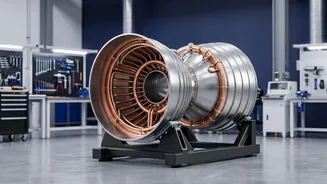
The number of registered space startups in India has exploded, growing from a single company in 2014 to over 400 by mid-2026. Several have already emerged as pioneers. Skyroot Aerospace made history by becoming the first private Indian company to reach orbit. Chennai-based Agnikul Cosmos is gaining attention for its 3D-printed rocket engines and for conducting a launch from a private launchpad. Meanwhile, companies like Pixxel are focusing on building constellations of hyperspectral Earth-observation satellites, promising data that can transform agriculture and climate monitoring. Others, like Dhruva Space and Digantara, are carving out niches in satellite manufacturing and space situational awareness, demonstrating the breadth of the burgeoning industry.
Beyond Launch: The Downstream Effect
The expansion of the space sector is not just about rockets and satellites. The real economic multiplier is expected to come from downstream applications. The data and services provided by these new space assets will have a transformative impact on sectors across the Indian economy. From precision agriculture and disaster management to urban planning, logistics, and telecommunications, the commercialisation of space applications promises to drive efficiency and innovation. The development of India’s first privately owned Earth observation satellite constellation, backed by a consortium of companies, is a prime example of this trend, showcasing how private investment is building critical infrastructure that will serve countless industries on the ground.