







Mangosteen: The Queen of Fruits
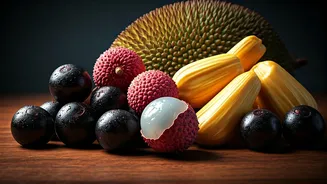
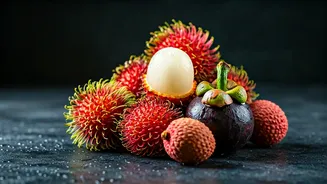
Don't let its humble, purple, apple-sized exterior fool you. The mangosteen is royalty for a reason. Hailing from Southeast Asia, this fruit is legendary for its exquisite flavor, a delicate balance of sweet and tangy that evokes notes of lychee, peach,
strawberry, and pineapple all at once. To open it, score the thick, woody rind around its equator without cutting through to the flesh, then twist it apart to reveal milky-white, garlic-like segments. The texture is soft, juicy, and dissolves on the tongue. In its native climate, the mangosteen’s brief and glorious season coincides with the monsoons. Finding them fresh in the U.S. is a treasure hunt worth embarking on at specialty Asian markets, but their subtly floral sweetness is an unforgettable reward.
Rambutan: The Hairy-Looking Wonder
At first glance, the rambutan looks like a creature from a Dr. Seuss book. Its name, derived from the Malay word for “hair,” perfectly describes the soft, pliable spikes covering its red or yellow skin. But beneath this wild exterior is a treat closely related to lychee and longan. To eat one, use a thumbnail or a small knife to slice the skin and peel it back, revealing a translucent, whitish orb. The flavor is sweet with a mild creamy acidity, often compared to a super-juicy grape. The texture is firm yet gelatinous. Harvested during the rainy seasons in countries like Thailand and Vietnam, rambutans are becoming increasingly common in U.S. grocery stores. Look for brightly colored skins without blackening on the spikes—a sign of peak freshness.
Lychee: The Perfumed Summer Jewel
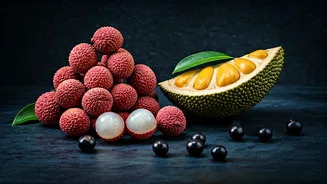
Perhaps the most recognizable fruit on this list, the lychee is a summertime icon for a reason. When you peel back its bumpy, pinkish-red shell, you're greeted with an intoxicating floral perfume. The fruit itself is a firm, translucent globe of sweet, aromatic flesh surrounding a single, inedible seed. Its flavor is bright and crisp, less creamy than a rambutan but more fragrant. While lychees have a short fresh season in the U.S. (primarily in Florida and Hawaii during late spring and early summer), they thrive in the high-humidity, high-rainfall climates of Southern China and Southeast Asia. When buying fresh, choose fruits that are firm and reddish, not brown or mushy. They make an incredible addition to cocktails, sorbets, or simply enjoyed chilled on a hot day.
Longan: Dragon's Eye Delight
Often called the “little brother” of the lychee, the longan is a subtler but equally delicious fruit. Its name translates to “dragon’s eye” in Chinese, a nod to its appearance when shelled: a translucent orb with a dark seed showing through, resembling an eyeball. The skin is thin, tan, and brittle, easily cracked open with a squeeze. The flesh has a similar texture to a lychee or grape but offers a different flavor profile—less floral and more earthy or musky, with a uniquely deep, mellow sweetness. Longans are harvested during the wet summer months across Asia and are a perfect snack for those who find lychees a bit too perfumed. They're fantastic for eating by the handful.
Jackfruit: The Versatile Giant
While many know jackfruit as the trendy vegan meat substitute, its primary identity in its native South and Southeast Asia is that of a magnificent fruit. It’s the largest tree-borne fruit in the world, and its arrival signals the heart of the monsoon season. When ripe, the fibrous pods inside have a unique flavor often described as a blend of banana, mango, and pineapple, with a distinct, bubblegum-like aroma. The texture is slightly chewy and satisfying. You can find it fresh in some markets (a daunting prospect for one person), but it’s more commonly available canned in syrup for a sweet treat or in brine for savory cooking. Trying ripe jackfruit is experiencing it in its truest, most delicious form.