





A Small Satellite on a Big Mission
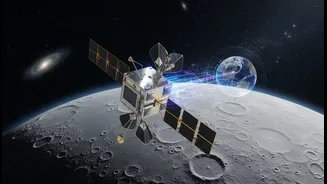
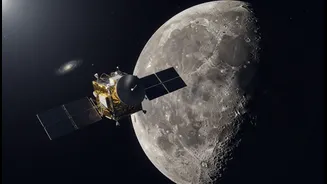
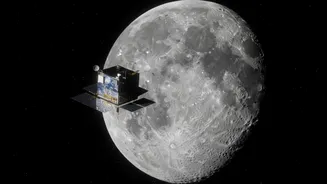
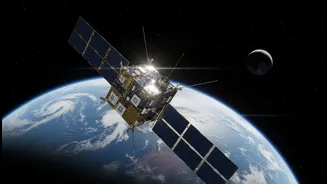
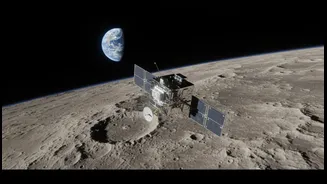
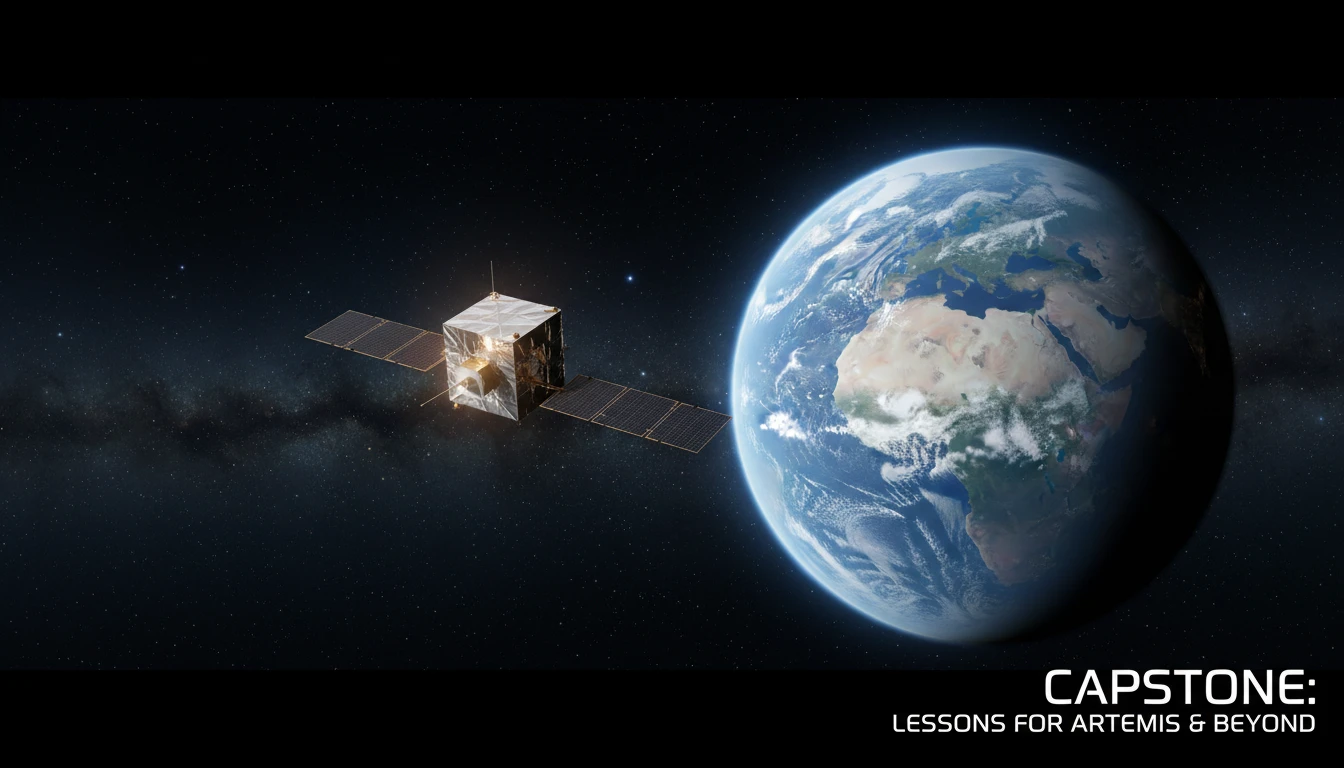
Imagine a satellite the size of a microwave oven charting a new course for moon exploration. That was CAPSTONE. Launched in June 2022, the Cislunar Autonomous Positioning System Technology Operations and Navigation Experiment (CAPSTONE) was a pathfinder
mission designed to test critical technologies in the challenging environment of deep space. Weighing just 25 kilograms (55 pounds), this CubeSat was a low-cost, high-reward project managed by NASA and owned and operated by the private company Advanced Space. After a four-month journey, it began its work, overcoming early communication glitches and a frightening tumble through space that required remarkable recovery efforts from its ground team. This resilience set the stage for a mission that would punch well above its weight, achieving all of its primary and extended goals before NASA concluded its activities in June 2026.
The Uncharted Path of a Halo Orbit
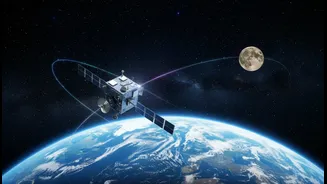
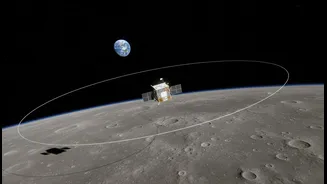
The mission's primary destination was not the Moon itself, but a unique and untested orbit around it. Known as a Near-Rectilinear Halo Orbit (NRHO), this path is a highly elliptical loop that uses a precise balance point between the gravities of the Earth and the Moon. This gravitational balancing act offers tremendous stability, meaning a spacecraft can stay in this orbit for long periods with minimal fuel. CAPSTONE was the very first spacecraft to successfully enter and operate in an NRHO. In its seven-day cycle, it would swing from just 1,600 kilometres over one lunar pole to a distant 70,000 kilometres over the other. By proving the viability of this orbit, CAPSTONE has validated the future home of the Lunar Gateway, the planned outpost that will support long-term human missions to the Moon.
A GPS for the Moon
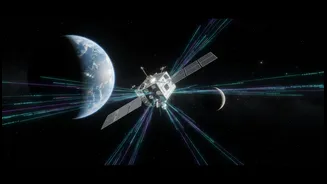
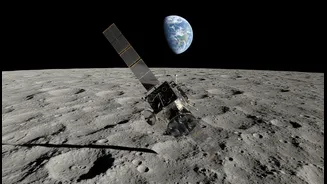
Perhaps CAPSTONE's most significant achievement was demonstrating a new way to navigate in deep space. Currently, spacecraft depend almost exclusively on constant communication with giant antennas on Earth to know where they are. This is resource-intensive and creates a bottleneck. CAPSTONE tested a groundbreaking technology called the Cislunar Autonomous Positioning System (CAPS). This system allows spacecraft to determine their position autonomously. It achieved this by communicating directly with another spacecraft, NASA’s Lunar Reconnaissance Orbiter (LRO), which has been circling the Moon since 2009. By sending a signal to LRO and measuring the response, CAPSTONE could calculate its own position, speed, and trajectory without phoning home. This successful test is a critical step toward creating a 'GPS for the Moon,' allowing future missions to navigate independently and freeing up Earth-based networks for vital science data.
Paving the Way for Artemis
The success of CAPSTONE directly impacts NASA's ambitious Artemis program, which aims to establish a sustainable human presence on and around the Moon. Every piece of data sent back from the small satellite has reduced the risks for the multi-billion-dollar missions that will follow. By confirming the stability of the NRHO, it has given mission planners confidence in the orbit for the Lunar Gateway. By proving that autonomous navigation is possible, it has laid the groundwork for a future where dozens of missions can operate in lunar space without overwhelming ground control. The mission also served as a valuable model for public-private partnerships, showing how smaller, agile commercial companies can play a crucial role in tackling complex exploration challenges. NASA was even able to upload new software during the mission, transforming the spacecraft into a flexible testbed for other advanced technologies like disruption-tolerant networking.