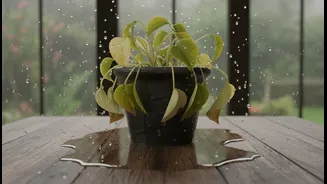



Decoding the Distress Signal
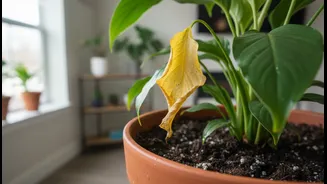
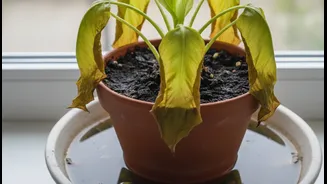
A yellow leaf is essentially a plant's cry for help. The process, known as chlorosis, occurs when a leaf stops producing chlorophyll, the pigment that makes plants green and is essential for photosynthesis. When you see yellow, your plant is telling you that something
is interfering with its ability to function properly. While it can be alarming, it's also a valuable clue. The key is to play detective, and one of the first and most critical places to investigate is not the leaves, but what’s happening below the surface in the pot.
Why Drainage Is the Root of the Problem
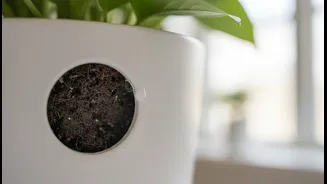
Improper watering is the leading cause of yellowing leaves, but it’s often a symptom of a larger issue: poor drainage. When soil stays overly wet, the roots can't breathe. Think of it like a sponge that is perpetually soaked; the air pockets disappear. Plant roots need oxygen to survive and absorb water and nutrients. In waterlogged soil, roots begin to suffocate and can develop root rot, a condition where they turn brown, mushy, and die. Damaged roots can no longer do their job, leading to the telltale yellow leaves, even though the plant is sitting in water. This is especially true during seasons like the monsoon, where higher humidity means soil dries out much slower, making plants more susceptible to overwatering.
Your Diagnostic Checklist
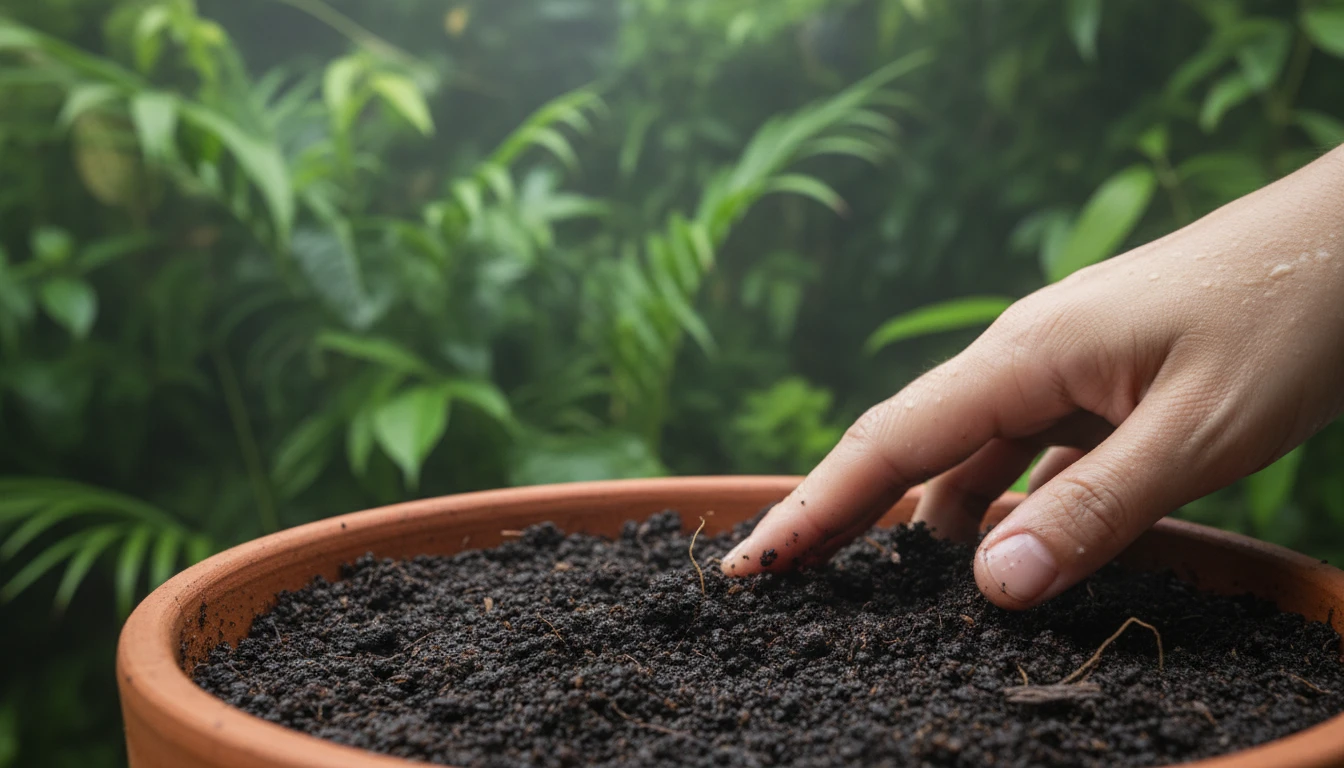
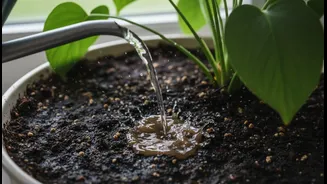
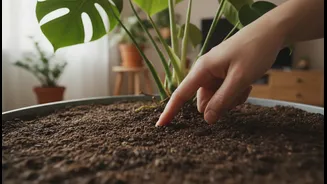
Before you jump to conclusions, run through this checklist to diagnose a drainage problem. The signs often point to overwatering, which is directly linked to how well your pot drains. First, feel the soil. If it’s consistently soggy or wet to the touch several days after watering, that’s a red flag. You might also notice water pooling on the surface during watering or that the pot feels unusually heavy. A foul, swampy smell emanating from the soil is a telltale sign of root rot. Another clue can be the presence of fungus gnats, small flies that thrive in moist conditions. Finally, observe the pattern of yellowing. With overwatering and poor drainage, leaves often turn yellow and feel soft or mushy, and it can affect both old and new growth.
A Rescue Mission for Your Plant
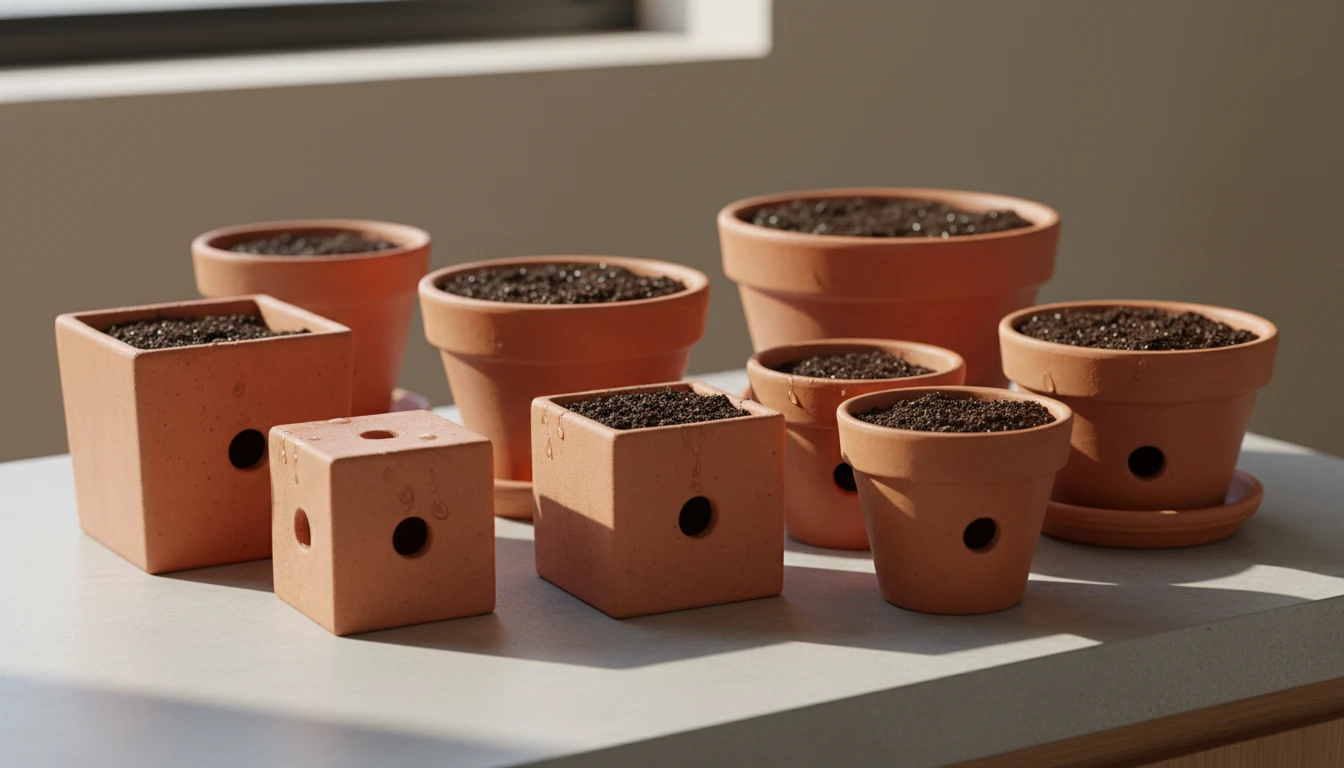
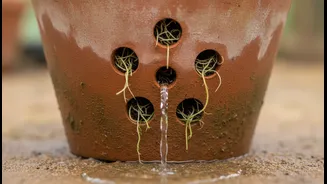
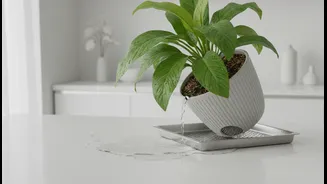
If you suspect poor drainage is the issue, it’s time to intervene. First, gently slide the plant out of its pot to inspect the roots. Healthy roots are typically firm and white or light-coloured; rotting roots will be dark brown or black, soft, and may fall apart when touched. If root rot is present, use clean scissors to trim away all affected parts. Next, check the pot itself. Does it have at least one drainage hole? If not, that's your primary problem. Your best bet is to repot the plant into a container that allows excess water to escape. If the pot has a hole but it’s clogged, clear it out. Finally, use a fresh, well-draining potting mix. Amending your soil with materials like perlite, pumice, or coarse sand creates air pockets and helps prevent waterlogging.
When It's Not About Drainage
While drainage is a major factor, other issues can also cause yellow leaves. Underwatering can make leaves turn yellow and crispy as the plant sacrifices older foliage to conserve water. A key difference is that the soil will be bone-dry and may pull away from the sides of the pot. Nutrient deficiencies can also be a cause, often showing specific patterns. For example, a nitrogen deficiency typically causes older, lower leaves to yellow first. Pests like spider mites and mealybugs suck sap from leaves, causing yellow spots. Lastly, it's normal for the oldest, lowest leaves on a plant to occasionally yellow and drop as part of its natural life cycle.