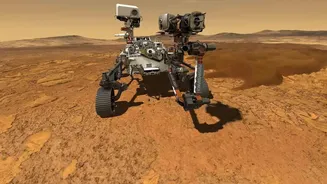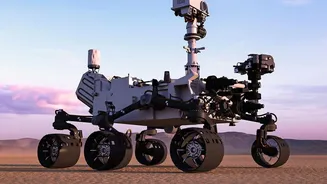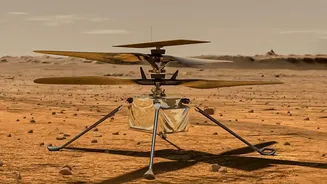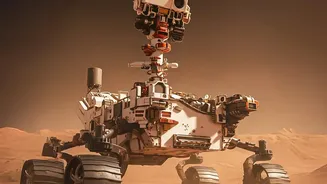

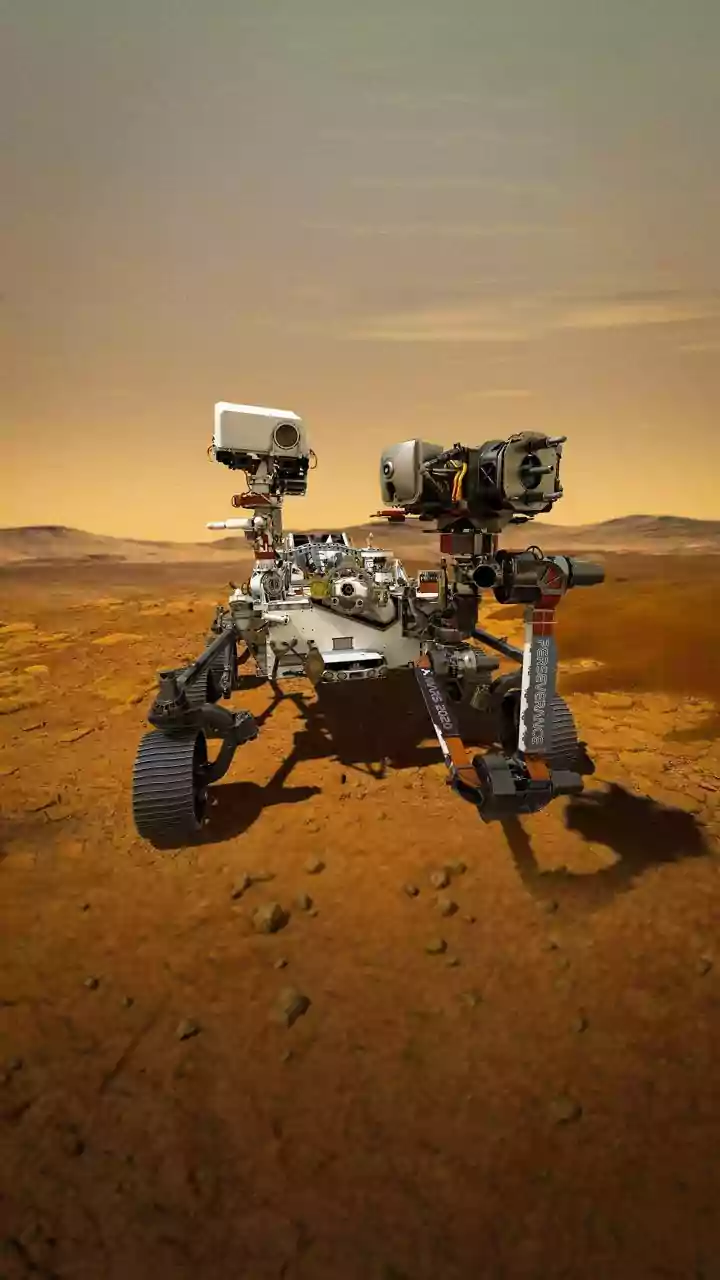
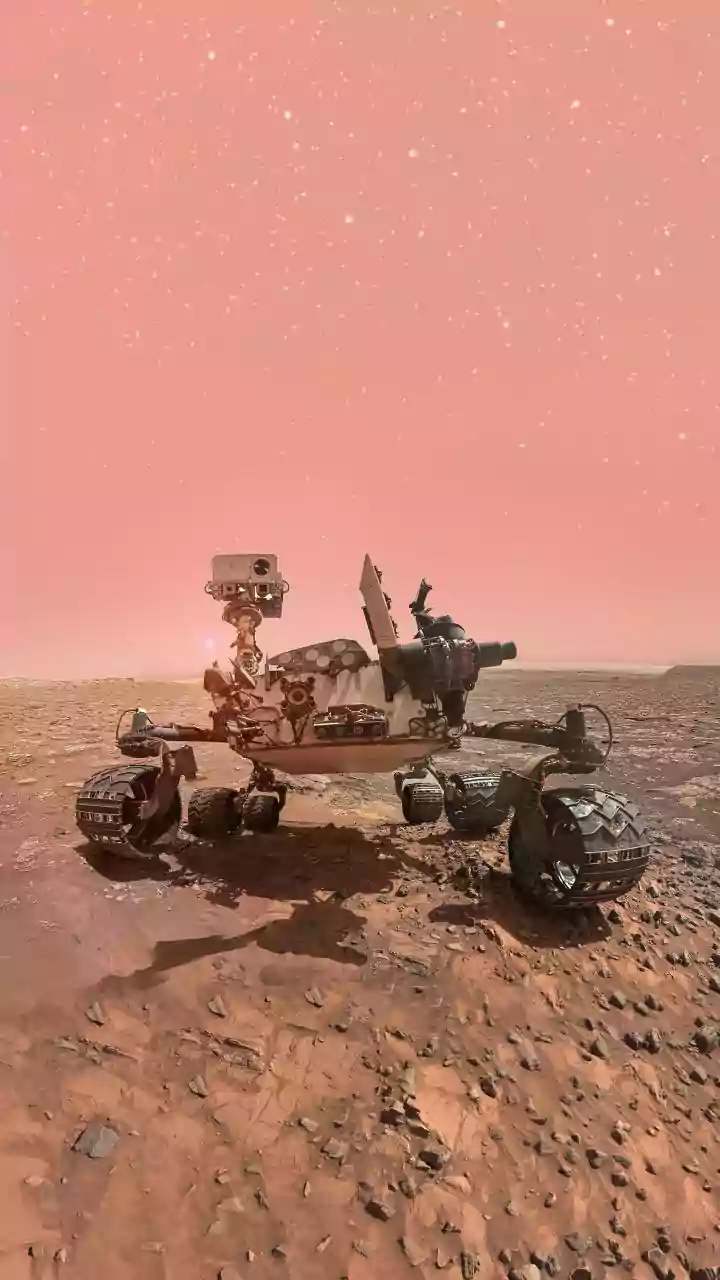
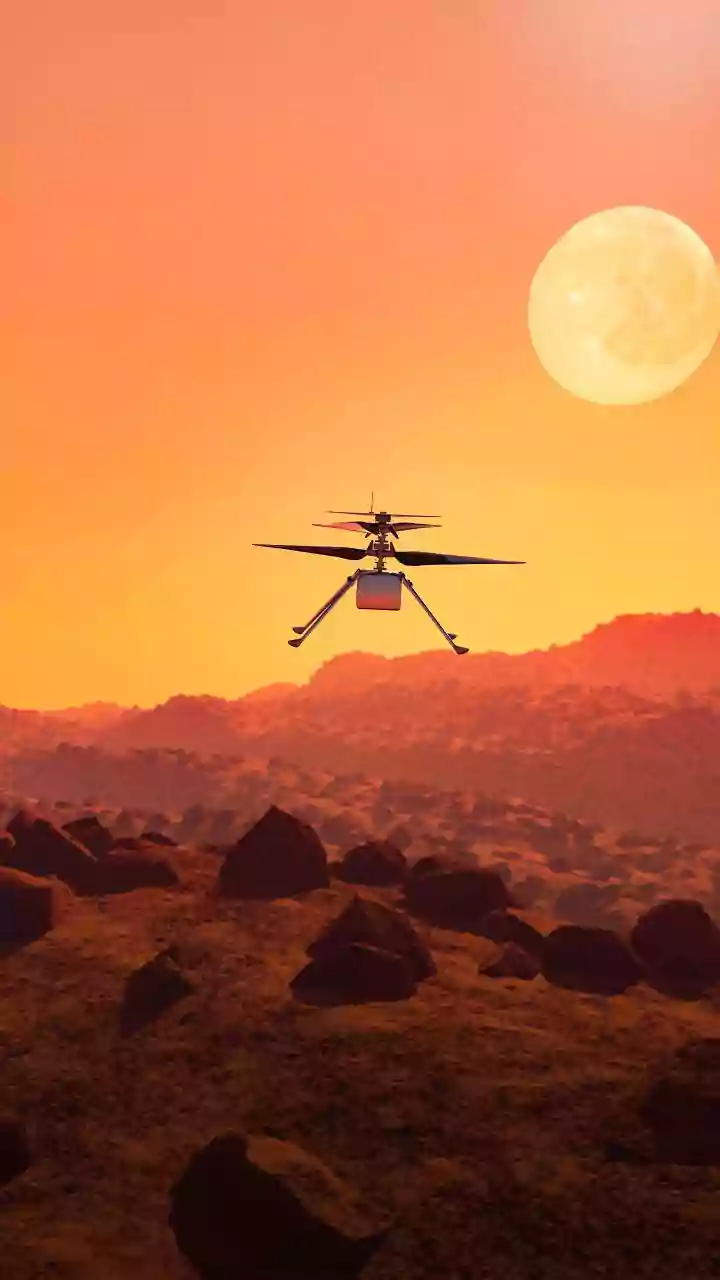
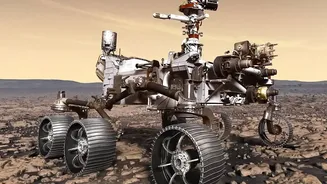
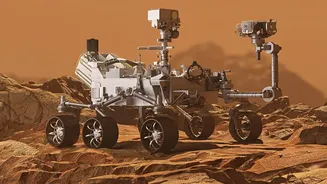
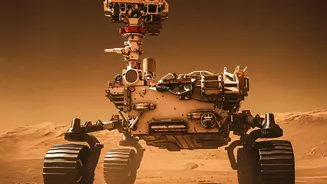
On the reddish-brown plains of Mars, a treasure trove awaits. NASA's Perseverance rover has spent years drilling and sealing pristine samples of rock and soil, a collection that could rewrite our understanding of the red planet.
A Treasure Chest on Mars
Since its landing in February
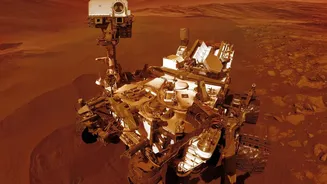
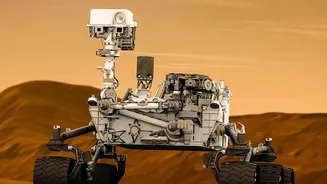
2021, the Perseverance rover has been diligently working in Jezero Crater, an ancient, dried-up lakebed believed to be a prime location for preserving signs of past microbial life. The rover has successfully collected dozens of samples, including igneous rocks that reveal the planet's volcanic history, sedimentary rocks that could hold chemical fossils, and even a sample of the thin Martian atmosphere. These samples are hermetically sealed in titanium tubes. In a remarkable feat of planning, Perseverance has created a backup depot, carefully placing ten of these tubes on the Martian surface at a site nicknamed 'Three Forks', while keeping the rest aboard. This ensures that, no matter what, a collection is available for a future pickup mission.
The Ultimate Scientific Prize
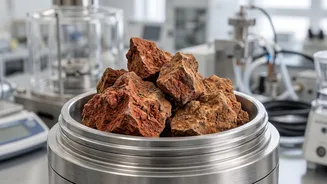
The motivation behind this immense effort is the promise of an unprecedented scientific revolution. While rovers can perform amazing analysis on Mars, they are limited by the size and complexity of their instruments. Bringing the samples to Earth would allow scientists to use state-of-the-art laboratories to search for definitive evidence of past life, or biosignatures. Beyond the search for life, these rocks are a time capsule. They can provide precise dating of Martian geology, reveal how the planet's climate transformed from a warmer, wetter world to the cold desert it is today, and help assess potential hazards and resources for future human explorers. It has been the highest-priority mission for planetary scientists for decades for this very reason.
The Original Plan Hits a Wall
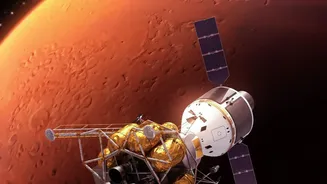
The initial plan to retrieve these samples was an intricate interplanetary relay race jointly designed by NASA and the European Space Agency (ESA). It involved a Sample Retrieval Lander that would launch a small Mars Ascent Vehicle (MAV) into orbit, where an ESA-built Earth Return Orbiter would capture the sample container and fly it home. However, the complexity of this multi-stage mission led to significant challenges. An independent review in 2023 found that the projected cost had ballooned from around $5 billion to a potential $8-11 billion, with the return date slipping towards 2040. Faced with these figures, Congress declined to fully fund the ambitious project in its 2026 budget, effectively cancelling that specific architecture and sending the agencies back to the drawing board.
Back to the Drawing Board
Despite the setback, the mission to retrieve the samples is far from dead. The scientific imperative is considered too great to ignore. In response to the budget and schedule issues, NASA is now actively exploring faster, more affordable ways to achieve the same goal. The agency has solicited new ideas from across the aerospace industry, awarding contracts for 90-day studies to investigate leaner and more innovative mission architectures. These new concepts could involve different lander designs, leveraging commercial launch vehicles, or other creative solutions to reduce complexity and cost. The fundamental goal remains, but the method for achieving it is being completely re-evaluated to find a viable path forward.
An Uncertain but Hopeful Path
The future of Mars Sample Return now rests on these new plans. A dedicated strategy team is expected to deliver recommendations in the coming year, charting a new course for the program. While the original 2028 launch date is off the table, new proposals are targeting a launch in the early 2030s, which could see the precious samples arrive on Earth in the mid-to-late 2030s. Adding a sense of urgency is the progress of other nations; China's Tianwen-3 sample return mission is reportedly on track to launch around 2028 and return samples by 2031. For now, the samples collected by Perseverance sit safely in Jezero Crater, a historic collection waiting for its ride home.