






So, What’s This ‘Group Chat’?
Imagine a VIP lounge for the cosmos. For decades, the ability to independently launch humans into space has been a feat achieved by only a handful of nations. This exclusive club, or ‘group chat’, has had just three members: the United States (since 1961),
Russia (since 1961), and China (since 2003). Entering this chat isn’t about just building a rocket; it's about mastering a symphony of complex technologies, from life support systems to launch escape protocols and precision re-entry. It signifies technological sovereignty, immense scientific capability, and a nation’s ambition to shape the future of exploration. With the Gaganyaan mission, India is not just knocking on the door; it's ready to pull up a chair and join the conversation.
India’s RSVP: The Gaganyaan Mission
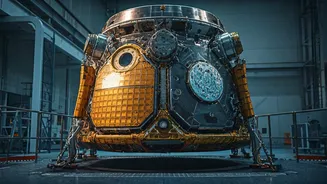
Gaganyaan, which translates from Sanskrit to “Celestial Vehicle,” is the Indian Space Research Organisation’s (ISRO) flagship program to demonstrate human spaceflight capability. The primary objective is to launch a crew of three Indian astronauts, called 'Vyomanauts,' into a Low Earth Orbit of 400 kilometres. They will circle the Earth for three days before returning for a safe splashdown in Indian waters. The mission is about more than just sending people to space; it's a monumental undertaking to develop and master all the core technologies in-house. This includes everything from the powerful human-rated LVM3 rocket to the advanced crew escape system designed to ensure astronaut safety above all else.
Passing the Vibe Check: Key Milestones
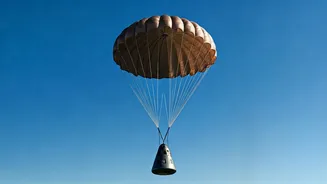
Gaganyaan's recent buzz is thanks to a series of critical test successes that show the mission is moving from the drawing board to the launchpad. ISRO has successfully completed thousands of tests, including crucial engine hot tests and demonstrations of the Service Module Propulsion System. A key focus has been the parachute system, essential for a safe landing. Multiple Integrated Air Drop Tests have validated the entire sequence, where a mock crew capsule was dropped from a helicopter to test the parachute deployment and recovery operations, which were successfully carried out by the Indian Navy. These successful trials, which have rigorously tested the crew's safety systems in various scenarios, have built immense confidence and cleared the path for the next phase.
The Vyomanauts: Meet the Admins
You can't have a human spaceflight mission without the humans. The first cohort of Vyomanauts are four distinguished test pilots from the Indian Air Force. These candidates have undergone an extensive selection process and rigorous training, both in Russia at the Gagarin Cosmonaut Training Center and back home in India at a new, dedicated facility in Bengaluru. Their training covers everything from simulated spaceflight and survival drills in various terrains to advanced academic courses and yoga for holistic health management. While the first batch is from the military, ISRO is already planning to open up the astronaut cadre to civilian scientists and engineers for future missions, broadening the pool of talent that will represent India in space.
The Read Receipts: What’s Next?
The timeline is becoming clearer. Before the first crewed flight, ISRO has planned a series of uncrewed test missions. The first of these, the G1 mission, is slated for early 2026. This flight will be a full dress rehearsal without astronauts, and will even feature 'Vyommitra', a sophisticated humanoid robot developed by ISRO to mimic human functions and test the life-support systems of the crew module. Following a sequence of successful uncrewed flights, the historic first crewed Gaganyaan mission, H1, is targeted for 2027. This methodical, safety-first approach ensures that every system is perfected before India's Vyomanauts lift off.