




An Identity Crisis in the Cosmos
For generations, we’ve been taught a tidy distinction. Asteroids are the rocky, inert bodies that mostly populate the belt between Mars and Jupiter. Comets are the ‘dirty snowballs’ from the solar system’s outer fringes, composed of ice, rock, and dust.
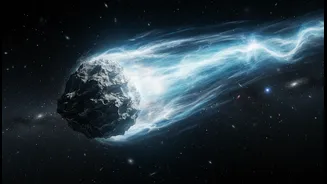
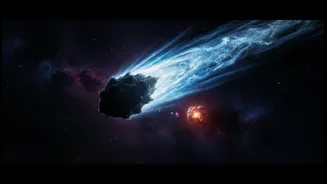
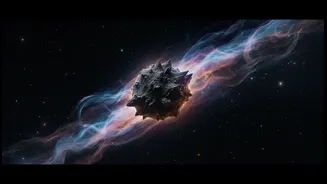
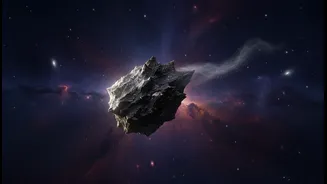
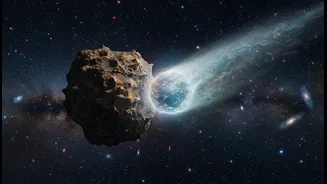
As they near the Sun, the ice sublimates—turns directly from solid to gas—creating a brilliant glowing coma (a fuzzy atmosphere) and a magnificent tail. But the universe, it turns out, is not always so neat. Astronomers are increasingly finding objects that defy these simple labels. These celestial mavericks look like asteroids but act like comets, forcing a rethink of how we categorise the residents of our cosmic neighbourhood. A recent observation of a supposedly dormant rock showing activity is the latest chapter in this unfolding story.
Meet the Centaurs
Many of these hybrid objects belong to a class known as Centaurs. Named after the mythical Greek creatures that were half-human, half-horse, Centaurs are objects with characteristics of both asteroids and comets. They inhabit a chaotic, unstable orbital region between Jupiter and Neptune. It’s believed they are refugees from the Kuiper Belt, a vast ring of icy bodies beyond Neptune. Tugged by the immense gravity of the giant planets, their orbits are temporary, lasting only a few million years before they are either flung out of the solar system or pushed inward to become a short-period comet. The very first Centaur discovered, Chiron, was initially catalogued as an asteroid, only to later develop a comet-like coma, providing the first clue to their dual nature.
The Puzzle of 'Dark Comets'
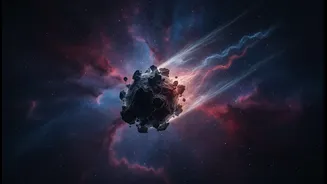
When a comet makes enough trips around the Sun, it can exhaust the ice on its surface. The volatile materials that produce its spectacular tail boil away, leaving behind a dark, rocky nucleus that looks, for all intents and purposes, like an asteroid. These are often called extinct or dormant comets. Some may have simply run out of fuel, while others might have a thick crust of dust insulating a core of remaining ice. This makes them incredibly difficult to find. They don’t reflect much light and they lack their tell-tale tail. Yet, recent studies suggest that a significant percentage of near-Earth objects could be these ‘dark comets’. They look like asteroids but exhibit tiny, non-gravitational accelerations—subtle pushes that can only be explained by the venting of gas from hidden ice.
What Wakes a Sleeping Giant?
So, how does a dormant rock suddenly sprout a tail? There are several leading theories. One possibility is a cosmic collision. A smaller asteroid could have crashed into it, excavating the surface and exposing a fresh layer of ancient, pristine ice to the Sun’s rays for the first time in millennia. Another theory involves its unstable orbit. A gravitational nudge from Jupiter or Saturn could have altered its path, bringing it slightly closer to the Sun. This small change in distance could be just enough to raise its surface temperature past the point needed to sublimate deeply buried volatiles. We’ve seen this happen before. The Centaur named Echeclus, for example, has been observed displaying a cometary coma on occasion, despite usually appearing as a simple point of light.
One Tail, Many Unanswered Questions
This brings us to the crucial caveat. While observing an inactive object spring to life is a thrilling discovery, it doesn't provide a single, universal answer to the mystery of dark comets. The universe is more complex than that. For instance, the asteroid 3200 Phaethon develops a tail when it nears the sun, but studies revealed this tail isn’t made of dust from sublimating ice; it’s composed of sodium gas fizzing from its superheated rock. Other dark comets show acceleration without any visible tail at all, suggesting a different kind of stealthy outgassing. Each new observation adds a piece to the puzzle, revealing that the transition from active comet to inert rock is not a straight line but a spectrum of bizarre and wonderful behaviours. One object's awakening is a clue, not the full story.
Why We Hunt for These Ghosts
Understanding these strange objects is about more than just satisfying cosmic curiosity. They are time capsules from the formation of the solar system, 4.6 billion years ago. Studying their composition tells us about the raw materials that built the planets. Furthermore, dark comets have been proposed as a possible mechanism for delivering water and organic molecules to early Earth, contributing to the conditions necessary for life. There is also a more immediate, practical reason: planetary defence. A dark comet on a collision course with Earth would be much harder to detect than an active, bright one. Identifying and tracking these stealthy objects is crucial for mapping our cosmic neighbourhood and anticipating any potential hazards.