







Beyond the Metros: A New Focus
For decades, conversations about advanced urban transit in India were dominated by the needs of Delhi, Mumbai, and Bengaluru. However, a significant shift is underway. The spotlight is turning towards the nation's smaller, yet rapidly expanding, Tier-2
and Tier-3 cities. Places like Jaipur, Lucknow, Kochi, Nagpur, and Surat are no longer just regional hubs but are becoming engines of economic growth, attracting investment, businesses, and a skilled workforce that might have previously migrated to larger metros. This growth has brought its own set of challenges, particularly traffic congestion and pressure on existing infrastructure. As a result, both central and state governments are increasingly looking at rail-based solutions not just for the megacities, but for these emerging urban centres as well. The buzz is about creating integrated transport ecosystems that can support this next phase of urbanisation.
The Rise of Regional Rail
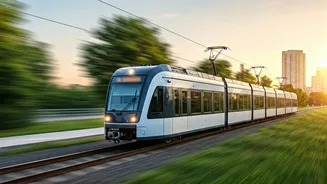
The core of this new strategy isn't just about building metro lines within cities, but connecting them to each other. This is where concepts like the Regional Rapid Transit System (RRTS) and Vande Metro (also known as Namo Bharat Rapid Rail) come into play. Unlike long-distance express trains or intra-city metros, these services are designed to connect urban clusters within a 100-250 km radius. The Delhi-Ghaziabad-Meerut RRTS corridor is a prime example, demonstrating a new model of public transport that bridges the gap between conventional railways and metro networks. Similarly, the Vande Metro is being developed for shorter, high-frequency intercity routes, such as Lucknow-Kanpur or Chennai-Tirupati, offering a faster and more comfortable alternative to road travel for daily commuters and business travellers alike. These systems aim to create economic zones by seamlessly linking satellite towns and industrial centres to the main city.
Connecting the Dots: Projects on the Anvil
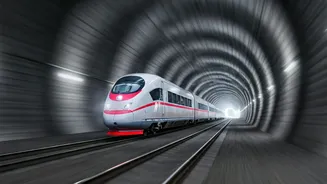
This isn't just theoretical. Concrete plans are taking shape across the country. The 2026 Union Budget outlined plans for seven new high-speed rail corridors, many of which will connect or pass through smaller but significant cities, such as Pune, Nashik, and Vadodara. The government's focus is on developing these cities as new growth centres. Beyond the headline-grabbing bullet train projects, Indian Railways is also focused on multitracking existing high-density routes to increase capacity for both passenger and freight trains. Projects are underway to add third and fourth lines on critical sections like Nagda-Mathura and Guntakal-Wadi, which will improve connectivity to destinations like Ujjain and Raichur. In states like Bihar, West Bengal, and Jharkhand, projects worth over Rs 1,131 crore have been approved to eliminate congestion and enhance line capacity.
The Economic and Social Payoff
The push for better small-city rail connectivity is driven by clear economic logic. Improved transport links are proven to boost economic activity. Studies have shown that towns connected to new high-speed lines see a notable rise in GDP compared to their unconnected neighbours. For businesses, it means easier access to markets and talent pools, while reducing logistics costs. For residents, it translates to faster, safer, and more reliable commutes, opening up job opportunities in neighbouring cities without the need to relocate. This is particularly crucial as remote and hybrid work models allow professionals to move back to their hometowns, fuelling demand for better local services and infrastructure. Enhanced rail connectivity is also a catalyst for the real estate market and urban development around new stations.
From Buzz to Reality: The Road Ahead
While the vision is compelling, the path from announcement to operation is fraught with challenges. Large-scale railway projects in India are complex and often face significant hurdles. Land acquisition remains one of the most persistent obstacles, capable of causing long delays and cost overruns, as seen in the Mumbai-Ahmedabad high-speed rail project. Securing funding, navigating difficult terrain, and ensuring coordination between multiple government agencies are also major challenges. Furthermore, there's a debate on whether capital-intensive metro and rail projects are always the right solution for every small city, with some experts arguing for a more integrated approach that includes bus rapid transit systems (BRTS) and better land-use planning. The key will be to ensure these projects are not just status symbols but are built as part of a well-thought-out mobility plan.