





The Foundation: Posture and Core
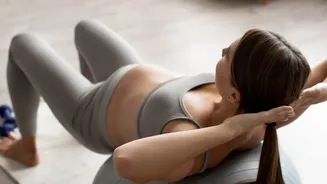
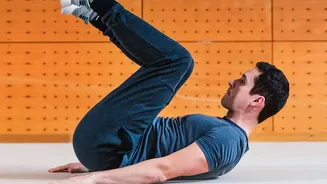
All powerful movement, whether on the dance floor or the rower, begins with the core. In dance, a strong, engaged core is the powerhouse for balance, stability, and control. Dancers strive for a posture that is both elongated and grounded, with relaxed
shoulders and a neutral spine, allowing for fluid transitions and expressive movement. Similarly, proper rowing form demands a strong, tall posture to protect the spine and transfer power effectively. Before the stroke even begins, a rower must engage their core and hinge at the hips, maintaining a straight back. While a dancer’s posture is about aesthetic grace and readiness for multi-directional movement, a rower’s is about creating a solid base for generating explosive, linear force.
The Sequence: Power vs. Expression
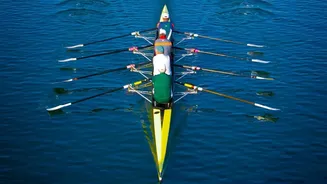
The rowing stroke is a highly structured sequence of four distinct phases: the catch, drive, finish, and recovery. The power phase, or 'drive', is a chain reaction that starts with an explosive push from the legs, followed by a swing of the body, and finally a pull from the arms. This sequence—legs, body, arms—is critical for maximizing power and efficiency. Dance, on the other hand, is not bound by a single, repeatable sequence. Its movements are dictated by choreography and music. However, like rowing, dance movement originates from a centre of power. A leap or turn also follows a sequence of preparation, execution, and landing, relying on a transfer of energy through the body to create a moment of seemingly effortless expression.
Rhythm and Flow
Rhythm is the heartbeat of both activities. For a rower, this means finding a consistent and powerful stroke rate, often measured in strokes per minute. The goal is a seamless, fluid cycle where the explosive drive is balanced by a patient and controlled recovery, which should typically take about twice as long as the drive. This steady cadence creates a hypnotic flow state. In dance, rhythm is more varied and interpretive. A dancer’s body responds to the tempo, melody, and emotion of the music, translating sound into physical storytelling. Yet, both disciplines require an immense mind-body connection to sustain their respective rhythms, whether it's the metronomic pulse of the rower or the dynamic cadence of the dance floor.
A Full-Body Symphony
A common misconception about rowing is that it’s an upper-body workout. In reality, it is one of the most comprehensive full-body exercises available, engaging approximately 85-86% of the body's muscles with every stroke. The power distribution is roughly 60% legs, 30% core, and 10% arms. Dance is also a quintessential full-body activity. From the feet that articulate every step to the core that stabilizes every turn and the arms that shape every line, dancing requires the coordinated effort of the entire body. While rowing builds strength through repetitive, powerful movements, dance develops strength, flexibility, and control across a more varied and less predictable range of motion.